

Probation in a Michigan DUI Case
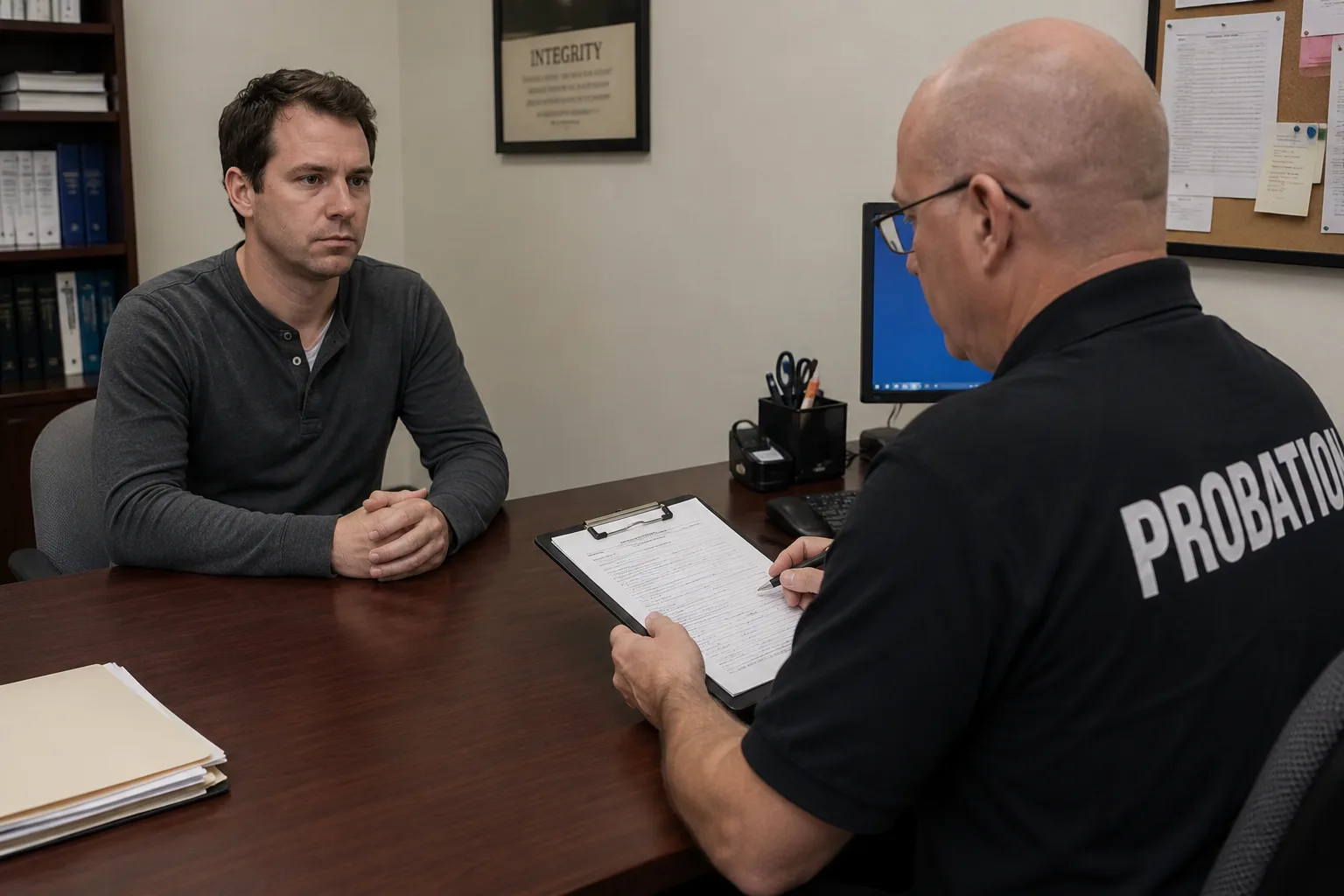
In the real world, the overwhelming majority of DUI cases result in some kind of probationary sentence. However, almost without exception, the very idea of going to jail will cause most people to say something like “I’ll do any kind of probation.” In this article, we’re going to examine the realities of probation in Michigan DUI cases.
To keep things straight, we’ll use the term “DUI probation” throughout because we’re talking specifically about probation in the context of a DUI case.
It is important to note that there are some differences in how probation plays out among the various courts in the Greater Detroit area — meaning Wayne, Oakland, Macomb, and the surrounding counties. We’ll take a quick look at probation in general, then summarize how it typically differs in 1st, 2nd, and 3rd offense DUI cases.
What DUI Probation Actually Means
In the broadest sense, DUI probation means that a person is being supervised while NOT being incarcerated, and that it is a violation if he or she does something prohibited or fails to do something required by the judge. Violating probation is never good and always puts a person at risk of being locked up.
At its most basic, DUI probation is a court order requiring a person to do certain things and refrain from others. In all DUI cases, there will be a prohibition against consuming alcohol and usually some requirement that the person provide periodic breath and/or urine samples. That can be on a set schedule or at random, and either way, it can be ordered more or less frequently.
In addition, a person will generally not be allowed to leave the state without the court’s prior permission, though exceptions are often made for those who travel regularly for work so that they don’t need to clear things in advance every time they go out of state.
Similarly, if a person has already planned a vacation, the court will almost always allow it.
Of course, anyone who doesn’t live in Michigan but winds up getting a DUI here will be allowed to return home and will likely be placed on some form of write-in or non-reporting probation.
Generally speaking, probation is relatively straightforward: do what’s required, don’t do what’s been forbidden, and all will be well. Some people, though, aren’t quite up to that task — especially when it comes to the “no drinking” order.
In the real world, the most common DUI probation violation, BY FAR, is a positive-for-alcohol test indicating that someone drank.
In addition to not drinking, a person can also be ordered to complete a class, a series of classes, counseling, or even a treatment program — including or in addition to being required to attend a community support group (like AA) — depending on the circumstances of the underlying DUI case.
There are courts in the Greater Detroit area that almost always require some kind of community service as a condition of DUI probation. A few never require it, while others may or may not. As the saying goes, “it depends.”
In that regard, DUI probation can range from easy and short — like less than a year of non-reporting probation — to what people sometimes call “probation from hell,” meaning a person has so many things to do (and not do) for a much longer period of time. Whatever else, Michigan law now allows a person to request early discharge from probation after completing half the assigned period. Of course, having done what was required, like completing an alcohol education class or the like, is a prerequisite.
As a general rule, things are going to be easier and more lenient in a 1st offense case than in a 2nd offense case, and any term of DUI probation in a 3rd offense felony case is going to be the most demanding.
The Three Types of DUI Probation
Let’s take a look at the range of different kinds of probation a person can face in a real-world DUI case.
Non-Reporting Probation
This is the easiest form of DUI probation. At its most basic, it means a person is simply told by the judge to stay out of trouble for a certain period of time. Given its leniency, jail is virtually never part of a non-reporting probation sentence.
A person given non-reporting probation usually need not do anything except stay clean. “Trouble” in that sense always means being convicted of or charged with any new offense. At the end of the term, the court checks the person’s record, and if it’s clean, the person is discharged from probation and the matter is considered closed.
Reporting Probation with General Conditions
This is the garden-variety kind of DUI probation that most people get. The reporting requirement means that a person has to check in — either in-person or virtually — with a probation officer at specified intervals.
Most often, this is monthly, but sometimes it can be every other month or even quarterly. Beyond just staying out of trouble, a person on general reporting probation is usually ordered by the judge to do certain things — like not drink alcohol (typically enforced by alcohol testing), complete some kind of counseling or education, and perhaps something else, like community service.
Reporting Probation with Special Conditions
In addition to reporting and staying out of trouble, this form of DUI probation carries a longer list of requirements and prohibitions. “Special” conditions can include an order that a person not so much as be arrested for any offense, or even receive a traffic ticket.
It can also include all kinds of other requirements. For example, a person can be required to serve all or part of his or her time on house arrest, or complete a formal substance abuse treatment program.
How Probation Differs by Offense Level
A first-time DUI offender who doesn’t appear to have any kind of drinking problem is looking at a much softer probation outcome than someone dealing with a 2nd or 3rd offense DUI. The court’s approach to probation is heavily influenced by a person’s prior record, the circumstances of the current offense, and what the legally required alcohol assessment reveals about the person’s relationship with alcohol.
Ultimately, it’s up to the judge to decide what a person must do — and not do — to remain free. What’s covered above is a general outline. There are endless possibilities between the easy end of things and the toughest extreme. The simple truth is that most people who wind up on DUI probation fall somewhere in between.
If you’ve been charged with a DUI and are concerned about probation, it’s also worth reading our article on probation violations in Michigan — because understanding what constitutes a violation, and what happens at a violation hearing, is helpful.
How Our Firm Approaches DUI Probation
When it comes to probation in a Michigan DUI case, our job is always to get things as far toward the easy end of things as possible. Through our extensive experience handling thousands of DUI cases, my team and I have developed very effective strategies to do just that. We will protect our clients from being unnecessarily burdened with classes, counseling, testing, and other conditions that go beyond what the situation actually calls for.
In the final analysis, success in a DUI case is always best measured by what does not happen to a person. When it comes to probation, less is definitely more.
If you’ve been charged with a DUI in Wayne, Oakland, Macomb, or one of the surrounding counties, my team and I are here to help. Call us at 586-465-1980 for a free, confidential phone consultation, available Monday through Friday, 8:30 a.m. to 5:00 p.m. An answering service is available after hours. You can also reach us through the contact form or chat box on this site. For a full overview of how a Michigan DUI case unfolds, visit our Michigan DUI defense page.