


Getting a First DUI Reduced or Dismissed in Michigan: What’s Realistic

Michigan DUI attorneys reviewing evidence in first offense OWI case
Share on Facebook
Share on X
Share on LinkedIn

If you’ve been arrested for a first DUI in Michigan, the first thing you want to know is whether you can make the whole thing go away. That’s completely understandable. Nobody wants a drunk driving conviction on their record, and the idea of just getting a first DUI dismissed in Michigan — like it never happened — is incredibly appealing. Some lawyers are happy to let you keep hoping for that.

My team and I would rather give you an honest picture of what’s actually realistic, because that’s what genuinely helps you.

The short version: dismissals happen, but getting that kind of outcome depends on — more than anything else — the evidence. If it’s solid and the police didn’t commit some kind of fatal error in handling the case, then no amount of legal wrangling is going to get a 1st offense DUI knocked out of court. And, truth be told, those cases in which there is some catastrophic flaw are the exception, and not the rule.

It All Starts With a Hard Look at the Evidence

No matter what, it is imperative that a lawyer undertake a careful, deliberate examination of all the evidence with the mindset that there IS something that can be used to get the case dismissed. That kind of determined approach produces far better outcomes than merely looking over the evidence to see if anything “jumps out.” Whatever else, a first offense OWI case won’t dismiss itself — and that same thorough review that might turn up grounds for dismissal will almost always turn up something useful for negotiating a reduction, even when a full dismissal isn’t in the cards. A lawyer has to make both of those things happen.

By contrast, reductions to a less serious charge happen all the time, and when they do, they matter. And in a first offense case, a good outcome sometimes looks less dramatic than a full dismissal — but is still genuinely good news for your record, your license, and your future. Let’s walk through how this actually works.

Michigan DUI attorneys reviewing evidence in first offense OWI case

Can a First Offense DUI in Michigan Actually Be Dismissed?

Yes — and my team and I get cases dismissed. But it’s important to understand why a case gets dismissed, because that determines whether dismissal is even on the table in your situation.

A Michigan OWI charge gets dismissed when there’s a genuine, legally significant flaw in the evidence, or how it was handled. That means something went wrong with the traffic stop, the arrest, the breath test, the blood draw, or some other piece of the prosecution’s case — and it was wrong enough that a judge has no choice but to throw the case out. That’s the key phrase: no choice.

Judges don’t dismiss drunk driving charges as a favor or as a discretionary call. There’s too much political risk in being the judge who let a drunk driver walk, and then that person later hurts someone. A dismissal only happens when the evidence legally can’t stand up in court.

What that means for you is that your lawyer needs to go through every piece of evidence — the patrol car video, the body cam, the field sobriety tests, the breath or blood test results, the police report — looking not just for something obvious, but for anything that doesn’t hold up. This isn’t a quick scan. It’s a thorough, disciplined process.

When something real is found, we file a motion, challenge it at a hearing, and make the case to the judge. When it works, the charge goes away entirely. That’s the best result there is.

The honest reality, though, is that most first offense DUI cases in Michigan — or anywhere, for that matter — don’t get dismissed. The evidence in most cases is solid enough to survive a legal challenge. That doesn’t mean you’re out of options — not even close — but it does mean that a lawyer who promises to “beat” your 1st offense OWI without first carefully reviewing the evidence is basically just telling you what you want to hear.

What About Getting the Charge Reduced?

This is where things get more nuanced — and where first-time offenders often have real options worth understanding.

In Michigan, the standard first offense DUI charge is OWI (Operating While Intoxicated). There is also a more serious offense called Operating While Intoxicated with a BAC of .17 or Greater — often called either “High BAC” or “Super Drunk.” What’s important to understand is that there is also a lesser charge called OWVI (Operating While Visibly Impaired).

The differences matter more than most people realize. An OWI or High BAC conviction triggers a driver’s license suspension. An OWVI conviction does not — your license stays intact, though you will still face restrictions. An OWI carries higher fines and more points on your driving record. A High BAC conviction carries an even longer potential jail sentence. An OWVI is simply a less serious offense in every meaningful way.

Getting a High BAC or a first offense OWI reduced to an OWVI — or even getting a High BAC dropped to a standard OWI — involves negotiating a plea bargain with the prosecutor. It’s not automatic, and it takes work. But in first offense cases where a person has no prior record and the evidence, while solid, leaves some room to work with, it’s a realistic and worthwhile goal. My team and I pursue reductions like this in every case we take, and we’re extraordinarily successful at it.

What makes a reduction possible? Honestly, a lot of factors go into it: the strength of the evidence, the specific court and prosecutor involved, how the person has been presented throughout the case, and — this is something most people don’t fully appreciate — how the person came across at their alcohol screening and pre-sentence interview with the probation department. More on that in a moment.

The Part Most Lawyers Don’t Talk About: The Alcohol Screening

In every Michigan DUI case that makes it through the court system, the defendant must complete a written alcohol screening and sit down with a probation officer for an interview before sentencing. The probation officer then writes a sentencing recommendation, and judges closely follow those recommendations the overwhelming majority of the time.

Here’s the thing most people don’t know: that pre-sentence investigation and recommendation has more direct impact on what actually happens to you than almost anything else in the case. And for first-time offenders especially, how you test out in that alcohol screening, and whether you come across as someone who made an isolated mistake or someone who appears to either have — or even be at risk to develop — a problem with alcohol, shapes everything from the length of your probation to what conditions get attached to it.

The questions in that screening are designed in ways that aren’t always obvious. What seems like a perfectly reasonable, honest answer can actually paint a picture you didn’t intend to create. I’ve spent over three decades working with alcohol and substance issues, and I completed a formal post-graduate program in addiction studies specifically because this piece of DUI cases matters so much. My team and I spend real time preparing clients for the screening — not to be dishonest, but to make sure they give an accurate picture of who they actually are, rather than accidentally looking like something they’re not.

The courts have a built-in tendency to assume an alcohol problem exists in anyone who gets arrested for drunk driving. That assumption isn’t always warranted — most first-time offenders don’t have a troubled relationship with alcohol. But if you’re not properly prepared and presented, you can inadvertently confirm that bias and end up with a far heavier sentence than the situation called for.

What Does a “Good Outcome” Actually Look Like for a First Offense?

I often tell clients that success in a DUI case is best measured by what doesn’t happen to you. A 1st offense DUI handled well might mean:

  • The OWI or High BAC charge gets dismissed outright because we found a real problem with the evidence.
  • The OWI or High BAC gets reduced to an OWVI through a negotiated plea, saving your license from suspension.
  • No matter what, a good pre-sentence report is much more likely to result in a short, simple probation with minimal conditions — instead of a year and a half of testing, counseling, and classes that disrupts your life.

None of those outcomes involve a lawyer performing some magic trick. All of them involve careful, methodical work: reviewing the evidence thoroughly, preparing you properly for everything, and knowing what’s realistic in the specific court where your case is pending.

Courts in Wayne, Oakland, and Macomb Counties all handle first offense DUI cases a bit differently. Knowing what each court typically does — and what each prosecutor is typically willing to entertain — is part of what experience in these specific courts gives you. This is precisely why our firm limits its criminal and DUI practice to the Greater-Detroit area.

Ultimately, when you hire a lawyer, you’re either buying their experience to make things better in the court where your case is pending, or you’re paying their tuition to get that experience.
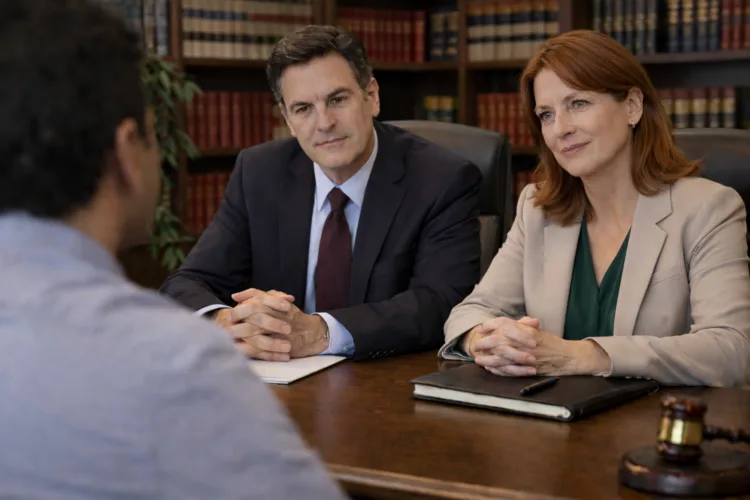
Michigan DUI defense attorneys consulting with a client about a first offense OWI case


What You Should Be Looking for in a Lawyer

If you’re researching Michigan DUI lawyers right now, you’ve probably already seen plenty of websites promising to “fight” your charge and “beat” your first offense OWI. Some of that language is just marketing. But some of it is genuinely misleading — it lets people believe that dismissal is anything less than the exception, rather than the rule, or that any good lawyer can just find a way to make a 1st offense DUI disappear. That’s not how it works, and a lawyer who implies otherwise either doesn’t know better, or doesn’t mind letting you believe something that isn’t true.

What you actually want is a lawyer who will look at your case honestly, tell you what’s realistic, and then pursue every legitimate avenue to get there. That means someone who will genuinely dig into the evidence looking for a way out, who knows how to negotiate a reduction and won’t give up, and who will prepare you the right way — because that preparation has real consequences for the outcome.

My team and I have been handling DUI and OWI cases in Wayne, Oakland, Macomb, and the surrounding counties for over 30 years. Although our driver’s license restoration practice is statewide, we don’t take criminal or DUI cases outside those courts, because knowing the courts where we practice — the judges, the prosecutors, what they do and don’t accept — is part of how we get good results. If your first offense DUI case is pending in one of those counties, we’d be glad to talk with you.

One More Thing Worth Knowing If You’re Facing a High BAC Charge

If you’ve been charged with Operating While Intoxicated with a BAC of .17 or greater — what Michigan law calls the “Super Drunk” offense — the stakes are meaningfully higher than a standard 1st offense OWI. The potential jail time is longer, the license consequences are more severe, and the path through the court system is more demanding. In those cases, getting the charge reduced to a standard OWI, or all the way down to an OWVI, isn’t just a nice result — it’s a significant difference in what you’re facing. We handle these cases regularly, and if you want a deeper look at how the Super Drunk charge works and what to expect, we’ve covered it in detail in our article on Michigan High BAC cases.

Talk to Us — No Pressure, No Cost

All of our consultations are free, confidential, and done over the phone right when you call. You’ll speak with a friendly, real person, get real answers, and have a chance to ask whatever questions are on your mind. We can be reached Monday through Friday from 8:30 a.m. to 5:00 p.m. at 586-465-1980, or anytime through our contact page.

If you’d like more background on how Michigan DUI cases work from start to finish, our DUI overview page is a good place to start. And if you have a specific question about your situation, just call. That’s what we’re here for.

About the Author
Jeff has been a practicing Michigan criminal lawyer, DUI attorney and driver’s license restoration lawyer for more than 30 years. He is passionate about winning and doing whatever it takes to accomplish that. He understands that a pending criminal or DUI charge is stressful and that being unable to legally drive is a huge problem.
Michigan DUI attorneys reviewing evidence in first offense OWI case
Getting a First DUI Reduced or Dismissed in Michigan: What’s Realistic

If you’ve been arrested for a first DUI in Michigan, the first thing you want to know is whether you can make the whole thing go away. That’s completely understandable. Nobody wants a drunk driving conviction on their record, and the idea of just getting a first DUI dismissed in Michigan — like it never happened — is incredibly appealing. Some lawyers are happy to let you keep hoping for that.

My team and I would rather give you an honest picture of what’s actually realistic, because that’s what genuinely helps you.

The short version: dismissals happen, but getting that kind of outcome depends on — more than anything else — the evidence. If it’s solid and the police didn’t commit some kind of fatal error in handling the case, then no amount of legal wrangling is going to get a 1st offense DUI knocked out of court. And, truth be told, those cases in which there is some catastrophic flaw are the exception, and not the rule.

It All Starts With a Hard Look at the Evidence

No matter what, it is imperative that a lawyer undertake a careful, deliberate examination of all the evidence with the mindset that there IS something that can be used to get the case dismissed. That kind of determined approach produces far better outcomes than merely looking over the evidence to see if anything “jumps out.” Whatever else, a first offense OWI case won’t dismiss itself — and that same thorough review that might turn up grounds for dismissal will almost always turn up something useful for negotiating a reduction, even when a full dismissal isn’t in the cards. A lawyer has to make both of those things happen.

By contrast, reductions to a less serious charge happen all the time, and when they do, they matter. And in a first offense case, a good outcome sometimes looks less dramatic than a full dismissal — but is still genuinely good news for your record, your license, and your future. Let’s walk through how this actually works.

Michigan DUI attorneys reviewing evidence in first offense OWI case

Can a First Offense DUI in Michigan Actually Be Dismissed?

Yes — and my team and I get cases dismissed. But it’s important to understand why a case gets dismissed, because that determines whether dismissal is even on the table in your situation.

A Michigan OWI charge gets dismissed when there’s a genuine, legally significant flaw in the evidence, or how it was handled. That means something went wrong with the traffic stop, the arrest, the breath test, the blood draw, or some other piece of the prosecution’s case — and it was wrong enough that a judge has no choice but to throw the case out. That’s the key phrase: no choice.

Judges don’t dismiss drunk driving charges as a favor or as a discretionary call. There’s too much political risk in being the judge who let a drunk driver walk, and then that person later hurts someone. A dismissal only happens when the evidence legally can’t stand up in court.

What that means for you is that your lawyer needs to go through every piece of evidence — the patrol car video, the body cam, the field sobriety tests, the breath or blood test results, the police report — looking not just for something obvious, but for anything that doesn’t hold up. This isn’t a quick scan. It’s a thorough, disciplined process.

When something real is found, we file a motion, challenge it at a hearing, and make the case to the judge. When it works, the charge goes away entirely. That’s the best result there is.

The honest reality, though, is that most first offense DUI cases in Michigan — or anywhere, for that matter — don’t get dismissed. The evidence in most cases is solid enough to survive a legal challenge. That doesn’t mean you’re out of options — not even close — but it does mean that a lawyer who promises to “beat” your 1st offense OWI without first carefully reviewing the evidence is basically just telling you what you want to hear.

What About Getting the Charge Reduced?

This is where things get more nuanced — and where first-time offenders often have real options worth understanding.

In Michigan, the standard first offense DUI charge is OWI (Operating While Intoxicated). There is also a more serious offense called Operating While Intoxicated with a BAC of .17 or Greater — often called either “High BAC” or “Super Drunk.” What’s important to understand is that there is also a lesser charge called OWVI (Operating While Visibly Impaired).

The differences matter more than most people realize. An OWI or High BAC conviction triggers a driver’s license suspension. An OWVI conviction does not — your license stays intact, though you will still face restrictions. An OWI carries higher fines and more points on your driving record. A High BAC conviction carries an even longer potential jail sentence. An OWVI is simply a less serious offense in every meaningful way.

Getting a High BAC or a first offense OWI reduced to an OWVI — or even getting a High BAC dropped to a standard OWI — involves negotiating a plea bargain with the prosecutor. It’s not automatic, and it takes work. But in first offense cases where a person has no prior record and the evidence, while solid, leaves some room to work with, it’s a realistic and worthwhile goal. My team and I pursue reductions like this in every case we take, and we’re extraordinarily successful at it.

What makes a reduction possible? Honestly, a lot of factors go into it: the strength of the evidence, the specific court and prosecutor involved, how the person has been presented throughout the case, and — this is something most people don’t fully appreciate — how the person came across at their alcohol screening and pre-sentence interview with the probation department. More on that in a moment.

The Part Most Lawyers Don’t Talk About: The Alcohol Screening

In every Michigan DUI case that makes it through the court system, the defendant must complete a written alcohol screening and sit down with a probation officer for an interview before sentencing. The probation officer then writes a sentencing recommendation, and judges closely follow those recommendations the overwhelming majority of the time.

Here’s the thing most people don’t know: that pre-sentence investigation and recommendation has more direct impact on what actually happens to you than almost anything else in the case. And for first-time offenders especially, how you test out in that alcohol screening, and whether you come across as someone who made an isolated mistake or someone who appears to either have — or even be at risk to develop — a problem with alcohol, shapes everything from the length of your probation to what conditions get attached to it.

The questions in that screening are designed in ways that aren’t always obvious. What seems like a perfectly reasonable, honest answer can actually paint a picture you didn’t intend to create. I’ve spent over three decades working with alcohol and substance issues, and I completed a formal post-graduate program in addiction studies specifically because this piece of DUI cases matters so much. My team and I spend real time preparing clients for the screening — not to be dishonest, but to make sure they give an accurate picture of who they actually are, rather than accidentally looking like something they’re not.

The courts have a built-in tendency to assume an alcohol problem exists in anyone who gets arrested for drunk driving. That assumption isn’t always warranted — most first-time offenders don’t have a troubled relationship with alcohol. But if you’re not properly prepared and presented, you can inadvertently confirm that bias and end up with a far heavier sentence than the situation called for.

What Does a “Good Outcome” Actually Look Like for a First Offense?

I often tell clients that success in a DUI case is best measured by what doesn’t happen to you. A 1st offense DUI handled well might mean:

  • The OWI or High BAC charge gets dismissed outright because we found a real problem with the evidence.
  • The OWI or High BAC gets reduced to an OWVI through a negotiated plea, saving your license from suspension.
  • No matter what, a good pre-sentence report is much more likely to result in a short, simple probation with minimal conditions — instead of a year and a half of testing, counseling, and classes that disrupts your life.

None of those outcomes involve a lawyer performing some magic trick. All of them involve careful, methodical work: reviewing the evidence thoroughly, preparing you properly for everything, and knowing what’s realistic in the specific court where your case is pending.

Courts in Wayne, Oakland, and Macomb Counties all handle first offense DUI cases a bit differently. Knowing what each court typically does — and what each prosecutor is typically willing to entertain — is part of what experience in these specific courts gives you. This is precisely why our firm limits its criminal and DUI practice to the Greater-Detroit area.

Ultimately, when you hire a lawyer, you’re either buying their experience to make things better in the court where your case is pending, or you’re paying their tuition to get that experience.

Michigan DUI defense attorneys consulting with a client about a first offense OWI case


What You Should Be Looking for in a Lawyer

If you’re researching Michigan DUI lawyers right now, you’ve probably already seen plenty of websites promising to “fight” your charge and “beat” your first offense OWI. Some of that language is just marketing. But some of it is genuinely misleading — it lets people believe that dismissal is anything less than the exception, rather than the rule, or that any good lawyer can just find a way to make a 1st offense DUI disappear. That’s not how it works, and a lawyer who implies otherwise either doesn’t know better, or doesn’t mind letting you believe something that isn’t true.

What you actually want is a lawyer who will look at your case honestly, tell you what’s realistic, and then pursue every legitimate avenue to get there. That means someone who will genuinely dig into the evidence looking for a way out, who knows how to negotiate a reduction and won’t give up, and who will prepare you the right way — because that preparation has real consequences for the outcome.

My team and I have been handling DUI and OWI cases in Wayne, Oakland, Macomb, and the surrounding counties for over 30 years. Although our driver’s license restoration practice is statewide, we don’t take criminal or DUI cases outside those courts, because knowing the courts where we practice — the judges, the prosecutors, what they do and don’t accept — is part of how we get good results. If your first offense DUI case is pending in one of those counties, we’d be glad to talk with you.

One More Thing Worth Knowing If You’re Facing a High BAC Charge

If you’ve been charged with Operating While Intoxicated with a BAC of .17 or greater — what Michigan law calls the “Super Drunk” offense — the stakes are meaningfully higher than a standard 1st offense OWI. The potential jail time is longer, the license consequences are more severe, and the path through the court system is more demanding. In those cases, getting the charge reduced to a standard OWI, or all the way down to an OWVI, isn’t just a nice result — it’s a significant difference in what you’re facing. We handle these cases regularly, and if you want a deeper look at how the Super Drunk charge works and what to expect, we’ve covered it in detail in our article on Michigan High BAC cases.

Talk to Us — No Pressure, No Cost

All of our consultations are free, confidential, and done over the phone right when you call. You’ll speak with a friendly, real person, get real answers, and have a chance to ask whatever questions are on your mind. We can be reached Monday through Friday from 8:30 a.m. to 5:00 p.m. at 586-465-1980, or anytime through our contact page.

If you’d like more background on how Michigan DUI cases work from start to finish, our DUI overview page is a good place to start. And if you have a specific question about your situation, just call. That’s what we’re here for.

About the Author
Jeff has been a practicing Michigan criminal lawyer, DUI attorney and driver’s license restoration lawyer for more than 30 years. He is passionate about winning and doing whatever it takes to accomplish that. He understands that a pending criminal or DUI charge is stressful and that being unable to legally drive is a huge problem.
Attorney Advertising
Website developed in accordance with Web Content Accessibility Guidelines 2.2.
If you encounter any issues while using this site, please contact us: 586.465.1980