
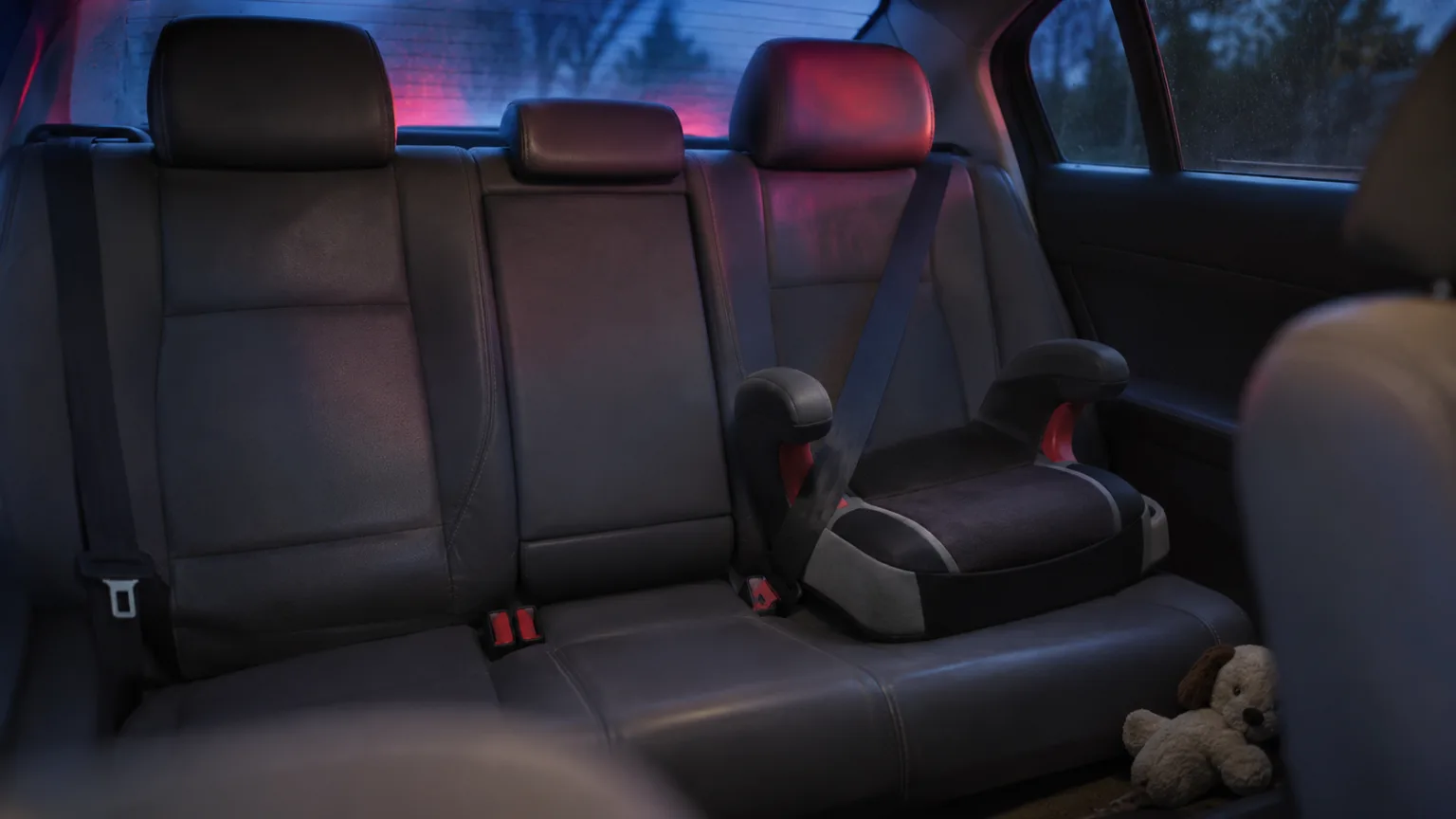

DUI With a Child in the Car in Michigan: Penalties
If you were arrested for a DUI with a child in the car, the drunk driving charge is probably not what kept you awake last night. The other one is. Most people who find this page are far less frightened of a license suspension than of what a child endangerment charge involving their own son or daughter might mean for their family.
So here is the straight answer first, before any statutes.
Michigan treats having a child in the car as its own separate crime. It is not a harsher version of the drunk driving charge — it is a second charge, filed alongside the first. On paper it carries more jail exposure than a standard first-offense OWI. And in our experience, when a child under 16 is in the vehicle, that count gets charged.
That sounds scary. The good news, however, is that the real world outcome of a DUI with a child in the car is usually far less severe than the written law makes it sound, and the rest of this page explains why.
The age that matters is 16, not 18
This surprises a lot of people including plenty who have already spoken to some lawyer about their case. The child-in-the-car count applies when the passenger is under 16 years old. A 16-year-old or a 17-year-old in the car does not trigger it, even though they are still minors in every other sense.
If your passenger had just turned 16, that single fact changes which charges you can face. It is one of the first things our office checks.
It is a second charge, not a worse DUI
Under MCL 257.625(7)(a), child endangerment stands as a crime in its own right rather than as an add-on to the operating-while-intoxicated charge. One traffic stop, two separate charges, each with its own penalties.
For a first offense DUI, with no prior drunk driving convictions, the child count is a misdemeanor. It carries a mandatory fine of $200 to $1,000, plus jail of up to one year, community service of 30 to 90 days, or both.
Set that against a standard first-offense OWI, which tops out at 93 days. The child count by itself carries close to four times the jail exposure of the drunk driving charge it accompanies. That is why it deserves real attention rather than being treated as a footnote to the DUI.
A word on what those numbers mean in practice: maximums are not sentences. They describe the ceiling the law permits, not what happens in a typical case in front of a typical judge. Very few first-offense cases result in any kind of sentence like that.
One prior DUI can turn this into a felony
This is the part that changes everything, and it is the single most important thing on this page.
The child endangerment count becomes a felony if it comes within seven years of a prior DUI conviction, or at any point after two or more priors. Here is the detail that is often overlooked; the prior does not have to involve a child. Any prior drunk driving conviction counts.
This means that someone who had a single OWI from six years ago — a case long since closed, fines paid, probation finished, nothing since — can be facing a felony today because a child was in the back seat. Combined with the child count, it changes the category of the charge from a misdemeanor to a felony. Moreover, and most people reading this already know it in their gut, it just sounds bad.
A felony child count carries a fine of $500 to $5,000, and either one to five years in prison, or probation that includes 30 days to one year in jail plus 60 to 180 days of community service, with at least 48 hours served consecutively.
The statute also limits a judge’s ability to suspend that incarceration unless the person completes a specialty court program. Where one is available and appropriate, a sobriety court can change the shape of a case like this considerably. Whether that option exists depends heavily on the court your case is in.
If you have a prior drunk driving conviction of any age and a child was in your car, this is the point at which the case needs careful handling. It needs a lawyer who has experience in this area and knows exactly what to do, and, just as important, what not to do.
Does Protective Services get involved?
This is the question we are asked before any other, often before the caller mentions the DUI at all. The answer is better than most parents expect.
In our experience, Children’s Protective Services (CPS) seldom becomes involved in these cases. It can happen, and we will not tell you it never does. But it is not the routine outcome, and it is not what we see in most of the child-count cases our office handles.
The fear here usually runs well ahead of the reality. People arrive imagining a custody fight on top of a criminal case. What they are generally facing is a criminal case — a serious one that needs careful handling, but still a criminal case.
The two charges are resolved together, not separately
The second question we hear is whether the child count runs on its own track, with its own hearings and its own outcome, separate from the DUI.
It does not. In the cases our office has handled, the child count and the drunk driving charge are fought or negotiated and resolved as one case. There is no scenario where the DUI is worked out and the child count is left hanging over you afterward. Whatever resolution is reached addresses both.
In some cases the child count is dismissed as part of that resolution. Nobody can tell you in advance whether yours will be — not before reviewing the police report, the chemical test result, the legality of the stop itself, and the prosecutor and judge assigned to your case. What we can tell you is that this count is negotiable, and that it gets addressed as part of the whole case rather than as a separate threat.
Your vehicle and your license
Vehicle immobilization is a penalty option for the court in a first offense. It is required in a felony. In plain terms, the judge may (but usually won’t) order your vehicle immobilized in a first offense DUI accompanied by a child endangerment charge but must do so when there is a prior and the charge is elevated to a felony. Fortunately, those cases are not very common.
The drunk driving conviction itself carries its own license consequences, which run separately from anything the child count does and depend on your prior record.
Expect probation
Probation is all but guaranteed in every Michigan drunk driving case, and that certainly holds when a child endangerment count is attached. Any notion to the contrary is just plain wrong. What a lawyer can work on is what probation looks like — its length, its conditions, what testing and counseling it requires, and how much of your ordinary life it leaves intact.
That is where the real work in these cases happens, and it matters more to most people day to day than the headline penalties do.
If you want a sense of what the whole thing costs, our office publishes real figures rather than estimates: what a Michigan DUI costs. For how a first offense works start to finish, see our page on a first-offense Michigan DUI.
What to do now
Do not talk about the case with anyone except your lawyer — not with the officer who arrested you, not on the phone, and not online. Try to note everything you remember about the stop while it is fresh: where you had been, what you were asked, what was said, what tests you were given, and where your child was in the vehicle. Those details fade quickly and they matter.
Then talk to a lawyer who has handled a DUI with a child in the car before, not just drunk driving cases in general.
Our office handles DUI and child endangerment cases across Wayne, Oakland, Macomb, and the surrounding counties. All our consultations are done over the phone and are free and confidential. We can be reached directly, Monday through Friday, 8:30 AM to 5:00 PM, at 586-465-1980. An answering service takes calls after hours, and there is a contact form and a chat box on this site if you would rather start in writing.
If a child was in your car when you were arrested, call us at 586-465-1980 and let us look at what you are facing. You can also read more about how our office handles Michigan DUI and OWI cases.