Michigan DUI Charges — What They Are, What They Mean, and What Can Actually Change

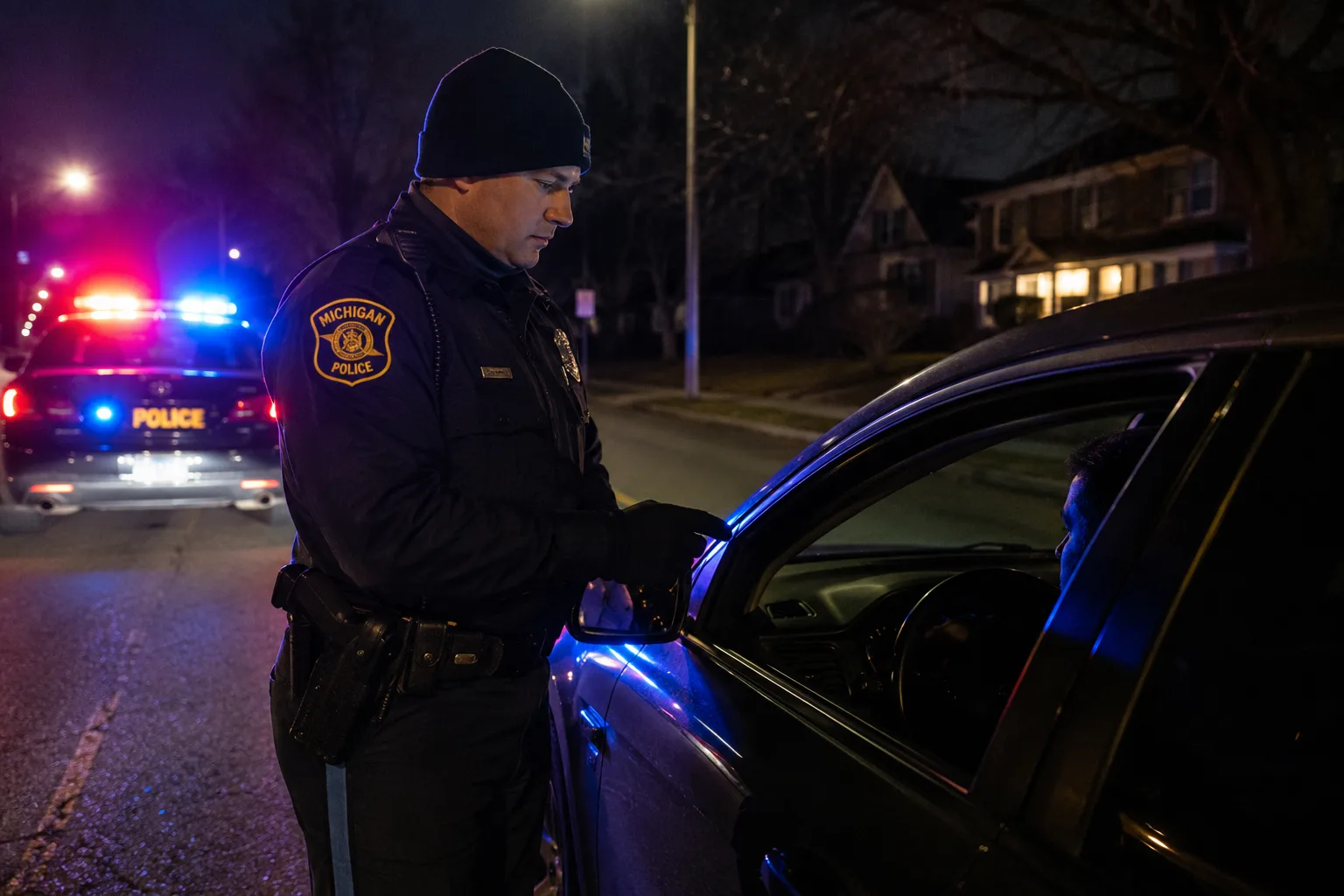
Michigan police officer conducting a DUI stop at night
Share on Facebook
Share on X
Share on LinkedIn

Most people who contact our office after a Michigan DUI arrest have already spent time online trying to figure out what charges and penalties they’re facing. They’ve seen the statutory penalty lists — jail time ranges, fines, license consequences — and they’re understandably alarmed. What those lists don’t explain is the difference between what the law allows as a maximum and what happens in practice. That distinction matters more than almost anything else in a DUI case, and it’s at the core of what we do as Michigan DUI lawyers.

Michigan’s drunk driving law — formally called Operating While Intoxicated, or OWI — covers a range of charges that vary in severity depending on factors like your BAC reading, whether you have any prior DUI convictions, and whether anyone was hurt. Under MCL 257.625, these Michigan DUI charges carry penalties ranging from misdemeanors with no mandatory jail time all the way to serious felonies. What we’ll do in this article is walk through the most common charges our firm handles in the district and circuit courts of Wayne, Oakland, Macomb, and the surrounding counties — and more importantly, explain what those charges mean in practice.

The Difference Between Mandatory Penalties and Discretionary Ones

Before getting into the specific charges, it helps to understand one fundamental distinction that shapes the outcome of every DUI case: some penalties are mandatory and some are left to the judge’s discretion.

Driver’s license consequences and points are mandatory. When someone is convicted of an OWI offense, the Michigan Secretary of State automatically imposes the license sanctions specified by law — the judge has no say in the matter. Points go on the driving record automatically. There’s no negotiating with the court to reduce the license hit or waive the points. That simply isn’t an option.

Jail time, fines, and the terms of probation are largely discretionary. A judge can impose anywhere from no jail at all to the statutory maximum, and two judges in neighboring courthouses can — and regularly do — handle near-identical cases differently. Probation terms vary enormously from court to court. One judge might impose a straightforward 12-month probation with an alcohol education class. Another might require two years of intensive supervision, frequent testing, and mandatory counseling. Both sentences can be entirely legal for the same charge.

This is why the court where a case is pending matters, why the specific judge matters, and why having a lawyer who knows those courts and those judges matters. The mandatory penalties are fixed — but there’s often significant room to work within the discretionary ones. And the best news is that things like jail time and probation terms are discretionary, not fixed.

First Offense Michigan DUI Charges and Penalties

In the vast majority of first DUI arrests, the initial charge is OWI — Operating While Intoxicated — or, if the BAC reading was 0.17% or higher, a High BAC charge (sometimes called Super Drunk). The lesser charge of Operating While Visibly Impaired (OWVI, or simply “Impaired”) is almost never made as an original charge. It matters because it’s where most first-offenders want to end up after plea negotiations — more on that below.

The statutory maximum Michigan DUI charges and penalties for a first offense OWI are:

  • Up to 93 days in jail
  • Fines up to $500, plus costs
  • Up to 360 hours of community service
  • 6 points on the driving record
  • License suspended for 6 months — no driving for the first 30 days, restricted driving permitted for the remaining 5 months

A High BAC charge (0.17% or above) carries enhanced penalties:

  • Up to 180 days in jail
  • Fines up to $700, plus costs
  • Up to 360 hours of community service
  • 6 points on the driving record
  • License suspended for 1 year — no driving for the first 45 days; restricted driving permitted only with a mandatory ignition interlock device (BAIID) installed
  • Mandatory alcohol treatment or self-help program

For more detail on the High BAC charge, see our dedicated article: Michigan Super Drunk DUI — What a High BAC Charge Actually Means.

What Happens in a First Offense Case — The Real Picture

In the real world, if the evidence in a first offense OWI case is solid and the charge can’t be dismissed or reduced on legal grounds, our goal is to negotiate the charge down to OWVI — Operating While Visibly Impaired, or simply Impaired Driving. This matters enormously, because a conviction for OWVI carries only 4 points (not 6) and — critically — does not trigger a license suspension. Instead, driving is restricted for 90 days. No suspension. That’s a significant difference for anyone who drives to work.

Michigan DUI defense lawyer reviewing charges and penalties with client

Consider an example. Suppose someone gets pulled over for drifting between lanes, blows a 0.14 on the Intoxilyzer 9000, and is charged with OWI. Assume the stop was legal and the evidence is otherwise solid. With a negotiated plea to OWVI, that person avoids the 6-month license suspension entirely. In one court, they might serve 6 months of straightforward probation with an alcohol education class and light testing. In another court, the same facts might result in a longer and more demanding probation with more frequent testing. Both are within the law. The outcome depends heavily on which court the case is in and how it’s handled.

For a comprehensive look at what to expect after a first DUI, including realistic outcomes and how probation typically unfolds, see our full article: First Offense DUI in Michigan — What to Actually Expect.

Second Offense OWI — When the Stakes Get Serious

The statutory penalties include:A second OWI conviction within seven years carries Michigan DUI charges and penalties that are a significant step up in severity:

  • 5 days to 1 year in jail, or probation instead of jail, with 30 to 90 days of community service
  • Fines of $200 to $1,000, plus costs
  • Mandatory license revocation — no driving at all, no restricted license available
  • 6 points on the driving record
  • License plate confiscation
  • Vehicle immobilization from 90 to 180 days, unless the vehicle is forfeited
  • Possible vehicle forfeiture

The license revocation is the consequence that hits hardest and lasts longest. Unlike a suspension — which has a defined end date — a revocation means the license is taken away entirely. Getting it back requires filing and winning a formal appeal with the Michigan Secretary of State. That process cannot even begin until at least one year after the revocation date, and realistically, winning it back will take closer to 3 years. The other main focus of our practice is handling those restoration appeals, and we guarantee to win every one we accept.

A second offense also means the court will take a harder look at alcohol use overall. Probation terms are typically more demanding, and courts will require formal substance abuse evaluation and treatment rather than just an education class.

Participation in a sobriety court program is often an option, and it can provide a path to a restricted license much earlier — as soon as 45 days — but it comes with very specific requirements, close supervision, and requires being approved for admission.

For a full breakdown of second offense consequences and license impacts, see: Second Offense DUI in Michigan — License Consequences.

Third Offense OWI — A Felony with Serious Long-Term Consequences

A third OWI conviction at any point in a person’s lifetime is a felony in Michigan. Unlike the second offense, there’s no limiting time window — a third DUI is a felony regardless of when the prior convictions occurred. The statutory penalties reflect that:


  • 1 to 5 years in state prison, OR 30 days to 1 year in county jail followed by probation — unless admitted to a specialty court program such as Sobriety Court
  • Fines of $500 to $5,000, plus costs
  • 60 to 180 days of community service
  • 6 points on the driving record
  • License plate confiscation
  • Vehicle immobilization for 1 to 3 years, unless the vehicle is forfeited
  • Possible vehicle forfeiture
  • Registration denial

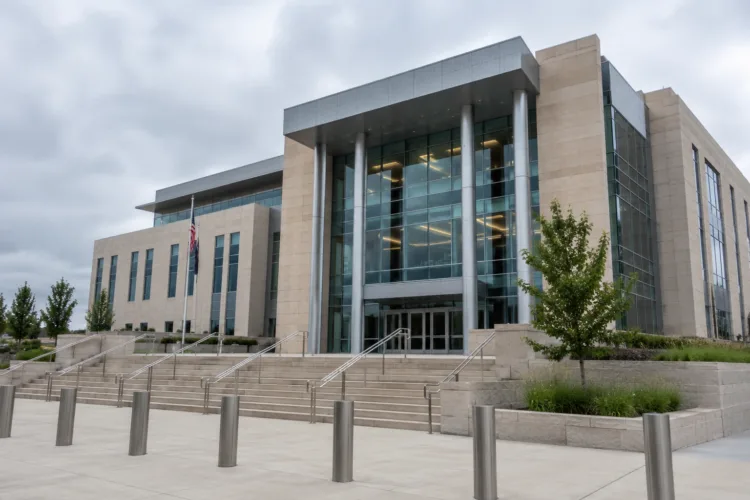
Michigan courthouse where felony DUI charges and penalties are decided

The license consequences for a third offense deserve their own explanation, because they depend entirely on a person’s conviction history — and what that history looks like makes an enormous difference.

3rd conviction within 10 years: This is the most serious scenario. The result is a lifetime license revocation, with no appeal possible for 5 years. Even after that 5-year mark, the path back is long. A person must be off probation and have accumulated a meaningful period of what Michigan law calls “voluntary sobriety” — time living free of alcohol without any external enforcement mechanism. Time spent in jail, on probation, in a sober house, or in any setting where drinking carries a consequence doesn’t count. It’s considered a “controlled environment,” and the sobriety clock doesn’t run during it. For most people in this situation, the realistic timeline to winning a license restoration appeal is 7 years or more from the date of conviction.

Results in a 2nd conviction within 7 years (but not a 3rd within 10): The result is still a lifetime revocation, but the no-appeal period is 1 year rather than 5. That sounds more manageable — but the same voluntary sobriety requirements apply. Once probation ends and the controlled-environment period is behind them, a person still needs to demonstrate sufficient sober time on their own terms. In practice, most people in this situation have no realistic shot at winning a restoration appeal for the better part of 3 years after conviction.

Prior convictions fall outside the time windows: This situation is more common than people might expect. When a third offense conviction is neither a person’s 3rd within 10 years nor their 2nd within 7, the license consequences are treated as a first offense — provided they had a valid license at the time of the new conviction. If they were already revoked and hadn’t restored their license, the new conviction triggers what’s called a mandatory additional revocation: either 1 or 5 years, depending on the length of the prior revocation period.

Because a third offense is a felony, it starts in district court — the local court where the arrest occurred — but if it isn’t resolved there by either a dismissal or a negotiated plea to a 2nd offense misdemeanor, it gets transferred up to the circuit court for the county. Getting a third offense reduced to a misdemeanor in district court is one of the most valuable outcomes we can achieve, because it keeps the case out of circuit court and away from the harshest penalties. It’s not always possible, but our team pursues that outcome in every third offense case where the facts allow it.

For a complete look at what a felony third offense involves and what the defense looks like, see: Third Offense DUI in Michigan — What Really Happens.

Michigan DUI Charges and Penalties — What Good Defense Really Changes

The Michigan DUI charges and penalties listed above represent what the law permits — not what routinely happens. The mandatory consequences (license sanctions, points) are what they are. But within the range of discretionary penalties, there is often real room to make a meaningful difference: whether jail time is imposed at all, how long and how demanding probation turns out to be, whether a charge can be reduced to something less damaging, and whether there are grounds to challenge the stop, the test, or the evidence.

The single most important factor in how a Michigan DUI case resolves — outside of the underlying facts — is the knowledge and skill of the lawyer handling it. Courts are different. Judges are different. Prosecutors are different. A lawyer who handles these cases in the same courts week after week understands what’s possible in that specific environment. That local knowledge, combined with a thorough review of the evidence, is what produces better outcomes.

Our blog contains detailed articles on every aspect of the Michigan DUI process — from the arrest and arraignment through probation and license restoration. Use the search box to find answers to specific questions, or read through the DUI sections to understand what you’re facing at each stage.

Talk to a Michigan DUI Lawyer — Free, Confidential Consultation

If you or someone you know is facing a DUI charge in Wayne, Oakland, Macomb, or one of the surrounding counties, we encourage you to reach out. We offer free, confidential phone consultations Monday through Friday, 8:30 AM to 5:00 PM, at 586-465-1980. An after-hours answering service is also available. You can also use the contact form or chat box on our website. When you’re ready to talk, we’re ready to help.

To learn more about our DUI practice, visit our Michigan DUI defense page.

About the Author
Jeff has been a practicing Michigan criminal lawyer, DUI attorney and driver’s license restoration lawyer for more than 30 years. He is passionate about winning and doing whatever it takes to accomplish that. He understands that a pending criminal or DUI charge is stressful and that being unable to legally drive is a huge problem.
Michigan police officer conducting a DUI stop at night
Michigan DUI Charges — What They Are, What They Mean, and What Can Actually Change

Most people who contact our office after a Michigan DUI arrest have already spent time online trying to figure out what charges and penalties they’re facing. They’ve seen the statutory penalty lists — jail time ranges, fines, license consequences — and they’re understandably alarmed. What those lists don’t explain is the difference between what the law allows as a maximum and what happens in practice. That distinction matters more than almost anything else in a DUI case, and it’s at the core of what we do as Michigan DUI lawyers.

Michigan’s drunk driving law — formally called Operating While Intoxicated, or OWI — covers a range of charges that vary in severity depending on factors like your BAC reading, whether you have any prior DUI convictions, and whether anyone was hurt. Under MCL 257.625, these Michigan DUI charges carry penalties ranging from misdemeanors with no mandatory jail time all the way to serious felonies. What we’ll do in this article is walk through the most common charges our firm handles in the district and circuit courts of Wayne, Oakland, Macomb, and the surrounding counties — and more importantly, explain what those charges mean in practice.

The Difference Between Mandatory Penalties and Discretionary Ones

Before getting into the specific charges, it helps to understand one fundamental distinction that shapes the outcome of every DUI case: some penalties are mandatory and some are left to the judge’s discretion.

Driver’s license consequences and points are mandatory. When someone is convicted of an OWI offense, the Michigan Secretary of State automatically imposes the license sanctions specified by law — the judge has no say in the matter. Points go on the driving record automatically. There’s no negotiating with the court to reduce the license hit or waive the points. That simply isn’t an option.

Jail time, fines, and the terms of probation are largely discretionary. A judge can impose anywhere from no jail at all to the statutory maximum, and two judges in neighboring courthouses can — and regularly do — handle near-identical cases differently. Probation terms vary enormously from court to court. One judge might impose a straightforward 12-month probation with an alcohol education class. Another might require two years of intensive supervision, frequent testing, and mandatory counseling. Both sentences can be entirely legal for the same charge.

This is why the court where a case is pending matters, why the specific judge matters, and why having a lawyer who knows those courts and those judges matters. The mandatory penalties are fixed — but there’s often significant room to work within the discretionary ones. And the best news is that things like jail time and probation terms are discretionary, not fixed.

First Offense Michigan DUI Charges and Penalties

In the vast majority of first DUI arrests, the initial charge is OWI — Operating While Intoxicated — or, if the BAC reading was 0.17% or higher, a High BAC charge (sometimes called Super Drunk). The lesser charge of Operating While Visibly Impaired (OWVI, or simply “Impaired”) is almost never made as an original charge. It matters because it’s where most first-offenders want to end up after plea negotiations — more on that below.

The statutory maximum Michigan DUI charges and penalties for a first offense OWI are:

  • Up to 93 days in jail
  • Fines up to $500, plus costs
  • Up to 360 hours of community service
  • 6 points on the driving record
  • License suspended for 6 months — no driving for the first 30 days, restricted driving permitted for the remaining 5 months

A High BAC charge (0.17% or above) carries enhanced penalties:

  • Up to 180 days in jail
  • Fines up to $700, plus costs
  • Up to 360 hours of community service
  • 6 points on the driving record
  • License suspended for 1 year — no driving for the first 45 days; restricted driving permitted only with a mandatory ignition interlock device (BAIID) installed
  • Mandatory alcohol treatment or self-help program

For more detail on the High BAC charge, see our dedicated article: Michigan Super Drunk DUI — What a High BAC Charge Actually Means.

What Happens in a First Offense Case — The Real Picture

In the real world, if the evidence in a first offense OWI case is solid and the charge can’t be dismissed or reduced on legal grounds, our goal is to negotiate the charge down to OWVI — Operating While Visibly Impaired, or simply Impaired Driving. This matters enormously, because a conviction for OWVI carries only 4 points (not 6) and — critically — does not trigger a license suspension. Instead, driving is restricted for 90 days. No suspension. That’s a significant difference for anyone who drives to work.

Michigan DUI defense lawyer reviewing charges and penalties with client

Consider an example. Suppose someone gets pulled over for drifting between lanes, blows a 0.14 on the Intoxilyzer 9000, and is charged with OWI. Assume the stop was legal and the evidence is otherwise solid. With a negotiated plea to OWVI, that person avoids the 6-month license suspension entirely. In one court, they might serve 6 months of straightforward probation with an alcohol education class and light testing. In another court, the same facts might result in a longer and more demanding probation with more frequent testing. Both are within the law. The outcome depends heavily on which court the case is in and how it’s handled.

For a comprehensive look at what to expect after a first DUI, including realistic outcomes and how probation typically unfolds, see our full article: First Offense DUI in Michigan — What to Actually Expect.

Second Offense OWI — When the Stakes Get Serious

The statutory penalties include:A second OWI conviction within seven years carries Michigan DUI charges and penalties that are a significant step up in severity:

  • 5 days to 1 year in jail, or probation instead of jail, with 30 to 90 days of community service
  • Fines of $200 to $1,000, plus costs
  • Mandatory license revocation — no driving at all, no restricted license available
  • 6 points on the driving record
  • License plate confiscation
  • Vehicle immobilization from 90 to 180 days, unless the vehicle is forfeited
  • Possible vehicle forfeiture

The license revocation is the consequence that hits hardest and lasts longest. Unlike a suspension — which has a defined end date — a revocation means the license is taken away entirely. Getting it back requires filing and winning a formal appeal with the Michigan Secretary of State. That process cannot even begin until at least one year after the revocation date, and realistically, winning it back will take closer to 3 years. The other main focus of our practice is handling those restoration appeals, and we guarantee to win every one we accept.

A second offense also means the court will take a harder look at alcohol use overall. Probation terms are typically more demanding, and courts will require formal substance abuse evaluation and treatment rather than just an education class.

Participation in a sobriety court program is often an option, and it can provide a path to a restricted license much earlier — as soon as 45 days — but it comes with very specific requirements, close supervision, and requires being approved for admission.

For a full breakdown of second offense consequences and license impacts, see: Second Offense DUI in Michigan — License Consequences.

Third Offense OWI — A Felony with Serious Long-Term Consequences

A third OWI conviction at any point in a person’s lifetime is a felony in Michigan. Unlike the second offense, there’s no limiting time window — a third DUI is a felony regardless of when the prior convictions occurred. The statutory penalties reflect that:


  • 1 to 5 years in state prison, OR 30 days to 1 year in county jail followed by probation — unless admitted to a specialty court program such as Sobriety Court
  • Fines of $500 to $5,000, plus costs
  • 60 to 180 days of community service
  • 6 points on the driving record
  • License plate confiscation
  • Vehicle immobilization for 1 to 3 years, unless the vehicle is forfeited
  • Possible vehicle forfeiture
  • Registration denial

Michigan courthouse where felony DUI charges and penalties are decided

The license consequences for a third offense deserve their own explanation, because they depend entirely on a person’s conviction history — and what that history looks like makes an enormous difference.

3rd conviction within 10 years: This is the most serious scenario. The result is a lifetime license revocation, with no appeal possible for 5 years. Even after that 5-year mark, the path back is long. A person must be off probation and have accumulated a meaningful period of what Michigan law calls “voluntary sobriety” — time living free of alcohol without any external enforcement mechanism. Time spent in jail, on probation, in a sober house, or in any setting where drinking carries a consequence doesn’t count. It’s considered a “controlled environment,” and the sobriety clock doesn’t run during it. For most people in this situation, the realistic timeline to winning a license restoration appeal is 7 years or more from the date of conviction.

Results in a 2nd conviction within 7 years (but not a 3rd within 10): The result is still a lifetime revocation, but the no-appeal period is 1 year rather than 5. That sounds more manageable — but the same voluntary sobriety requirements apply. Once probation ends and the controlled-environment period is behind them, a person still needs to demonstrate sufficient sober time on their own terms. In practice, most people in this situation have no realistic shot at winning a restoration appeal for the better part of 3 years after conviction.

Prior convictions fall outside the time windows: This situation is more common than people might expect. When a third offense conviction is neither a person’s 3rd within 10 years nor their 2nd within 7, the license consequences are treated as a first offense — provided they had a valid license at the time of the new conviction. If they were already revoked and hadn’t restored their license, the new conviction triggers what’s called a mandatory additional revocation: either 1 or 5 years, depending on the length of the prior revocation period.

Because a third offense is a felony, it starts in district court — the local court where the arrest occurred — but if it isn’t resolved there by either a dismissal or a negotiated plea to a 2nd offense misdemeanor, it gets transferred up to the circuit court for the county. Getting a third offense reduced to a misdemeanor in district court is one of the most valuable outcomes we can achieve, because it keeps the case out of circuit court and away from the harshest penalties. It’s not always possible, but our team pursues that outcome in every third offense case where the facts allow it.

For a complete look at what a felony third offense involves and what the defense looks like, see: Third Offense DUI in Michigan — What Really Happens.

Michigan DUI Charges and Penalties — What Good Defense Really Changes

The Michigan DUI charges and penalties listed above represent what the law permits — not what routinely happens. The mandatory consequences (license sanctions, points) are what they are. But within the range of discretionary penalties, there is often real room to make a meaningful difference: whether jail time is imposed at all, how long and how demanding probation turns out to be, whether a charge can be reduced to something less damaging, and whether there are grounds to challenge the stop, the test, or the evidence.

The single most important factor in how a Michigan DUI case resolves — outside of the underlying facts — is the knowledge and skill of the lawyer handling it. Courts are different. Judges are different. Prosecutors are different. A lawyer who handles these cases in the same courts week after week understands what’s possible in that specific environment. That local knowledge, combined with a thorough review of the evidence, is what produces better outcomes.

Our blog contains detailed articles on every aspect of the Michigan DUI process — from the arrest and arraignment through probation and license restoration. Use the search box to find answers to specific questions, or read through the DUI sections to understand what you’re facing at each stage.

Talk to a Michigan DUI Lawyer — Free, Confidential Consultation

If you or someone you know is facing a DUI charge in Wayne, Oakland, Macomb, or one of the surrounding counties, we encourage you to reach out. We offer free, confidential phone consultations Monday through Friday, 8:30 AM to 5:00 PM, at 586-465-1980. An after-hours answering service is also available. You can also use the contact form or chat box on our website. When you’re ready to talk, we’re ready to help.

To learn more about our DUI practice, visit our Michigan DUI defense page.

About the Author
Jeff has been a practicing Michigan criminal lawyer, DUI attorney and driver’s license restoration lawyer for more than 30 years. He is passionate about winning and doing whatever it takes to accomplish that. He understands that a pending criminal or DUI charge is stressful and that being unable to legally drive is a huge problem.
Website developed in accordance with Web Content Accessibility Guidelines 2.2.
If you encounter any issues while using this site, please contact us: 586.465.1980