
DUI in the 42-2 District Court (New Baltimore)
If you were charged with a DUI in New Baltimore, Chesterfield Township, Lenox Township, or New Haven, your case will be heard in the 42-2 District Court. Located on 23 Mile Road well east of I-94, the 42-2 serves a large swath of northern Macomb County and is one of the busier district courts in the county. For anyone facing a first, second, or third DUI charge there, here is what to expect.
The 42-2 District Court: Jurisdiction and Location
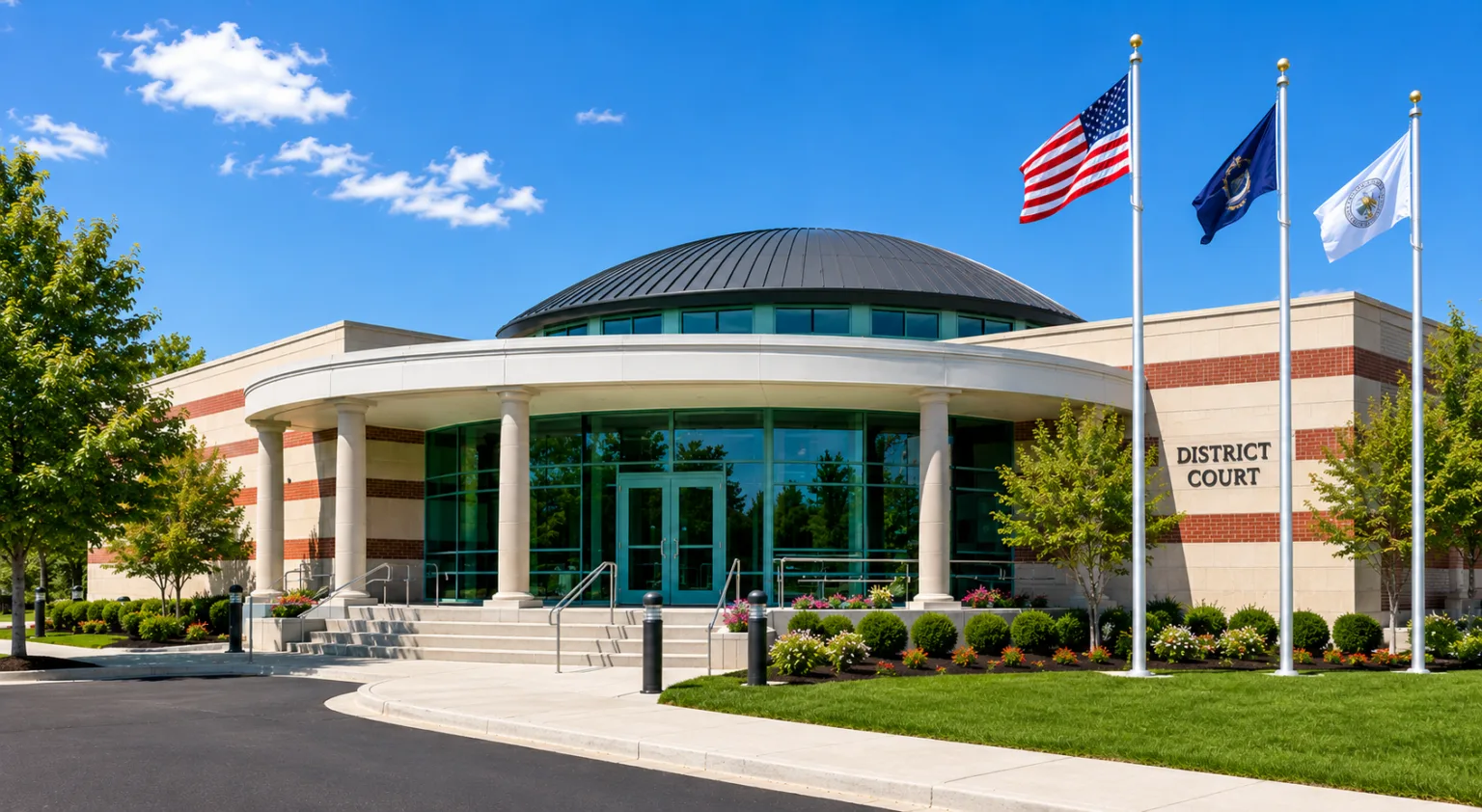
The 42-2 District Court handles cases arising from the City of New Baltimore, the City of New Haven, Chesterfield Township, and Lenox Township. It sits at 35071 23 Mile Road, New Baltimore — what Judge William Hackel III has been known to joke is the court nearest to the “last Meijer this side of Port Huron.” The building itself is modern and relatively new, with a staff that is consistently pleasant and efficient.
Misdemeanor DUI cases — first and second offense — are resolved entirely within the 42-2. Third offense DUI is a felony, and while the case begins in the 42-2, it is ultimately bound over to the Macomb County Circuit Court in Mt. Clemens for sentencing.
Judge William H. Hackel III: What to Know
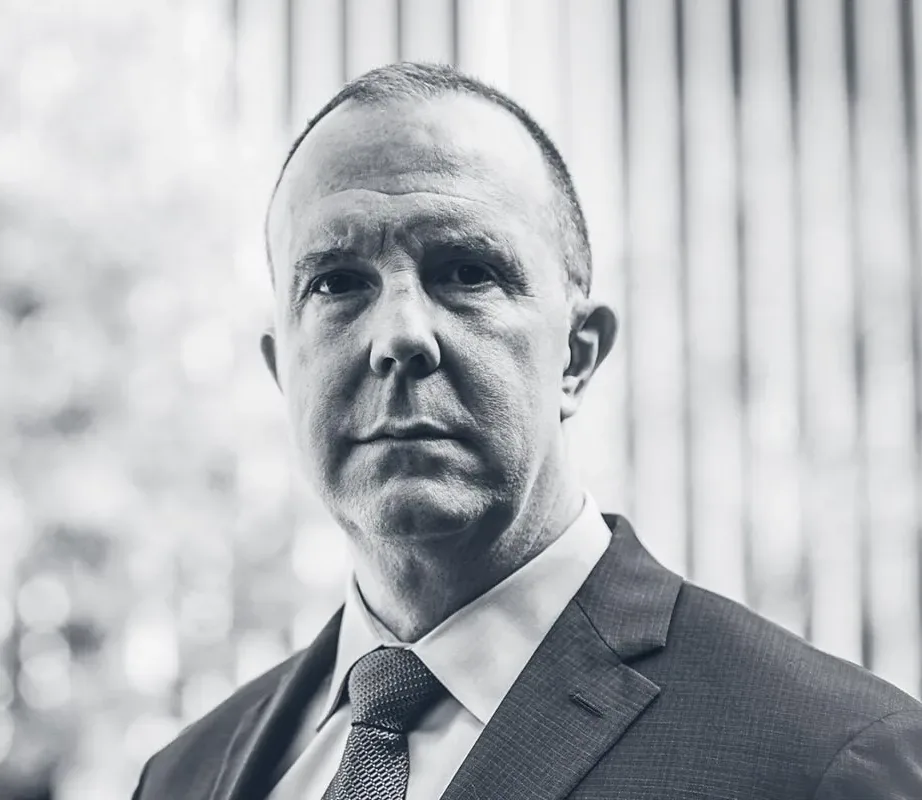
Judge William H. Hackel III is the sole judge at the 42-2. He was elected to the bench in 2016 and brings both a depth of legal experience and something rarer in a courtroom: a genuine ability to talk with people rather than simply talking at them.
His family background in Macomb County public service is well known. His father, William Hackel, served as Macomb County Sheriff for many years, and his brother, Mark Hackel, is the current Macomb County Executive and a former sheriff himself. One might wonder whether that kind of law enforcement pedigree would tilt a judge toward the prosecution side of the courtroom.
It does not. Instead, this judge stands as a shining example of decency and fairness.
Judge Hackel approaches DUI cases with the understanding that a first offense is often a lapse in judgment rather than a window into someone’s character. He is fair, thoughtful, and genuinely interested in outcomes that help people rather than simply punish them. Clients who appear before him regularly tell us they leave the courtroom wanting to follow his orders — not out of fear, but out of a real sense of not wanting to let him down.
That is a quality that is harder to come by than it sounds.
At the same time, anyone who mistakes Judge Hackel’s approachability for a lack of accountability will find out quickly that they have misjudged him. He pays close attention to the facts of a case and to the person standing before him. A genuine showing of remorse and a credible commitment to staying out of trouble can make a real difference in how a case resolves here.
By contrast, a bad attitude or otherwise failing to follow the court’s orders will not be received well.
What Happens in a DUI Case at the 42-2
Under MCL 257.625, a DUI charge in Michigan can carry significant consequences — but what actually happens in any given case depends heavily on the facts, the offense level, and how the case is handled. Here is a general overview of how things typically unfold in the 42-2.
The first goal in every DUI case is to find a way to get the charge dismissed outright, but when the evidence is strong enough that dismissal is not realistic, the focus shifts entirely to minimizing the legal consequences — avoiding jail, reducing the charge where possible, and keeping the impact on a person’s life as limited as the facts will allow.
Bond Conditions
At arraignment, a magistrate or the judge will set bond and impose conditions. In DUI cases at the 42-2, like in all Metro Detroit area courts, alcohol testing is essentially a given. Expect it.
That typically means some kind of breath testing. These conditions remain in effect throughout the duration of the case, which can run several months from arraignment to resolution.
Compliance with bond conditions matters. How a defendant handles the period between arraignment and final resolution — whether they comply with testing, and whether they obey any restrictions — is something the court notices.
First Offense DUI
In a first-offense case, like all others, the first inquiry is whether the evidence can be challenged. If the case is strong enough, then the goal becomes negotiating a reduction of the original OWI charge to the lesser offense of Operating While Visibly Impaired (OWVI). The difference is meaningful: an impaired driving conviction carries lighter license consequences than a straight OWI conviction.
In the right case, the 42-2 can produce an outcome that most first-time defendants would consider the best realistic result — fines, costs, and a short period of probation, without jail time or any other burdensome conditions.
When the charge is High BAC — Operating While Intoxicated with a BAC of .17 or above, sometimes called “Super Drunk” — the goal is the same: reduce it as far down as possible. Ideally that means a reduction all the way down to OWVI. If the evidence (typically, a very high BAC result) only allows a step down to a standard OWI, that is still a meaningful win — every reduction carries lighter consequences than the charge it replaces.
It is worth noting that High BAC is a first-offense-only enhancement; if there is a prior alcohol-related conviction within seven years, the new charge comes in as a second offense and High BAC does not apply.
Probation is a near-certainty in any DUI conviction, including first offenses. That said, the 42-2 is genuinely understanding — Judge Hackel has no interest in imposing conditions that make a person’s life unnecessarily difficult, and how probation is structured here tends to reflect that.
Second Offense DUI
A second offense DUI in Michigan carries mandatory minimums under state law and a mandatory license revocation (unless admitted into Sobriety Court). The 42-2 takes second offense cases seriously, as it should — a second DUI typically reflects an underlying pattern that the court will want to address. We must work to avoid jail time, and the approach to sentencing will be more structured than it is for a first offense.
That said, Judge Hackel takes into account the full picture of a case. A defendant who has genuinely addressed an alcohol problem, has support in place, and presents themselves well has a better chance of a workable outcome than someone who appears before the court without having taken any steps in the right direction.
Third Offense DUI
Third offense DUI is a felony under Michigan law. The case starts in the 42-2, where the arraignment and preliminary examination take place, but, unless reduced to a 2nd offense misdemeanor here, it will ultimately be transferred to the Macomb County Circuit Court for resolution and sentencing.
The Circuit Court handles felony dispositions for all Macomb County cases, including those that originate in New Baltimore.
Sobriety Court: Available, But Not Quite Here
The 42nd District does operate a Drug and Sobriety Court program — but it runs out of the 42-1 District Court in Romeo, not the 42-2 in New Baltimore. Defendants who are eligible for and ultimately admitted into the Sobriety Court program will have their case transferred there for the duration of the program.
Sobriety court is an intensive, highly structured alternative to traditional sentencing. It is not for everyone, and eligibility requirements apply — but for the right candidate, it can result in a significantly better long-term outcome. One of the biggest benefits is that the judge can override the mandatory revocation of the driver’s license. This is huge, and is really the difference between not being able to drive legally for the better part of the next three years, at least, or getting back on the road right away.
If you think sobriety court might be relevant to your situation, it is worth discussing with your attorney early in the case.
Fines, Costs, and the Pace of the Court
Fines and costs at the 42-2 tend toward the more affordable end of the Macomb County spectrum. That is not a reason to choose a court — nobody gets to choose where they are charged — but it is worth knowing.
The 42-2 also runs efficiently. There can be a delay between arrest and the first court date — sometimes several weeks — but once a case gets moving, it proceeds at a reasonable pace. The court staff is consistently courteous and organized.
It is worth understanding that DUI cases in Michigan can be prosecuted in two different ways. Most municipalities have local ordinances that mirror the state DUI statute, with violations punishable by up to 93 days. When a case is charged under a local ordinance, it is handled by a municipal attorney rather than the county prosecutor.
When the case is a state law matter — as it typically is when the Michigan State Police write the ticket, for example — the county prosecutor’s office handles it. This dual-track system exists in district courts across the state. What is specific to the 42-2 is that the city attorneys who appear in this court tend, as a group, to be easy to work with — a quality that is not uniform across every court in the Metro Detroit area.
The county prosecutors here are generally very reasonable as well. And regardless of which side is prosecuting, Judge Hackel holds both to the same standard. He follows the law carefully and expects the prosecution to do the same, which is exactly what a defendant should want from a court.
What You Need to Know
- The 42-2 District Court serves New Baltimore, New Haven, Chesterfield Township, and Lenox Township
- Alcohol testing as a bond condition is essentially universal — expect it from arraignment onward
- Judge William H. Hackel III is the sole judge — fair, approachable, and attentive to the full picture of a case
- First-offense cases can often be reduced to OWVI (Impaired Driving); jail is not typical for first offenders
- Probation is a near-certainty in any DUI conviction; the court is understanding about how it’s structured
- Sobriety court is available through the 42-1 (Romeo) division — not at the 42-2 itself — and can override mandatory license revocation
- Third-offense felony DUI cases may be reduced to a 2nd offense misdemeanor here; if not, they are bound over to Macomb County Circuit Court
- Fines and costs here tend toward the more affordable end of the county spectrum
Choosing the Right Attorney for a 42-2 DUI Case
Every court has its own culture, and experienced local counsel matters. The 42-2 is a court where preparation, professionalism, and a genuine understanding of what Judge Hackel is looking for can make a measurable difference in how a case resolves.
We have handled DUI cases in the 42-2 District Court for many years and know this court well — the judge, the staff, the prosecutors, and the practical realities of how cases move through the system. Our approach is to use our knowledge and experience to produce the very best result possible.
If you are facing a DUI charge in New Baltimore, Chesterfield Township, Lenox Township, or New Haven, you can read more about how we handle these cases on our DUI defense practice page. You may also find these articles useful:
- First Offense DUI in Michigan — What to Expect
- Second Offense DUI in Michigan — What Really Changes
- DUI in the 41B District Court (Clinton Township)
- DUI in the 41A District Court (Shelby Township)
- DUI in the 52-3 District Court (Rochester Hills)
Talk to a DUI Attorney About Your 42-2 Case
We offer free, confidential phone consultations Monday through Friday, 8:30 AM to 5:00 PM. Reach us at 586-465-1980. After-hours calls are answered by our answering service. You can also reach us through the contact form or chat box on our website.
If you would like to learn more about our firm and how we handle DUI cases, visit our DUI defense practice page.