


Second Offense DUI in Michigan: What Really Happens and Why It Matters More Than You Think
A Second DUI Feels Different — Because It Is
Most people facing second DUI Michigan consequences come to our office expecting something like a repeat of their first case — a little worse, maybe, but roughly the same process with a similar outcome. Some are genuinely shaken. Others are frustrated. And a significant number think that, with the right attorney, things will play out more or less the same way they did the first time.
That belief is understandable. It is also wrong. The second DUI Michigan consequences are completely different from a first offense — and the gap between what people expect and what the law actually delivers can be enormous.
Understanding what you’re facing, and why it matters so much to handle this case the right way, is the first step toward protecting yourself.
What Michigan Law Has Already Decided About You
Here is something most people don’t know until they’re sitting across from an attorney: under Michigan law, a second DUI conviction automatically designates you as a habitual alcohol offender. You don’t have to be charged with that label. You don’t have to be found to have a pattern of abuse. The conviction itself carries the designation, by law.
What that means, practically, is that Michigan law presumes you have an alcohol problem. Not suspects but presumes. As a result, mandatory alcohol counseling and treatment are baked into the sentencing structure for second offenders in a way they simply are not for first offenses.
Attorney Jeffrey Randa has completed post-graduate addiction studies coursework, and our firm takes this issue seriously rather than dismissing it. But here is the honest reality: what you believe about yourself and what the law has already decided about you are two separate things. A second DUI conviction means the legal system has made up its mind.
The question at that point isn’t whether the label is fair — it’s how to deal with the second DUI Michigan consequences it triggers as effectively as possible.
Revocation — Not Suspension. This Distinction Changes Everything.
This is where we see the most damaging misconceptions, and where it matters most to get things straight early.
After a first DUI conviction, most people lose their license for a period of time — typically through a suspension. A suspension has a defined end date. You wait out the suspension, and your license comes back, sometimes with restrictions for a while. It’s a painful interruption, but there’s a light at the end of the tunnel with a date attached to it.
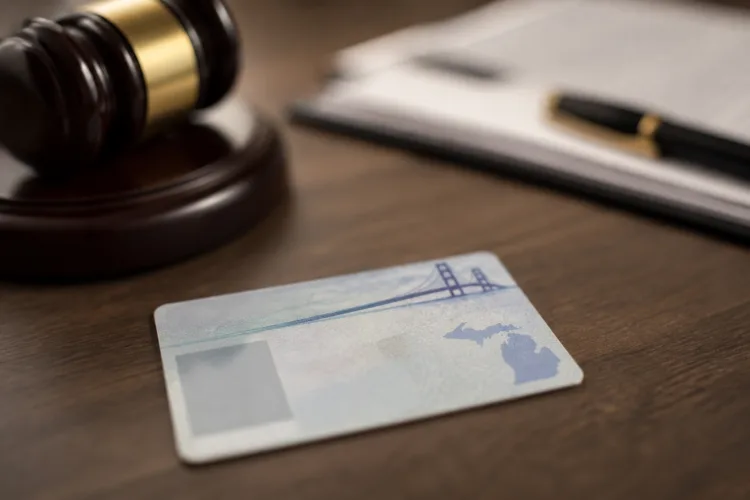
Among the second DUI Michigan consequences within seven years, a mandatory license revocation tops the list. Not a suspension. A revocation.
The difference is not semantic. A revocation means your license is gone — not paused, not restricted, gone. There is no automatic reinstatement date.
To drive legally again, you must win a formal license restoration appeal through the Michigan Secretary of State’s Office of Hearings and Administrative Oversight. That process requires proving, by clear and convincing evidence, that you are genuinely sober, that your sobriety is stable, and that you are unlikely to drink again — and there are specific legal requirements that must be met before an appeal can even be filed. It is a full administrative hearing with its own rules of evidence, its own standards, and its own denial rate.
Most people facing a second DUI assume they’ll be back behind the wheel within a year. The realistic timeline, for someone who goes through the standard process, is closer to three years or more from the date of conviction before a restoration appeal can actually be won. That includes the mandatory waiting period after revocation, the time needed to build a genuine sobriety record, and the time it takes to navigate the appeal process itself.
Understanding this from day one — before the case resolves — is essential, because how the case is handled on the criminal side has a direct impact on when and whether the license restoration clock starts running.
Criminal Penalties for a Second DUI in Michigan
Beyond the license consequences, a second DUI conviction carries serious potential criminal penalties under MCL 257.625. These include:
- Up to one year in jail, with a mandatory minimum of five days — or, as an alternative to jail, a sentence of probation with 30 to 90 days of community service
- Fines ranging from $200 to $1,000, plus substantial court costs and fees that routinely push the total financial impact far higher
- Probation that can be demanding and intrusive
- Mandatory completion of an alcohol treatment or rehabilitation program
- Community service
- Vehicle immobilization or forfeiture in some circumstances
Judges have real discretion within these ranges, and that discretion is one of the most important reasons to have strong legal representation. The difference between a sentence that derails someone’s life and one that is genuinely manageable often comes down to how well the case was prepared and argued at sentencing.
The goal in any DUI case is to find a way to get it thrown out of court. If the evidence is strong enough to prevent an outright dismissal — and that’s the reality for most cases — then our job is to do everything we can to avoid as many of the potential legal penalties and negative consequences as possible. Ultimately, success in a DUI case is best measured by what does not happen to you.
While the risk of jail is certainly an issue in every second offense case, our first priority is to avoid it — and we are extraordinarily good at that. For a detailed look at whether you’ll go to jail for a second DUI and what actually drives that outcome, see our article Will I Go to Jail for a Second DUI in Michigan?
Sobriety Court: The Exception That Can Change the Outcome
For many people dealing with second DUI Michigan consequences, sobriety court is the single most important option on the table — and one of the least understood.
Sobriety court is a specialized court program designed for repeat alcohol and drug offenders. Rather than simply imposing a sentence and sending someone on their way, sobriety court places participants in a structured, intensive supervision program that typically includes regular court appearances, substance abuse treatment, frequent drug and alcohol testing, and close monitoring by the court and probation staff. It is demanding. It requires real commitment.
But for second-offense DUI cases, sobriety court carries a benefit that cannot be overstated: successful participation gives the judge authority to override the mandatory license revocation that would otherwise apply. Instead of waiting years to pursue a restoration appeal, a participant in a sobriety court program can potentially regain driving privileges in a matter of weeks. For someone facing a revocation, that is an enormous difference.
This is not some loophole in the law. It is a carefully structured alternative designed to prioritize rehabilitation over punishment while still holding people accountable. For the right client — someone genuinely committed to addressing their relationship with alcohol — sobriety court can be a life-altering opportunity.
Our firm is deeply involved in the sobriety court process, from identifying whether a client is a good candidate to actively advocating for admission to a program. Not every court has a sobriety court program, and those that do sometimes have limited capacity. When a client’s case is pending in a jurisdiction without a program, or where the program is full, we regularly work to have cases transferred across jurisdictions to a court with an available sobriety court program.
This cross-jurisdictional transfer is something most people don’t know is even possible — and it can make an enormous difference in how a case ultimately resolves.
If sobriety court might be right for you, that conversation needs to happen early in your case, not after a plea has already been entered. The window for pursuing this option can close quickly.
Why the Court Handling Your Case Matters
A second offense DUI case can look very different depending on which court it lands in — the judge, the prosecutor’s typical approach to repeat offenders, and whether that court even has a sobriety court program all vary from one courthouse to the next. Hiring a lawyer who is already familiar with your specific court isn’t a nice-to-have. It’s one of the most important practical factors in how your case gets handled.
We confine our DUI practice to Wayne, Oakland, Macomb, and the surrounding counties, and we go to the same courts repeatedly, week after week. We know the judges, we know how each one tends to approach repeat offenders, and we know what arguments carry weight in a given courtroom and what doesn’t. That knowledge comes from accumulated experience in these specific courts, and it directly shapes the strategy we build for each client.
The Road Back to Driving After a Second DUI in Michigan
For clients who go through the standard process — conviction, revocation, waiting period, restoration appeal — the path back to a license is long and requires real preparation. Our firm handles both sides of that equation. We defend the DUI case itself, and we handle license restoration appeals.
That means we approach every second-offense case with an eye toward not just the immediate criminal outcome, but the downstream effect on when and how our client can get their license back.
Those two things are connected in ways that are easy to miss if you’re only thinking about the criminal case in front of you. The record that gets built during the criminal case — the evaluations, the treatment participation, the documentation of sobriety — becomes the foundation of the restoration case later. Starting that process thoughtfully, rather than just getting through the criminal case and worrying about the license later, can shave meaningful time off the overall timeline.
Why Attorney Randa’s Background in Addiction Studies Matters Here
Michigan law presumes a second-offense defendant has an alcohol problem. Whether or not you agree with that characterization in your specific situation, it means that alcohol treatment and evaluation are central to virtually every aspect of second DUI Michigan consequences — the sentencing, any sobriety court determination, and eventually the license restoration appeal.
Attorney Jeffrey Randa’s post-graduate training in addiction studies gives our firm a genuine advantage in navigating these evaluations and treatment components. We understand how alcohol use disorder is assessed, how evaluators think, and how to help clients present their situation accurately and effectively — not to game the system, but to ensure the record reflects the full truth of who they are and what they’ve done to address any underlying issue.
That background also means we can have honest, informed conversations with clients about what the evaluation process is likely to find, what treatment options are available, and how to approach the process in a way that genuinely serves their long-term interests.
Facing Second DUI Michigan Consequences? Let’s Talk.
All of our consultations are free, confidential, and done over the phone right when you call. You’ll speak with a real person, get real answers, and have a chance to ask whatever questions are on your mind.
You can reach us Monday through Friday, 8:30 AM to 5:00 PM at 586-465-1980. We also have an after-hours answering service for calls outside of business hours. You can also reach us through the contact form or chat box on our website.
To learn more about how our firm handles DUI cases across Metro Detroit, visit our Michigan DUI defense page.