
What Happens at a Pre-Trial in a Michigan DUI or Criminal Case

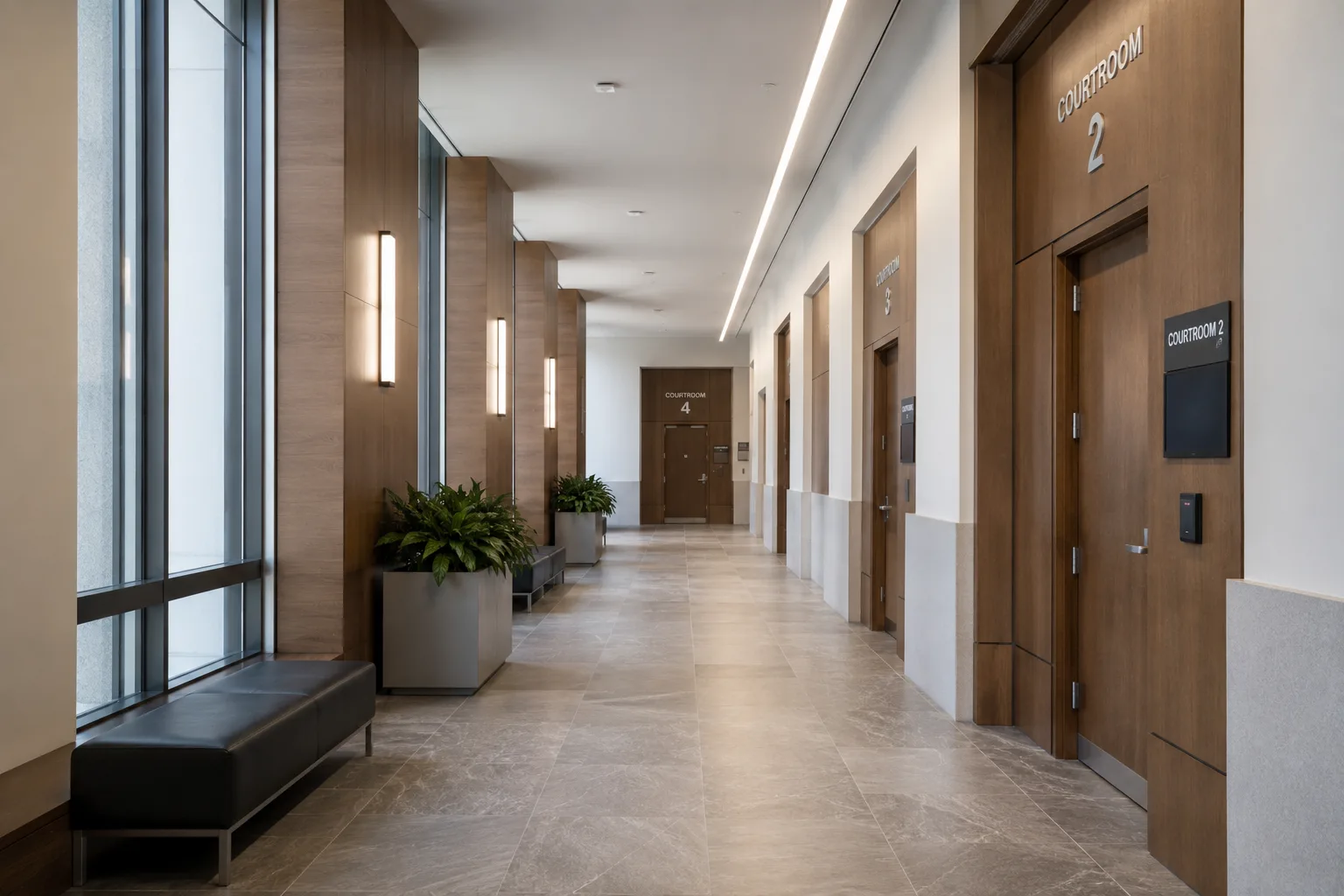
Michigan courthouse hallway with courtroom doors, where DUI pre-trial conferences take place
Share on Facebook
Share on X
Share on LinkedIn

What You Need to Know

  • The pre-trial conference is where the real work happens in a DUI case.
  • Your lawyer meets privately with the prosecutor to review evidence and negotiate.
  • There is often more than one pre-trial before a case gets resolved.
  • Over 99% of Michigan DUI cases never go to trial — most are resolved at the pre-trial stage.
  • The goal is the best possible outcome, not just the fastest one.

If you’ve been charged with a DUI in Michigan, you may or may not have already been through the arraignment — the brief first court appearance where a plea of “not guilty” is entered and a future date is set. That next date is almost always the DUI pre-trial conference — the stage most people know the least about, and the one that matters most.

Most of the anxiety people feel about a DUI charge centers on some vague idea of a “trial.” The reality is that trials are extraordinarily rare in Michigan DUI cases. The pre-trial conference is where cases actually get resolved — and understanding how that process works puts you in a much better position to understand your situation and make good decisions.

What Is a Pre-Trial Conference?

Some courts call it a “pre-trial conference.” Others just call it a “pre-trial.” A few combine it with the arraignment and send out a notice labeled “Arraignment/Pre-Trial.” Whatever the notice says, the practical reality is the same: the lawyer and the prosecutor take their opposing sides and try to resolve the case.

The defense wants the whole thing dismissed — and if the evidence isn’t strong enough to support the charge, that’s the only reasonable outcome. The reality, though, is that in most DUI cases the evidence isn’t so fatally compromised that dismissal is likely.

The prosecution would be happiest with a conviction on all the original charges. It’s a bit like a real estate negotiation: the seller wants full asking price, the buyer wants a significant discount, and they work their way toward something both sides can accept. DUI cases resolve the same way.

Any problems with the evidence can and should be used as leverage. And beyond the evidence itself, who you are as a person needs to be properly presented as part of negotiations to convince the prosecutor that you deserve a break.

Unlike the arraignment — which is a single, formulaic proceeding — the pre-trial conference can serve many different purposes. Evidence gets reviewed. Legal issues get raised. Negotiations take place. In most cases, it’s where the outcome of the entire case is determined.
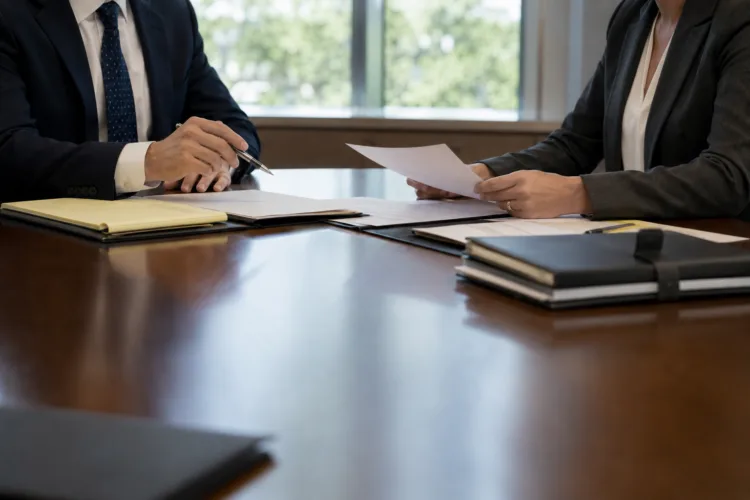
Defense attorney and prosecutor reviewing case documents during a DUI pre-trial conference

What Actually Happens at a DUI Pre-Trial Conference

When your lawyer arrives at court, he or she goes into a conference room where defense attorneys and prosecutors meet to discuss pending cases. Your lawyer asks for the prosecutor’s file and reads through it — the police report, the breath or blood test results, your driving record, your criminal record, and anything else the state intends to use against you.

That review is critical. By law, the defense is entitled to everything the prosecution has — this is called discovery. A good lawyer isn’t just reading to understand the case. He or she is reading to find problems with it.

Once the file has been reviewed, your lawyer waits for an opportunity to speak privately with the prosecutor. That conversation — the negotiation — is the real work of the DUI pre-trial conference. After the lawyers have conferred, you and your attorney go into the courtroom together, where the judge is updated on where things stand.

What Your Lawyer Is Actually Doing

A lawyer who walks into a pre-trial conference asking “what kind of deal can you give me?” has already lost the negotiation. The starting point has to be the evidence — specifically, what’s wrong with it. Every aspect of the stop, the investigation, and the testing process gets evaluated for flaws, inconsistencies, and procedural problems.

That critical evaluation is what creates leverage. It gives the lawyer something real to bring to the negotiating table. Without it, the conversation is just a plea for leniency — and prosecutors aren’t paid to be lenient.

The goal in any case where the evidence is strong enough to survive a legal challenge is a plea bargain — the original charge gets reduced to something less serious in exchange for a guilty plea to the lesser offense. In a DUI case, that often means getting a High BAC or OWI charge reduced to “impaired driving,” which carries significantly lighter consequences. Sometimes it also means negotiating the sentence itself — keeping jail off the table, for example, or in 2nd and 3rd offense cases, getting into a sobriety court program.

There Is Often More Than One Pre-Trial Conference

This surprises a lot of people. The pre-trial conference is not a single event — it’s a stage. There can be, and very often are, multiple pre-trial dates before a case reaches resolution. Our attorneys have handled plenty of cases with four or more pre-trials.

Sometimes the full discovery (evidence) file isn’t ready at the first appearance. Sometimes additional investigation is needed. In some cases — particularly in Wayne County — the prosecutor in court isn’t authorized to negotiate independently, and we must submit a written request to their supervisor for what’s called a “deviation” (or “variance” in Wayne County). That takes time.

Pre-trial conferences can also be used to address other practical matters: requesting relief from bond conditions like breath or urine testing, seeking permission to travel out of state, or raising legal challenges to the evidence before a deal is finalized. The term “pre-trial conference” covers all of it.

A good lawyer is never in a hurry to wrap up a case.

The bargain-rate lawyer moves fast because speed is cheap. A thorough lawyer takes the time the case requires, because the goal isn’t to get it over with — it’s to get the best possible result.

Why Trials Are Rare — and What That Means

Michigan law requires the State Police to publish an Annual Drunk Driving Audit tracking every DUI arrest in the state from charge through final court disposition. The numbers are remarkably consistent from year to year. The average acquittal rate among all people who take a DUI to trial in Michigan is less than one quarter of one percent.

Read that again: less than one quarter of one percent.

Out of tens of thousands of DUI arrests each year in Michigan, only a tiny handful of people who go to trial walk away with a not-guilty verdict. Planning for a trial is not a beginning strategy in DUI cases — it’s a last resort when negotiations have genuinely broken down and there’s a real legal issue worth fighting.

This is exactly why the pre-trial conference matters so much. It’s where the outcome of the DUI pre-trial conference is shaped — where a charge gets reduced, where jail gets taken off the table, and where a person’s record gets protected. That’s the work that determines what your life looks like after a DUI charge.

Experience Is What Makes the Difference

There’s a version of pretrial work that looks like showing up, shaking hands with the prosecutor, and asking what’s available. There’s another version that involves knowing the evidence cold, understanding how each local prosecutor tends to approach these cases, recognizing when to push and when to wait, and being willing to come back as many times as it takes to get the right result.

Those two versions produce very different outcomes. The skill involved isn’t just legal knowledge — it’s judgment. It comes from doing this specific work, in these specific courts, over many years. Our attorneys have been handling DUI and criminal cases in the district and circuit courts of Wayne, Oakland, and Macomb, and the surrounding counties for decades.

When you’re evaluating a lawyer before hiring one, pay attention to how they explain things. A lawyer who takes the time to explain the process honestly — including the parts that aren’t in your favor — is showing you something real about how they work.

Talk to Our Firm — Free and Confidential

If you’re facing a DUI or criminal charge in Wayne, Oakland, Macomb, or one of the surrounding counties, we’re here to help. Our firm offers free, confidential phone consultations — no pressure, just an honest conversation about where things stand and what your options are.

We’re available Monday through Friday, 8:30 a.m. to 5:00 p.m., at 586-465-1980. An after-hours answering service is also available, and you can reach us anytime through the contact form or chat box on our website. To learn more about how our firm handles DUI cases from start to finish, visit our DUI/OWI practice page.

About the Author
Jeff has been a practicing Michigan criminal lawyer, DUI attorney and driver’s license restoration lawyer for more than 30 years. He is passionate about winning and doing whatever it takes to accomplish that. He understands that a pending criminal or DUI charge is stressful and that being unable to legally drive is a huge problem.
Michigan courthouse hallway with courtroom doors, where DUI pre-trial conferences take place
What Happens at a Pre-Trial in a Michigan DUI or Criminal Case

What You Need to Know

  • The pre-trial conference is where the real work happens in a DUI case.
  • Your lawyer meets privately with the prosecutor to review evidence and negotiate.
  • There is often more than one pre-trial before a case gets resolved.
  • Over 99% of Michigan DUI cases never go to trial — most are resolved at the pre-trial stage.
  • The goal is the best possible outcome, not just the fastest one.

If you’ve been charged with a DUI in Michigan, you may or may not have already been through the arraignment — the brief first court appearance where a plea of “not guilty” is entered and a future date is set. That next date is almost always the DUI pre-trial conference — the stage most people know the least about, and the one that matters most.

Most of the anxiety people feel about a DUI charge centers on some vague idea of a “trial.” The reality is that trials are extraordinarily rare in Michigan DUI cases. The pre-trial conference is where cases actually get resolved — and understanding how that process works puts you in a much better position to understand your situation and make good decisions.

What Is a Pre-Trial Conference?

Some courts call it a “pre-trial conference.” Others just call it a “pre-trial.” A few combine it with the arraignment and send out a notice labeled “Arraignment/Pre-Trial.” Whatever the notice says, the practical reality is the same: the lawyer and the prosecutor take their opposing sides and try to resolve the case.

The defense wants the whole thing dismissed — and if the evidence isn’t strong enough to support the charge, that’s the only reasonable outcome. The reality, though, is that in most DUI cases the evidence isn’t so fatally compromised that dismissal is likely.

The prosecution would be happiest with a conviction on all the original charges. It’s a bit like a real estate negotiation: the seller wants full asking price, the buyer wants a significant discount, and they work their way toward something both sides can accept. DUI cases resolve the same way.

Any problems with the evidence can and should be used as leverage. And beyond the evidence itself, who you are as a person needs to be properly presented as part of negotiations to convince the prosecutor that you deserve a break.

Unlike the arraignment — which is a single, formulaic proceeding — the pre-trial conference can serve many different purposes. Evidence gets reviewed. Legal issues get raised. Negotiations take place. In most cases, it’s where the outcome of the entire case is determined.

Defense attorney and prosecutor reviewing case documents during a DUI pre-trial conference

What Actually Happens at a DUI Pre-Trial Conference

When your lawyer arrives at court, he or she goes into a conference room where defense attorneys and prosecutors meet to discuss pending cases. Your lawyer asks for the prosecutor’s file and reads through it — the police report, the breath or blood test results, your driving record, your criminal record, and anything else the state intends to use against you.

That review is critical. By law, the defense is entitled to everything the prosecution has — this is called discovery. A good lawyer isn’t just reading to understand the case. He or she is reading to find problems with it.

Once the file has been reviewed, your lawyer waits for an opportunity to speak privately with the prosecutor. That conversation — the negotiation — is the real work of the DUI pre-trial conference. After the lawyers have conferred, you and your attorney go into the courtroom together, where the judge is updated on where things stand.

What Your Lawyer Is Actually Doing

A lawyer who walks into a pre-trial conference asking “what kind of deal can you give me?” has already lost the negotiation. The starting point has to be the evidence — specifically, what’s wrong with it. Every aspect of the stop, the investigation, and the testing process gets evaluated for flaws, inconsistencies, and procedural problems.

That critical evaluation is what creates leverage. It gives the lawyer something real to bring to the negotiating table. Without it, the conversation is just a plea for leniency — and prosecutors aren’t paid to be lenient.

The goal in any case where the evidence is strong enough to survive a legal challenge is a plea bargain — the original charge gets reduced to something less serious in exchange for a guilty plea to the lesser offense. In a DUI case, that often means getting a High BAC or OWI charge reduced to “impaired driving,” which carries significantly lighter consequences. Sometimes it also means negotiating the sentence itself — keeping jail off the table, for example, or in 2nd and 3rd offense cases, getting into a sobriety court program.

There Is Often More Than One Pre-Trial Conference

This surprises a lot of people. The pre-trial conference is not a single event — it’s a stage. There can be, and very often are, multiple pre-trial dates before a case reaches resolution. Our attorneys have handled plenty of cases with four or more pre-trials.

Sometimes the full discovery (evidence) file isn’t ready at the first appearance. Sometimes additional investigation is needed. In some cases — particularly in Wayne County — the prosecutor in court isn’t authorized to negotiate independently, and we must submit a written request to their supervisor for what’s called a “deviation” (or “variance” in Wayne County). That takes time.

Pre-trial conferences can also be used to address other practical matters: requesting relief from bond conditions like breath or urine testing, seeking permission to travel out of state, or raising legal challenges to the evidence before a deal is finalized. The term “pre-trial conference” covers all of it.

A good lawyer is never in a hurry to wrap up a case.

The bargain-rate lawyer moves fast because speed is cheap. A thorough lawyer takes the time the case requires, because the goal isn’t to get it over with — it’s to get the best possible result.

Why Trials Are Rare — and What That Means

Michigan law requires the State Police to publish an Annual Drunk Driving Audit tracking every DUI arrest in the state from charge through final court disposition. The numbers are remarkably consistent from year to year. The average acquittal rate among all people who take a DUI to trial in Michigan is less than one quarter of one percent.

Read that again: less than one quarter of one percent.

Out of tens of thousands of DUI arrests each year in Michigan, only a tiny handful of people who go to trial walk away with a not-guilty verdict. Planning for a trial is not a beginning strategy in DUI cases — it’s a last resort when negotiations have genuinely broken down and there’s a real legal issue worth fighting.

This is exactly why the pre-trial conference matters so much. It’s where the outcome of the DUI pre-trial conference is shaped — where a charge gets reduced, where jail gets taken off the table, and where a person’s record gets protected. That’s the work that determines what your life looks like after a DUI charge.

Experience Is What Makes the Difference

There’s a version of pretrial work that looks like showing up, shaking hands with the prosecutor, and asking what’s available. There’s another version that involves knowing the evidence cold, understanding how each local prosecutor tends to approach these cases, recognizing when to push and when to wait, and being willing to come back as many times as it takes to get the right result.

Those two versions produce very different outcomes. The skill involved isn’t just legal knowledge — it’s judgment. It comes from doing this specific work, in these specific courts, over many years. Our attorneys have been handling DUI and criminal cases in the district and circuit courts of Wayne, Oakland, and Macomb, and the surrounding counties for decades.

When you’re evaluating a lawyer before hiring one, pay attention to how they explain things. A lawyer who takes the time to explain the process honestly — including the parts that aren’t in your favor — is showing you something real about how they work.

Talk to Our Firm — Free and Confidential

If you’re facing a DUI or criminal charge in Wayne, Oakland, Macomb, or one of the surrounding counties, we’re here to help. Our firm offers free, confidential phone consultations — no pressure, just an honest conversation about where things stand and what your options are.

We’re available Monday through Friday, 8:30 a.m. to 5:00 p.m., at 586-465-1980. An after-hours answering service is also available, and you can reach us anytime through the contact form or chat box on our website. To learn more about how our firm handles DUI cases from start to finish, visit our DUI/OWI practice page.

About the Author
Jeff has been a practicing Michigan criminal lawyer, DUI attorney and driver’s license restoration lawyer for more than 30 years. He is passionate about winning and doing whatever it takes to accomplish that. He understands that a pending criminal or DUI charge is stressful and that being unable to legally drive is a huge problem.
Website developed in accordance with Web Content Accessibility Guidelines 2.2.
If you encounter any issues while using this site, please contact us: 586.465.1980