

High BAC / “Super Drunk” in Michigan: What It Means, Why It’s Worse, and What We Can Do About It

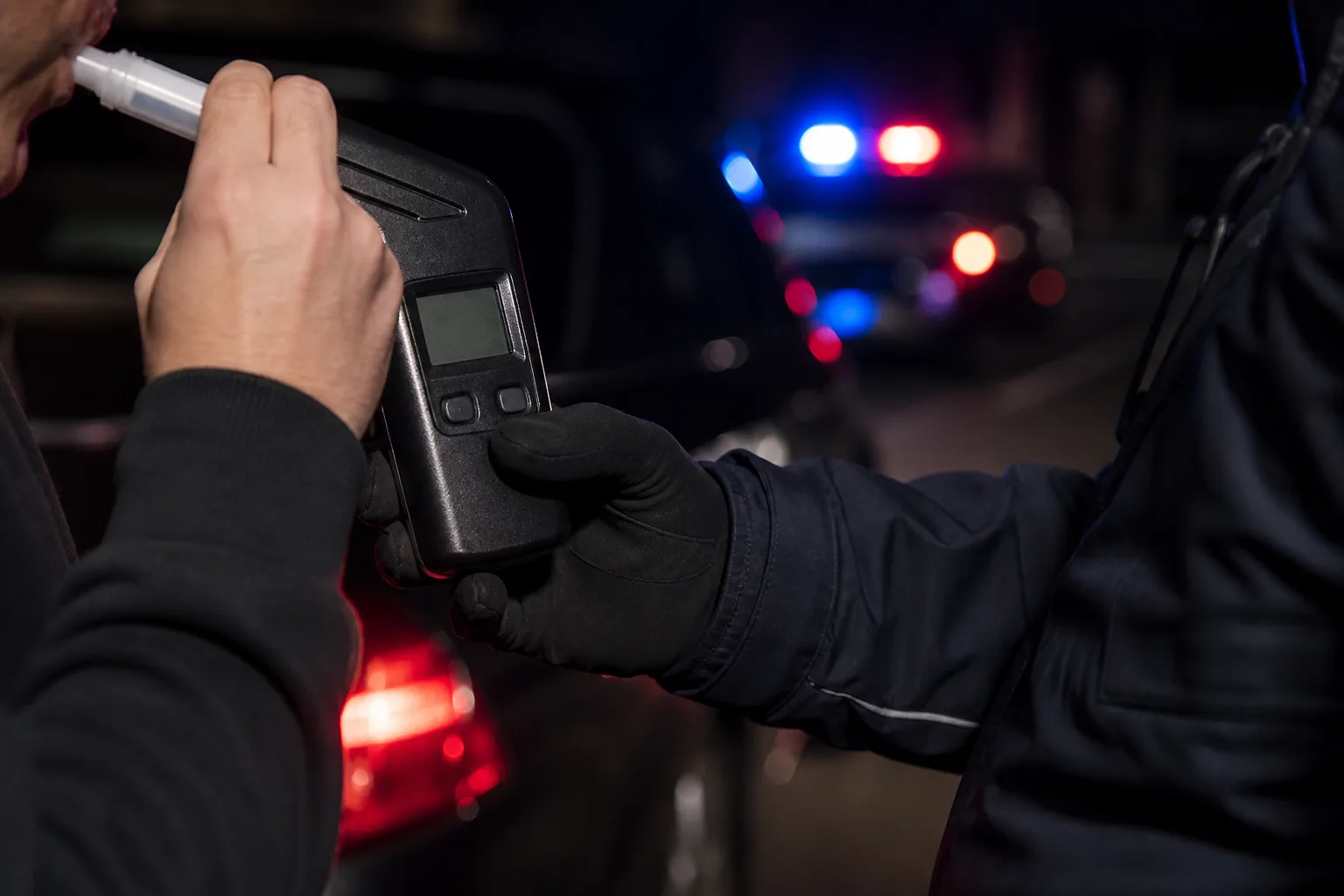
High BAC Michigan breathalyzer test during nighttime traffic stop
Share on Facebook
Share on X
Share on LinkedIn

If you’ve been charged with Operating While Intoxicated (OWI) with a High BAC in Michigan — sometimes called “Super Drunk” — you’re facing something more serious than a standard first-offense drunk driving case. Michigan law treats a breath or blood test result of .17 or higher as a separate, more harshly punished offense. The criminal penalties are steeper, and the automatic license consequences imposed by the Secretary of State hit harder and last longer than those that follow a standard first-offense OWI.

The good news — and there is some — is that High BAC is still a first-offense. It may be more serious than a regular DUI, but it’s a heck of a lot better to be facing this rather than a 2nd offense. Our firm handles these cases regularly, and this article explains what you’re facing, how the law works, and what a skilled defense lawyer can realistically do to help.

What Is High BAC / “Super Drunk”?

Michigan’s High BAC law creates an enhanced first-offense OWI charge that applies when a driver’s blood alcohol content (BAC) is .17 or higher. The standard OWI threshold in Michigan is .08. Thus, a High BAC charge means the person’s test result was more than double the legal limit.

The legislature drew the .17 line to target drivers whose impairment is considered substantially more severe, and the penalties reflect that judgment. Everything about a High BAC conviction — the fines, the possible jail time, the mandatory treatment, and especially the license sanctions — is designed to be worse than what follows from a standard first offense OWI.

One thing worth understanding right away: this charge only exists at the first-offense level. Michigan law does not have a “High BAC second offense” enhancement. If someone who previously had a High BAC conviction is later charged with drunk driving again, that new case is handled as a second offense. Sometimes, a person with a prior DUI wonders if the BAC matters in the new case.

It does, but only as a measure of their relationship to alcohol and an indication of a higher tolerance (or not). It does not have any legal significance, like it does in a first offense DUI case.

The Criminal Penalties: How High BAC in Michigan Differs From Standard OWI

Under MCL 257.625, a first-offense High BAC conviction carries significantly steeper criminal penalties than a standard OWI:

  • Jail: Up to 180 days (compared to up to 93 days for standard first-offense OWI and OWVI)
  • Fine: $200–$700 (compared to $100–$500 for standard OWI, and $100–$300 for OWVI)
  • Community service: Up to 360 hours (same for all three tiers of first offenses)
  • Alcohol treatment: Mandatory, as ordered by the court (not required for standard OWI or OWVI)
  • Probation: Up to two years
  • Points: 6 points on driving record (same as standard OWI; OWVI carries only 4 points — another reason why an OWVI reduction matters)

The mandatory alcohol treatment requirement is worth noting. No matter how lenient a judge may be in any given case, the courts are required to order treatment for High BAC convictions. That treatment — including evaluation, counseling, and any recommended follow-up — is a mandatory, and not optional, part of the sentence.

The License Penalty: A One-Year Suspension With Real Teeth

The criminal process is only part of the picture. On top of whatever the judge orders, the Michigan Secretary of State (SOS) automatically imposes its own administrative sanctions when someone is convicted of High BAC. The result is a one-year driver’s license suspension — but it is not a simple, flat suspension. It has two stages, and the second stage comes with a requirement that significantly affects daily life.

Here is how the SOS license sanctions compare across the three possible outcomes:

  • High BAC conviction: 45-day hard suspension (no driving at all), followed by 320 days of restricted driving with a mandatory ignition interlock device on every vehicle you drive.
  • Standard first-offense OWI: 30-day hard suspension, followed by 150 days of restricted driving. No interlock requirement.
  • OWVI (impaired driving): No hard suspension at all. Just 90 days of restricted driving, with no interlock requirement.

The ignition interlock requirement is the element that most people feel most acutely in their daily lives. During those 320 days of restricted driving following a High BAC conviction, you cannot operate any vehicle that does not have an interlock device installed — not your spouse’s car, not a company vehicle, nothing. You pay for the device. You drive only for the purposes allowed by a restricted license. Any failed breath sample or missed rolling retest gets reported to the state.

This comparison makes clear why the plea negotiation strategy matters so much. The difference between a High BAC conviction and an OWVI is not just a matter of degree — it is the difference between almost a year with an interlock device and no interlock at all. That is a significant real-world impact on employment, family responsibilities, and daily life.

The Two-Track Defense Strategy: Challenge First, Negotiate Second

When our firm takes on a High BAC case, the approach follows a consistent sequence: we first evaluate every possible ground to challenge the evidence, and if none of those challenges is viable, we work to negotiate the charge down to something less damaging. Here is how both tracks work.

Track One: Challenging the Evidence

The test result — whether from a breath test administered on the Intoxilyzer 9000 or from a blood draw — is the cornerstone of a High BAC case. Without a valid, reliable test result at .17 or above, the prosecution does not have a High BAC charge. That is where our analysis begins.

Some of the questions we investigate:

  • Was the traffic stop lawful? If the officer lacked reasonable suspicion to pull you over in the first place, everything that followed — including the test result — may be suppressible.
  • Were the field sobriety tests administered properly? Even if they were, the interpretation of how a person performed is subjective. That evidence needs to be carefully examined.
  • Was the Intoxilyzer 9000 properly maintained and calibrated? Breath test machines require regular maintenance and calibration. We obtain maintenance records and look for any deviation from required protocols.
  • Was the observation period followed? Before a breath test can be administered, officers are required to observe the subject continuously for a specific period to rule out factors that could artificially inflate the result. Gaps in that observation can compromise the test’s validity.
  • Is there a rising BAC issue? Alcohol continues to absorb into the bloodstream after you stop drinking. In some cases, the BAC at the time of driving was meaningfully lower than the BAC at the time of testing. If the test was administered long enough after the traffic stop, this issue deserves serious analysis.
  • For blood draws: was the collection and storage proper? Blood samples must be collected, preserved, and analyzed according to strict protocols. Contamination, improper anticoagulant ratios, or chain-of-custody failures can all undermine the result.
  • Was there a valid warrant for the blood draw? In cases where a blood draw was obtained without consent or a warrant, we evaluate Fourth Amendment suppression arguments.

We want to be candid with clients: the honest answer in most High BAC cases is that the test result holds up. Officers generally follow their protocols, the Intoxilyzer 9000 is a reasonably reliable instrument when properly maintained, and blood draws done through a hospital or lab rarely have chain-of-custody issues significant enough to throw out the result. Telling a client otherwise — building unrealistic expectations around a challenge that is not there — does them a disservice.

Our job is to look hard, be honest about what we find, and pivot quickly to Track Two when that is the right move.

Track Two: Negotiating a Reduction

When the evidence does not have a meaningful vulnerability, the focus shifts to negotiation. The goal is to avoid a High BAC conviction entirely through a plea to a reduced charge — and as the license comparison above makes clear, even a one-tier reduction produces a dramatically better outcome.
Michigan courtroom where High BAC defense cases are decided

There are two meaningful tiers of reduction:

  • Standard first-offense OWI: This removes the High BAC enhancement. The criminal penalties are lower, the mandatory treatment requirement disappears, and — critically — the SOS license sanction drops from 45 days hard / 320 days interlock-restricted to 30 days hard / 150 days restricted with no interlock. That is a substantial difference in practical terms.
  • Operating While Visibly Impaired (OWVI): This is the gold standard outcome in plea negotiations, and we always try for it. OWVI carries lower criminal penalties (including only 4 points vs. 6), no mandatory treatment requirement, and the best possible license outcome: no hard suspension, just 90 days restricted driving with no interlock device. Achieving an OWVI reduction from a High BAC charge requires skillful negotiations, and, to be honest, good facts to work with.

Plea negotiations depend on many factors: the prosecutor’s office and its policies, the specific court, the facts of the case, how far the BAC was above .17, the client’s prior record, and — frankly — the quality and credibility of the legal representation.

Prosecutors are not required to offer reductions in High BAC Michigan cases, but they often will when the defense presents a credible challenge or can make a compelling case to do so. An experienced attorney who knows the courthouse, the prosecutors, and the judges in a given jurisdiction brings something to the negotiating table that a general practitioner simply cannot.

What a High BAC Conviction Means for Your Michigan Record

A High BAC conviction goes on both your criminal record and your driving record. It is not automatically cleared, no matter how long you wait. Under Michigan’s Clean Slate Law, a first-and-only High BAC conviction does become eligible for expungement after five years — but eligibility is not the same as automatic removal.

You must file a formal petition, meet specific requirements, and demonstrate to the court’s satisfaction that you have addressed any underlying alcohol issue through treatment or a support program. A judge then decides whether to grant it. That process takes time and carries no guarantee of success.

This is another reason why the outcome at the time of the charge matters so much. A conviction that is reduced to something less is a better starting point than a High BAC conviction that you later hope to expunge. Getting it right the first time is always the better strategy.

Why Local Court Experience Matters in High BAC Michigan Cases

Our firm concentrates its practice in the courts of Wayne, Oakland, and Macomb counties, and the surrounding counties. That means we know the prosecutors, the judges, and the tendencies of the courts in every jurisdiction where our clients are charged. We know which offices are more receptive to plea negotiations on High BAC cases, which judges tend to be hard on first-offense OWI defendants, and where there may be room to push for an OWVI.

That local knowledge is not something you can replicate by hiring a general practice attorney who handles drunk driving cases occasionally, or doesn’t otherwise regularly appear in the same courts.

DUI and drunk driving defense is not a sideline for our firm. It is what we do. When you hire us, you are working with attorneys who have handled hundreds of High BAC cases in the courts where yours will be decided.

Facing a High BAC Charge? Contact Our Office.

If you have been charged with High BAC / “Super Drunk” in Michigan, the decisions you make in the coming days matter enormously. The charge is serious, the consequences — particularly the one-year license suspension and interlock requirement — are significant, and the window to build a strong defense starts closing immediately.

All of our consultations are free, confidential, and done over the phone right when you call. You’ll speak with a friendly, real person, get real answers, and have a chance to ask whatever questions are on your mind.

You can reach us Monday through Friday, 8:30 AM to 5:00 PM at 586-600-8317. We also have an after-hours answering service for calls outside of business hours. You can also reach us through the contact form or chat box on our website, and we’ll get back to you promptly.

You can also learn more about how we handle these cases on our High BAC / Super Drunk practice page.

About the Author
Jeff has been a practicing Michigan criminal lawyer, DUI attorney and driver’s license restoration lawyer for more than 30 years. He is passionate about winning and doing whatever it takes to accomplish that. He understands that a pending criminal or DUI charge is stressful and that being unable to legally drive is a huge problem.
High BAC Michigan breathalyzer test during nighttime traffic stop
High BAC / “Super Drunk” in Michigan: What It Means, Why It’s Worse, and What We Can Do About It

If you’ve been charged with Operating While Intoxicated (OWI) with a High BAC in Michigan — sometimes called “Super Drunk” — you’re facing something more serious than a standard first-offense drunk driving case. Michigan law treats a breath or blood test result of .17 or higher as a separate, more harshly punished offense. The criminal penalties are steeper, and the automatic license consequences imposed by the Secretary of State hit harder and last longer than those that follow a standard first-offense OWI.

The good news — and there is some — is that High BAC is still a first-offense. It may be more serious than a regular DUI, but it’s a heck of a lot better to be facing this rather than a 2nd offense. Our firm handles these cases regularly, and this article explains what you’re facing, how the law works, and what a skilled defense lawyer can realistically do to help.

What Is High BAC / “Super Drunk”?

Michigan’s High BAC law creates an enhanced first-offense OWI charge that applies when a driver’s blood alcohol content (BAC) is .17 or higher. The standard OWI threshold in Michigan is .08. Thus, a High BAC charge means the person’s test result was more than double the legal limit.

The legislature drew the .17 line to target drivers whose impairment is considered substantially more severe, and the penalties reflect that judgment. Everything about a High BAC conviction — the fines, the possible jail time, the mandatory treatment, and especially the license sanctions — is designed to be worse than what follows from a standard first offense OWI.

One thing worth understanding right away: this charge only exists at the first-offense level. Michigan law does not have a “High BAC second offense” enhancement. If someone who previously had a High BAC conviction is later charged with drunk driving again, that new case is handled as a second offense. Sometimes, a person with a prior DUI wonders if the BAC matters in the new case.

It does, but only as a measure of their relationship to alcohol and an indication of a higher tolerance (or not). It does not have any legal significance, like it does in a first offense DUI case.

The Criminal Penalties: How High BAC in Michigan Differs From Standard OWI

Under MCL 257.625, a first-offense High BAC conviction carries significantly steeper criminal penalties than a standard OWI:

  • Jail: Up to 180 days (compared to up to 93 days for standard first-offense OWI and OWVI)
  • Fine: $200–$700 (compared to $100–$500 for standard OWI, and $100–$300 for OWVI)
  • Community service: Up to 360 hours (same for all three tiers of first offenses)
  • Alcohol treatment: Mandatory, as ordered by the court (not required for standard OWI or OWVI)
  • Probation: Up to two years
  • Points: 6 points on driving record (same as standard OWI; OWVI carries only 4 points — another reason why an OWVI reduction matters)

The mandatory alcohol treatment requirement is worth noting. No matter how lenient a judge may be in any given case, the courts are required to order treatment for High BAC convictions. That treatment — including evaluation, counseling, and any recommended follow-up — is a mandatory, and not optional, part of the sentence.

The License Penalty: A One-Year Suspension With Real Teeth

The criminal process is only part of the picture. On top of whatever the judge orders, the Michigan Secretary of State (SOS) automatically imposes its own administrative sanctions when someone is convicted of High BAC. The result is a one-year driver’s license suspension — but it is not a simple, flat suspension. It has two stages, and the second stage comes with a requirement that significantly affects daily life.

Here is how the SOS license sanctions compare across the three possible outcomes:

  • High BAC conviction: 45-day hard suspension (no driving at all), followed by 320 days of restricted driving with a mandatory ignition interlock device on every vehicle you drive.
  • Standard first-offense OWI: 30-day hard suspension, followed by 150 days of restricted driving. No interlock requirement.
  • OWVI (impaired driving): No hard suspension at all. Just 90 days of restricted driving, with no interlock requirement.

The ignition interlock requirement is the element that most people feel most acutely in their daily lives. During those 320 days of restricted driving following a High BAC conviction, you cannot operate any vehicle that does not have an interlock device installed — not your spouse’s car, not a company vehicle, nothing. You pay for the device. You drive only for the purposes allowed by a restricted license. Any failed breath sample or missed rolling retest gets reported to the state.

This comparison makes clear why the plea negotiation strategy matters so much. The difference between a High BAC conviction and an OWVI is not just a matter of degree — it is the difference between almost a year with an interlock device and no interlock at all. That is a significant real-world impact on employment, family responsibilities, and daily life.

The Two-Track Defense Strategy: Challenge First, Negotiate Second

When our firm takes on a High BAC case, the approach follows a consistent sequence: we first evaluate every possible ground to challenge the evidence, and if none of those challenges is viable, we work to negotiate the charge down to something less damaging. Here is how both tracks work.

Track One: Challenging the Evidence

The test result — whether from a breath test administered on the Intoxilyzer 9000 or from a blood draw — is the cornerstone of a High BAC case. Without a valid, reliable test result at .17 or above, the prosecution does not have a High BAC charge. That is where our analysis begins.

Some of the questions we investigate:

  • Was the traffic stop lawful? If the officer lacked reasonable suspicion to pull you over in the first place, everything that followed — including the test result — may be suppressible.
  • Were the field sobriety tests administered properly? Even if they were, the interpretation of how a person performed is subjective. That evidence needs to be carefully examined.
  • Was the Intoxilyzer 9000 properly maintained and calibrated? Breath test machines require regular maintenance and calibration. We obtain maintenance records and look for any deviation from required protocols.
  • Was the observation period followed? Before a breath test can be administered, officers are required to observe the subject continuously for a specific period to rule out factors that could artificially inflate the result. Gaps in that observation can compromise the test’s validity.
  • Is there a rising BAC issue? Alcohol continues to absorb into the bloodstream after you stop drinking. In some cases, the BAC at the time of driving was meaningfully lower than the BAC at the time of testing. If the test was administered long enough after the traffic stop, this issue deserves serious analysis.
  • For blood draws: was the collection and storage proper? Blood samples must be collected, preserved, and analyzed according to strict protocols. Contamination, improper anticoagulant ratios, or chain-of-custody failures can all undermine the result.
  • Was there a valid warrant for the blood draw? In cases where a blood draw was obtained without consent or a warrant, we evaluate Fourth Amendment suppression arguments.

We want to be candid with clients: the honest answer in most High BAC cases is that the test result holds up. Officers generally follow their protocols, the Intoxilyzer 9000 is a reasonably reliable instrument when properly maintained, and blood draws done through a hospital or lab rarely have chain-of-custody issues significant enough to throw out the result. Telling a client otherwise — building unrealistic expectations around a challenge that is not there — does them a disservice.

Our job is to look hard, be honest about what we find, and pivot quickly to Track Two when that is the right move.

Track Two: Negotiating a Reduction

When the evidence does not have a meaningful vulnerability, the focus shifts to negotiation. The goal is to avoid a High BAC conviction entirely through a plea to a reduced charge — and as the license comparison above makes clear, even a one-tier reduction produces a dramatically better outcome.

Michigan courtroom where High BAC defense cases are decided

There are two meaningful tiers of reduction:

  • Standard first-offense OWI: This removes the High BAC enhancement. The criminal penalties are lower, the mandatory treatment requirement disappears, and — critically — the SOS license sanction drops from 45 days hard / 320 days interlock-restricted to 30 days hard / 150 days restricted with no interlock. That is a substantial difference in practical terms.
  • Operating While Visibly Impaired (OWVI): This is the gold standard outcome in plea negotiations, and we always try for it. OWVI carries lower criminal penalties (including only 4 points vs. 6), no mandatory treatment requirement, and the best possible license outcome: no hard suspension, just 90 days restricted driving with no interlock device. Achieving an OWVI reduction from a High BAC charge requires skillful negotiations, and, to be honest, good facts to work with.

Plea negotiations depend on many factors: the prosecutor’s office and its policies, the specific court, the facts of the case, how far the BAC was above .17, the client’s prior record, and — frankly — the quality and credibility of the legal representation.

Prosecutors are not required to offer reductions in High BAC Michigan cases, but they often will when the defense presents a credible challenge or can make a compelling case to do so. An experienced attorney who knows the courthouse, the prosecutors, and the judges in a given jurisdiction brings something to the negotiating table that a general practitioner simply cannot.

What a High BAC Conviction Means for Your Michigan Record

A High BAC conviction goes on both your criminal record and your driving record. It is not automatically cleared, no matter how long you wait. Under Michigan’s Clean Slate Law, a first-and-only High BAC conviction does become eligible for expungement after five years — but eligibility is not the same as automatic removal.

You must file a formal petition, meet specific requirements, and demonstrate to the court’s satisfaction that you have addressed any underlying alcohol issue through treatment or a support program. A judge then decides whether to grant it. That process takes time and carries no guarantee of success.

This is another reason why the outcome at the time of the charge matters so much. A conviction that is reduced to something less is a better starting point than a High BAC conviction that you later hope to expunge. Getting it right the first time is always the better strategy.

Why Local Court Experience Matters in High BAC Michigan Cases

Our firm concentrates its practice in the courts of Wayne, Oakland, and Macomb counties, and the surrounding counties. That means we know the prosecutors, the judges, and the tendencies of the courts in every jurisdiction where our clients are charged. We know which offices are more receptive to plea negotiations on High BAC cases, which judges tend to be hard on first-offense OWI defendants, and where there may be room to push for an OWVI.

That local knowledge is not something you can replicate by hiring a general practice attorney who handles drunk driving cases occasionally, or doesn’t otherwise regularly appear in the same courts.

DUI and drunk driving defense is not a sideline for our firm. It is what we do. When you hire us, you are working with attorneys who have handled hundreds of High BAC cases in the courts where yours will be decided.

Facing a High BAC Charge? Contact Our Office.

If you have been charged with High BAC / “Super Drunk” in Michigan, the decisions you make in the coming days matter enormously. The charge is serious, the consequences — particularly the one-year license suspension and interlock requirement — are significant, and the window to build a strong defense starts closing immediately.

All of our consultations are free, confidential, and done over the phone right when you call. You’ll speak with a friendly, real person, get real answers, and have a chance to ask whatever questions are on your mind.

You can reach us Monday through Friday, 8:30 AM to 5:00 PM at 586-600-8317. We also have an after-hours answering service for calls outside of business hours. You can also reach us through the contact form or chat box on our website, and we’ll get back to you promptly.

You can also learn more about how we handle these cases on our High BAC / Super Drunk practice page.

About the Author
Jeff has been a practicing Michigan criminal lawyer, DUI attorney and driver’s license restoration lawyer for more than 30 years. He is passionate about winning and doing whatever it takes to accomplish that. He understands that a pending criminal or DUI charge is stressful and that being unable to legally drive is a huge problem.
Website developed in accordance with Web Content Accessibility Guidelines 2.2.
If you encounter any issues while using this site, please contact us: 586.465.1980