

Getting Your License Back After a Second DUI in Michigan

Man walking to his car after winning Michigan driver's license restoration after second DUI
Share on Facebook
Share on X
Share on LinkedIn
By Jeffrey J. Randa
Getting Your License Back After a Second DUI in Michigan

In Michigan, a second DUI conviction within 7 years of a prior conviction results in the automatic and complete revocation of your driver’s license. If you’re looking at license restoration after a second DUI in Michigan, this means the license isn’t taken for a set period — you don’t wake up one day and find it automatically restored. It’s revoked, which means you can’t ever get it back until you file and win a formal driver’s license restoration appeal with the Michigan Secretary of State’s Office of Hearings and Administrative Oversight (OHAO).

To learn the basics of why the revocation happens and what the habitual alcohol offender designation means, and how it shapes everything that follows, read our article on what a second DUI does to your license. In this article, we’ll pick up where that one leaves off and see what it takes to actually get your license back, how the restoration process works, and what a second-offense applicant needs to understand going in.

The short version: it’s doable. Our firm handles these cases every day, and we guarantee a first-time win in every restoration case we take. But getting back on the road is not automatic, it’s not quick, and the people who struggle are often those who don’t understand what the process requires.

The Biggest Thing to Understand: This Is an Ongoing Presumption

Michigan law classifies anyone with two DUI convictions within seven years as a “habitual alcohol offender.” That classification doesn’t disappear after the criminal case ends. It follows you into the restoration hearing.

What it means in practice: Anyone who has lost their license for multiple DUIs is legally presumed to have an alcohol problem. This means that when you file a driver’s license restoration appeal, the hearing officer deciding your case begins with that legal presumption that you have an alcohol problem.

You don’t get a blank slate. The burden is on you — and it’s a high one. You must prove your case by what the law specifies as “clear and convincing evidence” that your alcohol problem is under control and that it’s likely to remain under control.

Let’s examine that legal standard first:

Civil cases are won or lost on “the greater weight of the evidence” — essentially enough to tip the scales of justice just past the mid-point, or just over 50%. Clear and convincing evidence is a significantly higher standard. In the real world, it’s equivalent to hitting a home run.

If the hearing officer is left with any unanswered questions, or if your case is thin, not fully complete, or there are any inconsistencies, it must be denied. The rules do NOT give the hearing officers any discretion to cut you a “break.”

This is different from defending a DUI charge, where the goal is to raise doubt. In a restoration hearing, the goal is to affirmatively prove something and leave no doubt. That distinction shapes everything about how the case needs to be built.

The Sobriety Requirement — and Why Probation Time Doesn’t Count

Our firm generally won’t file a restoration appeal for anyone who hasn’t been completely alcohol-free — no alcohol, no marijuana, nothing — for a minimum of 18 months. That’s our internal threshold, and it exists because the Secretary of State’s own standard requires at least 12 months of demonstrated sobriety, and in practice, anything under 18 months creates an uphill fight.

But here’s the part that catches a lot of people off guard: sobriety time earned while on probation, in incarceration, or living in a sober house doesn’t count.

This is called the controlled environment doctrine. The reasoning is straightforward: if you were required to be sober — because a court ordered it, or because your living situation enforced it — that’s not the same as choosing to be sober. The Secretary of State wants to see sobriety that you maintained on your own, in the real world, where alcohol was available to you and you consistently chose not to drink it.

There is a legal exception for those who successfully served probation while in a Sobriety Court program. By law, that time does count as voluntary sobriety, but even so, it’s a practical necessity for a person to have remained sober after completing Sobriety Court probation for a while before he or she can get a full license.

For any second-offenders who didn’t complete Sobriety Court, this means the practical timeline to a winnable case is roughly three years from the date of conviction. You finish probation. Then the real sobriety clock starts.

It’s frustrating to hear. And we understand why. But filing too soon is one of the most common ways to lose a restoration case — and a loss means you can’t try again for another full year. That can often set you back further than waiting just a bit longer would have.

What the Evidence Package Looks Like

A Michigan driver’s license restoration appeal isn’t just showing up and explaining yourself. You’re submitting a formal evidentiary package, and every piece of it matters.

The Substance Abuse Evaluation

This is the cornerstone of your case. It must be completed by a licensed substance abuse counselor using the state’s official form — the DI-4P. The evaluator reviews your entire drinking history, your two DUI convictions, any treatment or counseling you’ve undergone, and your current recovery status.

A vague, generic, or internally inconsistent evaluation is one of the most common reasons restoration cases are denied. The evaluator’s conclusions need to be clearly supported by the history they’ve documented — if the narrative and the conclusions don’t line up, the hearing officer will catch it.

Our clients are sent to a highly qualified evaluator who produces a clinically sound product. One of the most important things we do before we make that referral is to prepare each client for the evaluation. As part of that, we also complete our own forms that we then forward to our evaluator to ensure all critical information gets included.

Of course, we review these evaluations carefully before filing. We have to make sure that all the important details were covered, and that the evaluation is consistent with everything in all the other documents, including the letters of support.

Letters of Support

The first thing to note is that these are not character letters and can’t just be “good guy” letters about how hard you’ve had it without a license, and how much you need to be able to drive. Instead, they are testimonial letters of support. The people writing them need to speak specifically to the required aspects of your substance use and recovery history.

Generic letters that essentially say “this is a good person” don’t move the needle. Letters that conflict with each other, or with the evaluation or any of the other documents, will actively hurt the case. And every letter needs to be notarized.

Our firm reviews all support letters in draft form. Then, we edit and send them back for revision before having them notarized. Only when we know they meet the state’s requirements will they be considered ready for filing.

Drug Screens

The Secretary of State requires a formal 12-panel lab urinalysis — not an instant test, and not a basic screen. The test must include at least two integrity variables, which confirm the sample wasn’t diluted or adulterated. These aren’t optional; a test that doesn’t meet the specifications will be rejected outright.

What You Need to Know

For a second-DUI restoration case, the evidence package must include: (1) a completed DI-4P substance abuse evaluation from a licensed counselor; (2) a minimum of three notarized letters of support (our firm requires at least four) from people who can speak directly to your sobriety; and (3) a current 12-panel lab drug screen with at least two integrity variables. All three must be internally consistent with each other.

What the OHAO Hearing Actually Looks Like

All OHAO hearings are conducted remotely via Microsoft Teams. You’ll participate from wherever you are, and so will we.

Hearings typically run about 30 minutes. The hearing officer — a licensed attorney employed by the state — will have reviewed your submitted evidence beforehand. The hearing is an opportunity for you to answer their questions and testify about your sobriety, your recovery journey, and your life since the second DUI. We prepare every client thoroughly before that moment, walking through the questions likely to come up so nothing catches you off guard.
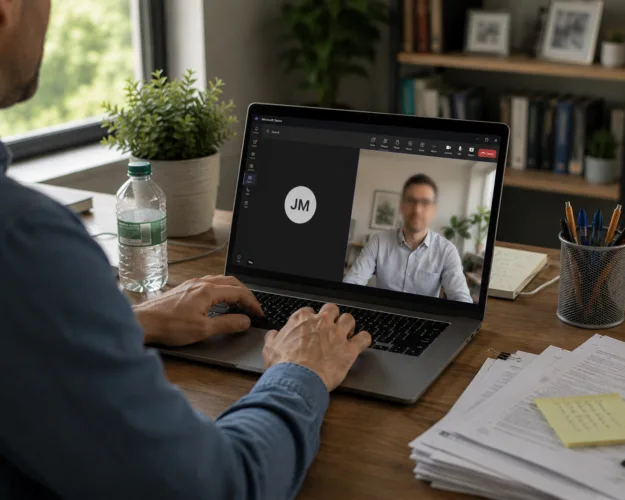
Michigan driver's license restoration hearing conducted remotely via Microsoft Teams

Note that an important part of being ready includes being prepared for the specific hearing officer who will decide your case. Every hearing officer is going to ask a group of similar questions, but each also has their own specific areas of interest. In other words, what’s important to one may not be of much interest to another, and vice-versa.

When you win, you’ll be issued a restricted license with a Breath Alcohol Ignition Interlock Device (BAIID) installed in your vehicle. After a minimum of one year on the interlock and in compliance, we can file for a second hearing to remove the BAIID and obtain a full, unrestricted license.

If you lose, you’re ineligible to file again for one full year. That’s another reason to build the case correctly the first time. It’s also another reason why our guarantee is so important.

A Word on Sobriety Court and the Interlock

If you’re coming to this article from a Sobriety Court path — meaning a judge granted you a restricted license while you were in the program — you’re already driving, which is a real benefit. But it’s worth understanding clearly: you haven’t finished the restoration process. You’re on a restricted license that requires a BAIID, and that interlock is staying on your vehicle until you go through the formal restoration appeal and win.

There’s a practical reason not to put that off: the longer you’re on the interlock, the more exposure you have to a violation. BAIID violations can result from things that have nothing to do with drinking — a dead battery flagged as a “tamper/circumvent” violation, a mechanic disconnecting the power briefly during routine service, a missed rolling retest because you stepped out of the vehicle for a moment, or even a false positive on an alcohol test. Any of those can set back your ability to get the full license.

Getting off the interlock as soon as you’re eligible isn’t impatience — it’s smart. The Sobriety Court path is a valuable head start, but the finish line is still a full restoration hearing.

For more on how Sobriety Court intersects with the license revocation in the first place, see our article on second offense DUI and your license.

Why the Second DUI Case Itself Matters for the Restoration Hearing

What you did — or didn’t do — during and after the criminal case will come up at your restoration hearing. The hearing officer will ask about your counseling, your treatment, when you stopped drinking, and if you’ve genuinely embraced sobriety.

Clients who were proactive during the criminal case — who sought some kind of help before the court ordered them into some program or other, who started building a genuine recovery before they had to — tend to have a much stronger story to tell at the hearing. Clients who went through the motions and waited for the clock to run out tend to struggle.

This is one of the reasons our firm handles both sides of this process. Because we take second-offense DUI cases and license restoration cases, we can help clients start building the right foundation during the criminal case itself — not as a legal tactic, but because the path to getting a license back genuinely starts there.

Our Guarantee

Our firm guarantees the result in every restoration and clearance case we take. If your appeal doesn’t win the first time, we keep working with you at no additional fee until it does.

We only take cases we believe we can win — which means we won’t file until the evidence is ready and the sobriety is real. That’s not a limitation; it’s why the guarantee means something.

The last thing we want to do is take a case that’s not ready, lose, and then have to do the whole thing all over again for free. That’s double the work for half the pay. No thanks…

Ready to Start the Process After a Second DUI in Michigan?

If you’re past the second DUI and ready to start thinking seriously about getting your license back, our firm can walk you through exactly where you stand and what the road forward looks like. Our consultations are free, confidential, and done over the phone right when you call.

Call us at 586-465-1980 Monday through Friday, 8:30 a.m. to 5:00 p.m. After-hours calls are answered by our answering service. You can also use the contact form on our website or the chat box on the site.

For more on how we handle the process from start to finish, visit our Michigan driver’s license restoration page.


About the Author
Jeff has been a practicing Michigan criminal lawyer, DUI attorney and driver’s license restoration lawyer for more than 30 years. He is passionate about winning and doing whatever it takes to accomplish that. He understands that a pending criminal or DUI charge is stressful and that being unable to legally drive is a huge problem.
Man walking to his car after winning Michigan driver's license restoration after second DUI
Getting Your License Back After a Second DUI in Michigan

In Michigan, a second DUI conviction within 7 years of a prior conviction results in the automatic and complete revocation of your driver’s license. If you’re looking at license restoration after a second DUI in Michigan, this means the license isn’t taken for a set period — you don’t wake up one day and find it automatically restored. It’s revoked, which means you can’t ever get it back until you file and win a formal driver’s license restoration appeal with the Michigan Secretary of State’s Office of Hearings and Administrative Oversight (OHAO).

To learn the basics of why the revocation happens and what the habitual alcohol offender designation means, and how it shapes everything that follows, read our article on what a second DUI does to your license. In this article, we’ll pick up where that one leaves off and see what it takes to actually get your license back, how the restoration process works, and what a second-offense applicant needs to understand going in.

The short version: it’s doable. Our firm handles these cases every day, and we guarantee a first-time win in every restoration case we take. But getting back on the road is not automatic, it’s not quick, and the people who struggle are often those who don’t understand what the process requires.

The Biggest Thing to Understand: This Is an Ongoing Presumption

Michigan law classifies anyone with two DUI convictions within seven years as a “habitual alcohol offender.” That classification doesn’t disappear after the criminal case ends. It follows you into the restoration hearing.

What it means in practice: Anyone who has lost their license for multiple DUIs is legally presumed to have an alcohol problem. This means that when you file a driver’s license restoration appeal, the hearing officer deciding your case begins with that legal presumption that you have an alcohol problem.

You don’t get a blank slate. The burden is on you — and it’s a high one. You must prove your case by what the law specifies as “clear and convincing evidence” that your alcohol problem is under control and that it’s likely to remain under control.

Let’s examine that legal standard first:

Civil cases are won or lost on “the greater weight of the evidence” — essentially enough to tip the scales of justice just past the mid-point, or just over 50%. Clear and convincing evidence is a significantly higher standard. In the real world, it’s equivalent to hitting a home run.

If the hearing officer is left with any unanswered questions, or if your case is thin, not fully complete, or there are any inconsistencies, it must be denied. The rules do NOT give the hearing officers any discretion to cut you a “break.”

This is different from defending a DUI charge, where the goal is to raise doubt. In a restoration hearing, the goal is to affirmatively prove something and leave no doubt. That distinction shapes everything about how the case needs to be built.

The Sobriety Requirement — and Why Probation Time Doesn’t Count

Our firm generally won’t file a restoration appeal for anyone who hasn’t been completely alcohol-free — no alcohol, no marijuana, nothing — for a minimum of 18 months. That’s our internal threshold, and it exists because the Secretary of State’s own standard requires at least 12 months of demonstrated sobriety, and in practice, anything under 18 months creates an uphill fight.

But here’s the part that catches a lot of people off guard: sobriety time earned while on probation, in incarceration, or living in a sober house doesn’t count.

This is called the controlled environment doctrine. The reasoning is straightforward: if you were required to be sober — because a court ordered it, or because your living situation enforced it — that’s not the same as choosing to be sober. The Secretary of State wants to see sobriety that you maintained on your own, in the real world, where alcohol was available to you and you consistently chose not to drink it.

There is a legal exception for those who successfully served probation while in a Sobriety Court program. By law, that time does count as voluntary sobriety, but even so, it’s a practical necessity for a person to have remained sober after completing Sobriety Court probation for a while before he or she can get a full license.

For any second-offenders who didn’t complete Sobriety Court, this means the practical timeline to a winnable case is roughly three years from the date of conviction. You finish probation. Then the real sobriety clock starts.

It’s frustrating to hear. And we understand why. But filing too soon is one of the most common ways to lose a restoration case — and a loss means you can’t try again for another full year. That can often set you back further than waiting just a bit longer would have.

What the Evidence Package Looks Like

A Michigan driver’s license restoration appeal isn’t just showing up and explaining yourself. You’re submitting a formal evidentiary package, and every piece of it matters.

The Substance Abuse Evaluation

This is the cornerstone of your case. It must be completed by a licensed substance abuse counselor using the state’s official form — the DI-4P. The evaluator reviews your entire drinking history, your two DUI convictions, any treatment or counseling you’ve undergone, and your current recovery status.

A vague, generic, or internally inconsistent evaluation is one of the most common reasons restoration cases are denied. The evaluator’s conclusions need to be clearly supported by the history they’ve documented — if the narrative and the conclusions don’t line up, the hearing officer will catch it.

Our clients are sent to a highly qualified evaluator who produces a clinically sound product. One of the most important things we do before we make that referral is to prepare each client for the evaluation. As part of that, we also complete our own forms that we then forward to our evaluator to ensure all critical information gets included.

Of course, we review these evaluations carefully before filing. We have to make sure that all the important details were covered, and that the evaluation is consistent with everything in all the other documents, including the letters of support.

Letters of Support

The first thing to note is that these are not character letters and can’t just be “good guy” letters about how hard you’ve had it without a license, and how much you need to be able to drive. Instead, they are testimonial letters of support. The people writing them need to speak specifically to the required aspects of your substance use and recovery history.

Generic letters that essentially say “this is a good person” don’t move the needle. Letters that conflict with each other, or with the evaluation or any of the other documents, will actively hurt the case. And every letter needs to be notarized.

Our firm reviews all support letters in draft form. Then, we edit and send them back for revision before having them notarized. Only when we know they meet the state’s requirements will they be considered ready for filing.

Drug Screens

The Secretary of State requires a formal 12-panel lab urinalysis — not an instant test, and not a basic screen. The test must include at least two integrity variables, which confirm the sample wasn’t diluted or adulterated. These aren’t optional; a test that doesn’t meet the specifications will be rejected outright.

What You Need to Know

For a second-DUI restoration case, the evidence package must include: (1) a completed DI-4P substance abuse evaluation from a licensed counselor; (2) a minimum of three notarized letters of support (our firm requires at least four) from people who can speak directly to your sobriety; and (3) a current 12-panel lab drug screen with at least two integrity variables. All three must be internally consistent with each other.

What the OHAO Hearing Actually Looks Like

All OHAO hearings are conducted remotely via Microsoft Teams. You’ll participate from wherever you are, and so will we.

Hearings typically run about 30 minutes. The hearing officer — a licensed attorney employed by the state — will have reviewed your submitted evidence beforehand. The hearing is an opportunity for you to answer their questions and testify about your sobriety, your recovery journey, and your life since the second DUI. We prepare every client thoroughly before that moment, walking through the questions likely to come up so nothing catches you off guard.

Michigan driver's license restoration hearing conducted remotely via Microsoft Teams

Note that an important part of being ready includes being prepared for the specific hearing officer who will decide your case. Every hearing officer is going to ask a group of similar questions, but each also has their own specific areas of interest. In other words, what’s important to one may not be of much interest to another, and vice-versa.

When you win, you’ll be issued a restricted license with a Breath Alcohol Ignition Interlock Device (BAIID) installed in your vehicle. After a minimum of one year on the interlock and in compliance, we can file for a second hearing to remove the BAIID and obtain a full, unrestricted license.

If you lose, you’re ineligible to file again for one full year. That’s another reason to build the case correctly the first time. It’s also another reason why our guarantee is so important.

A Word on Sobriety Court and the Interlock

If you’re coming to this article from a Sobriety Court path — meaning a judge granted you a restricted license while you were in the program — you’re already driving, which is a real benefit. But it’s worth understanding clearly: you haven’t finished the restoration process. You’re on a restricted license that requires a BAIID, and that interlock is staying on your vehicle until you go through the formal restoration appeal and win.

There’s a practical reason not to put that off: the longer you’re on the interlock, the more exposure you have to a violation. BAIID violations can result from things that have nothing to do with drinking — a dead battery flagged as a “tamper/circumvent” violation, a mechanic disconnecting the power briefly during routine service, a missed rolling retest because you stepped out of the vehicle for a moment, or even a false positive on an alcohol test. Any of those can set back your ability to get the full license.

Getting off the interlock as soon as you’re eligible isn’t impatience — it’s smart. The Sobriety Court path is a valuable head start, but the finish line is still a full restoration hearing.

For more on how Sobriety Court intersects with the license revocation in the first place, see our article on second offense DUI and your license.

Why the Second DUI Case Itself Matters for the Restoration Hearing

What you did — or didn’t do — during and after the criminal case will come up at your restoration hearing. The hearing officer will ask about your counseling, your treatment, when you stopped drinking, and if you’ve genuinely embraced sobriety.

Clients who were proactive during the criminal case — who sought some kind of help before the court ordered them into some program or other, who started building a genuine recovery before they had to — tend to have a much stronger story to tell at the hearing. Clients who went through the motions and waited for the clock to run out tend to struggle.

This is one of the reasons our firm handles both sides of this process. Because we take second-offense DUI cases and license restoration cases, we can help clients start building the right foundation during the criminal case itself — not as a legal tactic, but because the path to getting a license back genuinely starts there.

Our Guarantee

Our firm guarantees the result in every restoration and clearance case we take. If your appeal doesn’t win the first time, we keep working with you at no additional fee until it does.

We only take cases we believe we can win — which means we won’t file until the evidence is ready and the sobriety is real. That’s not a limitation; it’s why the guarantee means something.

The last thing we want to do is take a case that’s not ready, lose, and then have to do the whole thing all over again for free. That’s double the work for half the pay. No thanks…

Ready to Start the Process After a Second DUI in Michigan?

If you’re past the second DUI and ready to start thinking seriously about getting your license back, our firm can walk you through exactly where you stand and what the road forward looks like. Our consultations are free, confidential, and done over the phone right when you call.

Call us at 586-465-1980 Monday through Friday, 8:30 a.m. to 5:00 p.m. After-hours calls are answered by our answering service. You can also use the contact form on our website or the chat box on the site.

For more on how we handle the process from start to finish, visit our Michigan driver’s license restoration page.


About the Author
Jeff has been a practicing Michigan criminal lawyer, DUI attorney and driver’s license restoration lawyer for more than 30 years. He is passionate about winning and doing whatever it takes to accomplish that. He understands that a pending criminal or DUI charge is stressful and that being unable to legally drive is a huge problem.
Website developed in accordance with Web Content Accessibility Guidelines 2.2.
If you encounter any issues while using this site, please contact us: 586.465.1980