The Evidence
As your Michigan DUI lawyers, the first thing we’ll do is critically evaluate every bit of the evidence, starting from the reason for your first contact with the police (including things like the details provided in a cell-phone tip). From there, we’ll look at field sobriety tests that were administered and focus on how well (or not) you performed them by watching the police car dash-cam and any relevant body-cam video.
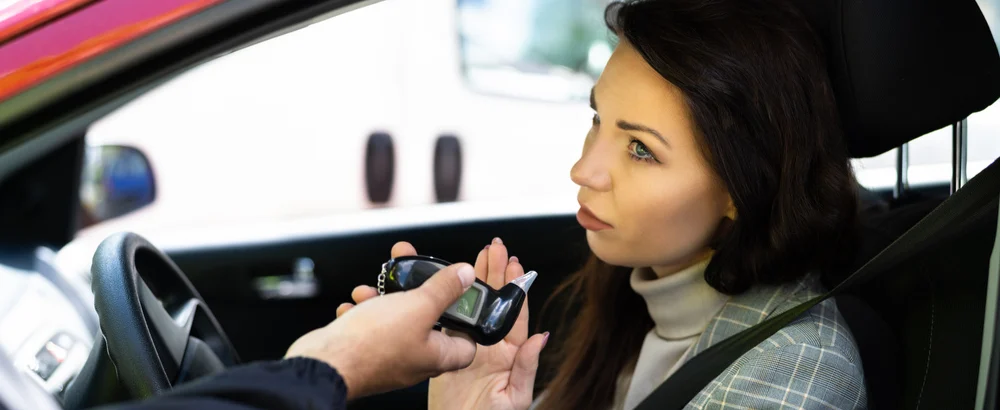
Next, we’ll scrutinize how any breath (or blood) samples were taken, and the analysis of them, including how the machines that measure them are calibrated and maintained. It’s critical to know if the people who did all these things followed the proper protocols. An experienced and skilled Michigan DUI attorney must not only know the law, but also have expertise in the science of alcohol testing – both in the field, meaning the side of the road – and in the station or laboratory, where breath and blood evidence is analyzed.
We do.
The simple truth is that most DUI (the legal term in Michigan is “Operating While Intoxicated,” or “OWI” for short) cases are not screwed up by the police so badly that they’ll be dismissed. In the real world – where DUI cases do not get thrown out of court like tennis balls bouncing out of bounds – the key in every case is to make things better so you can get past the whole situation, and move on with your life, unaffected by a simple and single mistake.
Within that majority of DUI cases that don’t get dismissed outright, my team and I are almost always able to negotiate a plea bargain that will reduce the original charge down to something less serious. For example, a charge of Operating While Intoxicated with a BAC of .17 or greater (commonly called “High BAC”) can sometimes be negotiated down to Impaired Driving (OWVI), the least serious of all DUI offense. This will prevent any loss of driving privileges, and will save the client lots of money, points on his or her driving record, and a lot of other grief all the way around.
Knowing how to best proceed with a case is determined by first evaluating the evidence. Remember, whatever is or isn’t in the evidence, DUI cases do not dismiss themselves. Finding any defect in that evidence comes from carefully examining it. Sometimes, that evidence isn’t strong enough to survive a proper legal challenge, and if that kind of defect is present in your case, we’ll find it.
If not, then we will negotiate with the prosecutor to get the least serious charge possible so that we can protect you and your interests and get you through this with as few negative consequences as possible. For everything that has been and will ever be said or written about DUI cases, here is the most accurate and important of them all:
Success in a DUI case is best measured by what does NOT happen to you.
For over 99% of all people facing a Michigan 1st offense DUI charge anywhere in the Greater-Detroit area, meaning in the district courts of Oakland, Macomb, Wayne, and the surrounding counties, the focus needs to be on both avoiding jail (that’s usually easy enough) and making sure you don’t get hung up with all kinds of testing, stuck in classes or counseling you don’t need (but have to pay for), while otherwise keeping any term of probation as short as possible.
Results
In terms of penalties, less is better. The best outcome in a DUI case is the one with the fewest negative consequences. While avoidng jail is usually easy enough for us in a 1st offense Michigan OWI charge here in the Metro-Detroit area , the fear of getting locked up is almost always the biggest concern anyone facing a Michigan DUI charge – at least until they find out that it’s highly unlikely to happen.
Once a person understands this, then his or her attention can be shifted to all the other, real-world penalties that can and will occur as a result of a DUI. As your lawyers, our job is to avoid and/or minimize as many of them as possible, and no-one does that better than us. The realistic consequences of a DUI include things like having your driver’s license suspended and being put on monthly reporting probation. Our job is to avoid them outright, or keeping them to a minimum.
The simple truth is that most DUI cases are not screwed up by the police so badly that they’ll be dismissed. This is why plea negotiations and getting your charges reduces is so critically important.
When it comes to probation, it can either be easy, or tough. Compare these widely different outcomes in a hypothetical DUI case:
# 1 – A 9-month term of non-reporting probation with no conditions or restrictions.
# 2 – A 2-year term of reporting probation that requires:
• Breath alcohol testing 3 times per day on a machine you have to rent,
• Urine testing for drugs 3 times per month at a testing facility,
• Mandatory A attendance on a weekly basis,
• Completing (and paying for) a program of counseling and/or treatment,
• Attending an alcohol or victim impact program,
• No leaving the state, except with permission from the court.
The closer anyone can get to #1, the better, but that won’t happen by accident. Results like that are the result of good work, not good luck.
Of all the conditions listed above, perhaps the biggest (and most avoidable) risk to anyone facing a 1st offense DUI charge is being ordered to complete all kinds of unnecessary alcohol classes and counseling. There’s a bit of irony to this, because early on, right after a DUI arrest, many people will say something like, “I’ll gladly go for all the counseling in the world if it keeps me out of jail.” You may have thought (and even said), the same thing yourself.
However, once you know that you’re not going to jail, then having to breath test 3 times a day and go to AA and/or the counseling center 3 nights a week will wear on you real fast. My team and I know that our job is to prevent the things that can happen in a case, not waste time and effort avoiding things that aren’t going to happen in the first place.
Beyond just being a DUI lawyer, I have a formal education in alcohol and substance abuse issues, as well, having completed a post-graduate program of addiction studies. This has provided me with a thorough understanding of the development, diagnosis and treatment of alcohol and drug problems. My team and I use this critically important knowledge to make things better in every DUI case we handle, and make sure that no one winds up having to go to treatment for an alcohol problem they don’t have.
For anyone whose drinking has become a problem, the goal is to make sure the person doesn’t get crammed into some “one-size-fits-all” counseling or treatment program that doesn’t address his or her particular needs, or that’s simply “too much.”
By law, before the Judge can sentence you for a DUI, you must be “screened” for the presence of an existing or potential drinking problem. This requires completing a written questionnaire. Each of your answers is assigned a point value, and the total is compared to a scoring key that the court uses to determine whether you have, or are at risk to develop, a problematic relationship to alcohol.
We can prepare you for that screening better than anyone else, and not just from the legal side of things, but the more important (at least as far as the screening goes) clinical side, as well. Our understanding of the diagnostic process means we can absolutely protect and help you avoid the very real “alcohol bias” inherent in the American court system when it comes to drunk driving offenders.
The alcohol bias arises from the not-so-surprising statistical fact that, as a group, people who get a DUI are statistically more likely to have (or to someday develop) a drinking problem than those who never get arrested for drunk driving. While this is true, it is also important to make sure the court is aware of the fact that the vast majority of people who get a single DUI do not have (and never will develop) a drinking problem.
Remember – Success in a DUI case is best measured by what does NOT happen to you.
That’s the gold standard, and the one we always follow.
If your facing a DUI charge anywhere in the Greater-Detroit area, make sure you contact our office. All of our consultaiton are free, confidendial, and done over the phone, right when you call. We are very friendly people who will be glad to answer your questions and explain things.
We can be reached Monday through Friday, from 8:30 AM until 5:00 PM at either 586-465-1980 or any of the other numbers on our website or blog (they all go the same place).