
Can You Ever Drive Again After a Third DUI

Share on Facebook
Share on X
Share on LinkedIn
By Jeffrey J. Randa
Can You Ever Drive Again After a Third DUI

In most cases, yes — but not automatically, and not without going through a formal process that most people don’t fully understand until they’re in the middle of it. A third OWI conviction, if it’s either your 2nd within 7 years or your 3rd within 10 years, results in mandatory license revocation. Getting back on the road requires either getting admitted to a Sobriety Court program (more on that later) or filing a formal driver’s license restoration appeal with the Michigan Secretary of State’s Office of Hearings and Administrative Oversight (OHAO) and winning it.

To win, you must meet a very high evidentiary standard and document genuine, sustained sobriety in a way that holds up under scrutiny. Our firm handles both the OWI defense side and the license restoration side of these cases. That matters more than it might seem — we’ll come back to it.

What a Third OWI Conviction Means in Michigan

A third OWI in Michigan is a felony. Michigan uses a lifetime lookback period for drunk driving offenses — if you have two prior OWI convictions anywhere in your history, a third arrest is charged as a felony regardless of when the earlier offenses occurred or whether they happened in another state with substantially similar laws. There is no 10-year window for the felony charge; that only applies to the driver’s license penalty. That surprises a lot of people.

The criminal penalties under Michigan’s drunk driving statute are serious. A conviction carries either one to five years in state prison, or probation with 30 days to one year in county jail combined with 60 to 180 days of community service. At least 48 hours of any jail sentence must be served consecutively. Mandatory jail can only be waived by either negotiating a plea bargain to a second offense misdemeanor, or — if that’s not possible — by admission into a specialty court program like Sobriety Court.

Fines range from $500 to $5,000, and vehicle immobilization or forfeiture may apply.

A felony OWI conviction also results in the loss of the right to own or possess a firearm under both Michigan and federal law. It can affect professional licenses in healthcare, education, law, and other regulated fields. Michigan law provides a path to restore firearm rights after the applicable waiting period; federal restrictions are governed separately and are considerably harder to lift.

Some courts in the Metro Detroit area offer a sobriety court program as a structured alternative for defendants facing a third OWI. As noted, if a person is admitted and successfully completes any specialty court program, the mandatory minimum jail term can be waived by the judge. Eligibility is not universal, and not every court in the tri-county area has an active program.

In many cases, entry into a sobriety court program requires negotiating the felony third offense OWI charge down to a second offense misdemeanor. This is always the better path in any case, but some local circuit courts also have such programs for those who are not eligible for a plea bargain that drops the third offense felony to a second offense misdemeanor.

For the right client, sobriety court is worth exploring early — and our firm has a track record of transferring cases from courts without a program to courts that do have one, including across county lines, when that option best serves a client’s long-term interests.

How Long Will Your License Be Revoked?

Michigan’s revocation rules for a third OWI depend on your specific history, and the difference between scenarios matters significantly. A revocation is for life, until and unless a person files and wins a formal driver’s license restoration appeal.

The base minimum waiting period to become eligible to appeal after 2 DUI convictions within 7 years is 1 year. In truth, a person has almost no chance of winning any such case for the better part of 3 years, because they must also have been off probation for a sufficient period of time to qualify.

If you had 2 prior convictions before your current conviction and this marks your 3rd within 10 years, that minimum rises to five years. Likewise, if your current revocation is a subsequent revocation within seven years of a prior revocation or denial — a common situation when someone has three OWI convictions within a 10-year window — the same 5-year minimum wait applies before you can even file for restoration.

These minimums are eligibility floors, not automatic expiration dates. The OHAO does not send you a letter when the time is up. Your license remains revoked until you file a formal license appeal and win your case. Reaching the eligibility date only opens the door to apply; it does not restore anything on its own.

There is also a terminology distinction worth understanding before you take any steps. A revoked license requires restoration — a formal OHAO hearing process involving evidence, documentation, and a high burden of proof. A suspended license, by contrast, is typically resolved by paying a fee after a certain, specified period of time has elapsed. A third OWI produces a revocation, not a suspension. These are legally distinct penalties, and people who confuse them often waste time — and sometimes money — pursuing a path that simply cannot help their situation.

What the OHAO License Restoration Hearing Requires

The OHAO hearing is a formal evidentiary proceeding. To succeed, you must present what the law specifies as “clear and convincing evidence” that your alcohol or substance issue is under control and likely to remain under control, and that you pose a low risk of drinking and driving again.

Under Michigan law, anyone convicted of 2 DUIs within 7 years or 3 DUIs within a lifetime is categorized as a “habitual alcohol offender.” A legal consequence of that is that any such person is presumed, by law, to have an alcohol problem. This means the starting point for any license appeal is that the person does, in fact, have a problem with drinking.

The burden of proof to show you’ve addressed that falls entirely on you, and the legal standard is high by design. The idea is that it’s better to be safe than sorry. The only thing the Secretary of State can know for certain is that people who don’t drink are exactly zero risk to drive drunk.

This requires proving that you’ve quit drinking and have the commitment and tools to remain alcohol-free for good — by providing evidence and testimony that meets that “clear and convincing evidence” standard.

A complete restoration petition typically includes: a hearing request application; a substance abuse evaluation completed by a state-approved counselor; a 12-panel drug screen with at least two integrity variables (no instant tests); and three to six support letters from people who can speak to your sobriety. These letters are not character references — they have a specific function, and every one of them needs to be written correctly, signed, and notarized before submission.

All OHAO hearings are currently conducted via video conference using Microsoft Teams. There are no in-person or county-specific hearings. Hearing officers are assigned statewide.

You can only petition once per year. A denial resets the clock regardless of why you were denied. That clock can be interrupted by an appeal to circuit court under MCL 257.323, which must be filed within 63 days of the denial, but that appeal applies a very narrow standard of review and is highly deferential to the hearing officer. The strength of the initial petition matters considerably — both for winning the first time and for building a record that supports an appeal if needed.

If the OHAO approves your petition, your license will initially be restricted, and you will be required to install an ignition interlock device in order to drive. It’s worth noting that the same requirement applies to any Sobriety Court license. After a monitoring period with a clean interlock record, you can file for a second OHAO hearing to remove the device and obtain full driving privileges. That approval is not automatic — it requires another formal petition, and you must meet the same burden of proof.

Why the Defense and the Restoration Case Are Connected

Here is something many people don’t consider until it’s too late: the way your third OWI case is resolved in criminal court can directly impact what your license restoration case looks like later. If you get into a Sobriety Court program, how well you do — or don’t do — will be an important part of your subsequent license restoration appeal. Whatever else happens in the criminal case, the OHAO hearing is always part of the picture, and what’s in your record when you get there is shaped by decisions made long before that.

Decisions made early in the criminal process — before sentencing, sometimes before arraignment — have the potential to either help or significantly complicate a restoration case down the road. That is why it matters to work with a firm that understands both sides. Most criminal defense attorneys don’t regularly handle license restoration. Most restoration practitioners are not in court handling the defense. Our firm does both, and the overlap between them is not incidental — it is one of the reasons we get the outcomes we do.

Jeffrey Randa completed a formal post-graduate program in addiction studies — not because it was required, but because our practice is so heavily concentrated in OWI and license restoration that a clinical understanding of alcohol use and recovery has helped us understand things that make us better at both. That background shows up in restoration hearings in ways that are hard to quantify but genuinely make a difference. Hearing officers are looking for a credible recovery story supported by solid documentation. The clinical framework we bring to evaluating and presenting that story is something that truly sets us apart.

Our Michigan license restoration practice is backed by a guarantee: we will win your driver’s license restoration or clearance case the first time, or we will continue to represent you at no additional attorney fee until we do. That commitment enables us to take on qualified clients who are genuinely sober and ready to build a complete, compelling case.

Ready to Find Out Where You Stand?

Whether you are currently facing a third OWI charge or working toward restoration after a past revocation, the right time to get accurate guidance is before you take steps that might complicate your situation. We offer a free, confidential phone consultations Monday through Friday, 8:30 a.m. to 5:00 p.m. — call us at 586-465-1980. 

After-hours messages are handled by our answering service. You can also reach us through the contact form or chat on our website. To learn more about the restoration process, visit our Michigan driver’s license restoration page.

About the Author
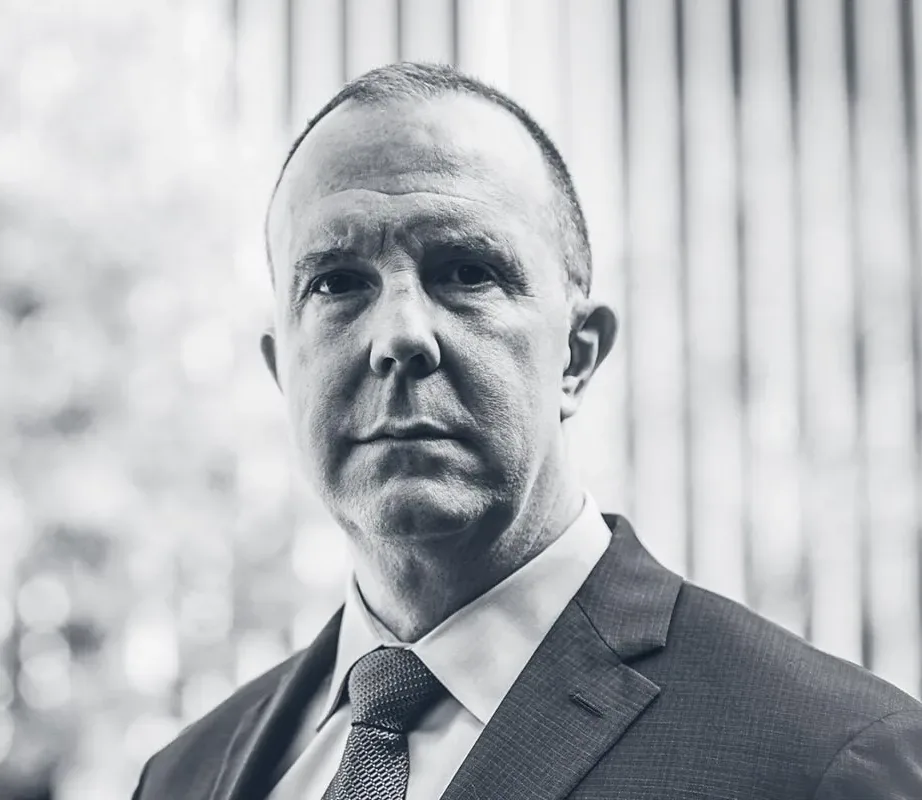
Jeff has been a practicing Michigan criminal lawyer, DUI attorney and driver’s license restoration lawyer for more than 30 years. He is passionate about winning and doing whatever it takes to accomplish that. He understands that a pending criminal or DUI charge is stressful and that being unable to legally drive is a huge problem.
Can You Ever Drive Again After a Third DUI

In most cases, yes — but not automatically, and not without going through a formal process that most people don’t fully understand until they’re in the middle of it. A third OWI conviction, if it’s either your 2nd within 7 years or your 3rd within 10 years, results in mandatory license revocation. Getting back on the road requires either getting admitted to a Sobriety Court program (more on that later) or filing a formal driver’s license restoration appeal with the Michigan Secretary of State’s Office of Hearings and Administrative Oversight (OHAO) and winning it.

To win, you must meet a very high evidentiary standard and document genuine, sustained sobriety in a way that holds up under scrutiny. Our firm handles both the OWI defense side and the license restoration side of these cases. That matters more than it might seem — we’ll come back to it.

What a Third OWI Conviction Means in Michigan

A third OWI in Michigan is a felony. Michigan uses a lifetime lookback period for drunk driving offenses — if you have two prior OWI convictions anywhere in your history, a third arrest is charged as a felony regardless of when the earlier offenses occurred or whether they happened in another state with substantially similar laws. There is no 10-year window for the felony charge; that only applies to the driver’s license penalty. That surprises a lot of people.

The criminal penalties under Michigan’s drunk driving statute are serious. A conviction carries either one to five years in state prison, or probation with 30 days to one year in county jail combined with 60 to 180 days of community service. At least 48 hours of any jail sentence must be served consecutively. Mandatory jail can only be waived by either negotiating a plea bargain to a second offense misdemeanor, or — if that’s not possible — by admission into a specialty court program like Sobriety Court.

Fines range from $500 to $5,000, and vehicle immobilization or forfeiture may apply.

A felony OWI conviction also results in the loss of the right to own or possess a firearm under both Michigan and federal law. It can affect professional licenses in healthcare, education, law, and other regulated fields. Michigan law provides a path to restore firearm rights after the applicable waiting period; federal restrictions are governed separately and are considerably harder to lift.

Some courts in the Metro Detroit area offer a sobriety court program as a structured alternative for defendants facing a third OWI. As noted, if a person is admitted and successfully completes any specialty court program, the mandatory minimum jail term can be waived by the judge. Eligibility is not universal, and not every court in the tri-county area has an active program.

In many cases, entry into a sobriety court program requires negotiating the felony third offense OWI charge down to a second offense misdemeanor. This is always the better path in any case, but some local circuit courts also have such programs for those who are not eligible for a plea bargain that drops the third offense felony to a second offense misdemeanor.

For the right client, sobriety court is worth exploring early — and our firm has a track record of transferring cases from courts without a program to courts that do have one, including across county lines, when that option best serves a client’s long-term interests.

How Long Will Your License Be Revoked?

Michigan’s revocation rules for a third OWI depend on your specific history, and the difference between scenarios matters significantly. A revocation is for life, until and unless a person files and wins a formal driver’s license restoration appeal.

The base minimum waiting period to become eligible to appeal after 2 DUI convictions within 7 years is 1 year. In truth, a person has almost no chance of winning any such case for the better part of 3 years, because they must also have been off probation for a sufficient period of time to qualify.

If you had 2 prior convictions before your current conviction and this marks your 3rd within 10 years, that minimum rises to five years. Likewise, if your current revocation is a subsequent revocation within seven years of a prior revocation or denial — a common situation when someone has three OWI convictions within a 10-year window — the same 5-year minimum wait applies before you can even file for restoration.

These minimums are eligibility floors, not automatic expiration dates. The OHAO does not send you a letter when the time is up. Your license remains revoked until you file a formal license appeal and win your case. Reaching the eligibility date only opens the door to apply; it does not restore anything on its own.

There is also a terminology distinction worth understanding before you take any steps. A revoked license requires restoration — a formal OHAO hearing process involving evidence, documentation, and a high burden of proof. A suspended license, by contrast, is typically resolved by paying a fee after a certain, specified period of time has elapsed. A third OWI produces a revocation, not a suspension. These are legally distinct penalties, and people who confuse them often waste time — and sometimes money — pursuing a path that simply cannot help their situation.

What the OHAO License Restoration Hearing Requires

The OHAO hearing is a formal evidentiary proceeding. To succeed, you must present what the law specifies as “clear and convincing evidence” that your alcohol or substance issue is under control and likely to remain under control, and that you pose a low risk of drinking and driving again.

Under Michigan law, anyone convicted of 2 DUIs within 7 years or 3 DUIs within a lifetime is categorized as a “habitual alcohol offender.” A legal consequence of that is that any such person is presumed, by law, to have an alcohol problem. This means the starting point for any license appeal is that the person does, in fact, have a problem with drinking.

The burden of proof to show you’ve addressed that falls entirely on you, and the legal standard is high by design. The idea is that it’s better to be safe than sorry. The only thing the Secretary of State can know for certain is that people who don’t drink are exactly zero risk to drive drunk.

This requires proving that you’ve quit drinking and have the commitment and tools to remain alcohol-free for good — by providing evidence and testimony that meets that “clear and convincing evidence” standard.

A complete restoration petition typically includes: a hearing request application; a substance abuse evaluation completed by a state-approved counselor; a 12-panel drug screen with at least two integrity variables (no instant tests); and three to six support letters from people who can speak to your sobriety. These letters are not character references — they have a specific function, and every one of them needs to be written correctly, signed, and notarized before submission.

All OHAO hearings are currently conducted via video conference using Microsoft Teams. There are no in-person or county-specific hearings. Hearing officers are assigned statewide.

You can only petition once per year. A denial resets the clock regardless of why you were denied. That clock can be interrupted by an appeal to circuit court under MCL 257.323, which must be filed within 63 days of the denial, but that appeal applies a very narrow standard of review and is highly deferential to the hearing officer. The strength of the initial petition matters considerably — both for winning the first time and for building a record that supports an appeal if needed.

If the OHAO approves your petition, your license will initially be restricted, and you will be required to install an ignition interlock device in order to drive. It’s worth noting that the same requirement applies to any Sobriety Court license. After a monitoring period with a clean interlock record, you can file for a second OHAO hearing to remove the device and obtain full driving privileges. That approval is not automatic — it requires another formal petition, and you must meet the same burden of proof.

Why the Defense and the Restoration Case Are Connected

Here is something many people don’t consider until it’s too late: the way your third OWI case is resolved in criminal court can directly impact what your license restoration case looks like later. If you get into a Sobriety Court program, how well you do — or don’t do — will be an important part of your subsequent license restoration appeal. Whatever else happens in the criminal case, the OHAO hearing is always part of the picture, and what’s in your record when you get there is shaped by decisions made long before that.

Decisions made early in the criminal process — before sentencing, sometimes before arraignment — have the potential to either help or significantly complicate a restoration case down the road. That is why it matters to work with a firm that understands both sides. Most criminal defense attorneys don’t regularly handle license restoration. Most restoration practitioners are not in court handling the defense. Our firm does both, and the overlap between them is not incidental — it is one of the reasons we get the outcomes we do.

Jeffrey Randa completed a formal post-graduate program in addiction studies — not because it was required, but because our practice is so heavily concentrated in OWI and license restoration that a clinical understanding of alcohol use and recovery has helped us understand things that make us better at both. That background shows up in restoration hearings in ways that are hard to quantify but genuinely make a difference. Hearing officers are looking for a credible recovery story supported by solid documentation. The clinical framework we bring to evaluating and presenting that story is something that truly sets us apart.

Our Michigan license restoration practice is backed by a guarantee: we will win your driver’s license restoration or clearance case the first time, or we will continue to represent you at no additional attorney fee until we do. That commitment enables us to take on qualified clients who are genuinely sober and ready to build a complete, compelling case.

Ready to Find Out Where You Stand?

Whether you are currently facing a third OWI charge or working toward restoration after a past revocation, the right time to get accurate guidance is before you take steps that might complicate your situation. We offer a free, confidential phone consultations Monday through Friday, 8:30 a.m. to 5:00 p.m. — call us at 586-465-1980. 

After-hours messages are handled by our answering service. You can also reach us through the contact form or chat on our website. To learn more about the restoration process, visit our Michigan driver’s license restoration page.

About the Author
Jeff has been a practicing Michigan criminal lawyer, DUI attorney and driver’s license restoration lawyer for more than 30 years. He is passionate about winning and doing whatever it takes to accomplish that. He understands that a pending criminal or DUI charge is stressful and that being unable to legally drive is a huge problem.
Website developed in accordance with Web Content Accessibility Guidelines 2.2.
If you encounter any issues while using this site, please contact us: 586.465.1980