
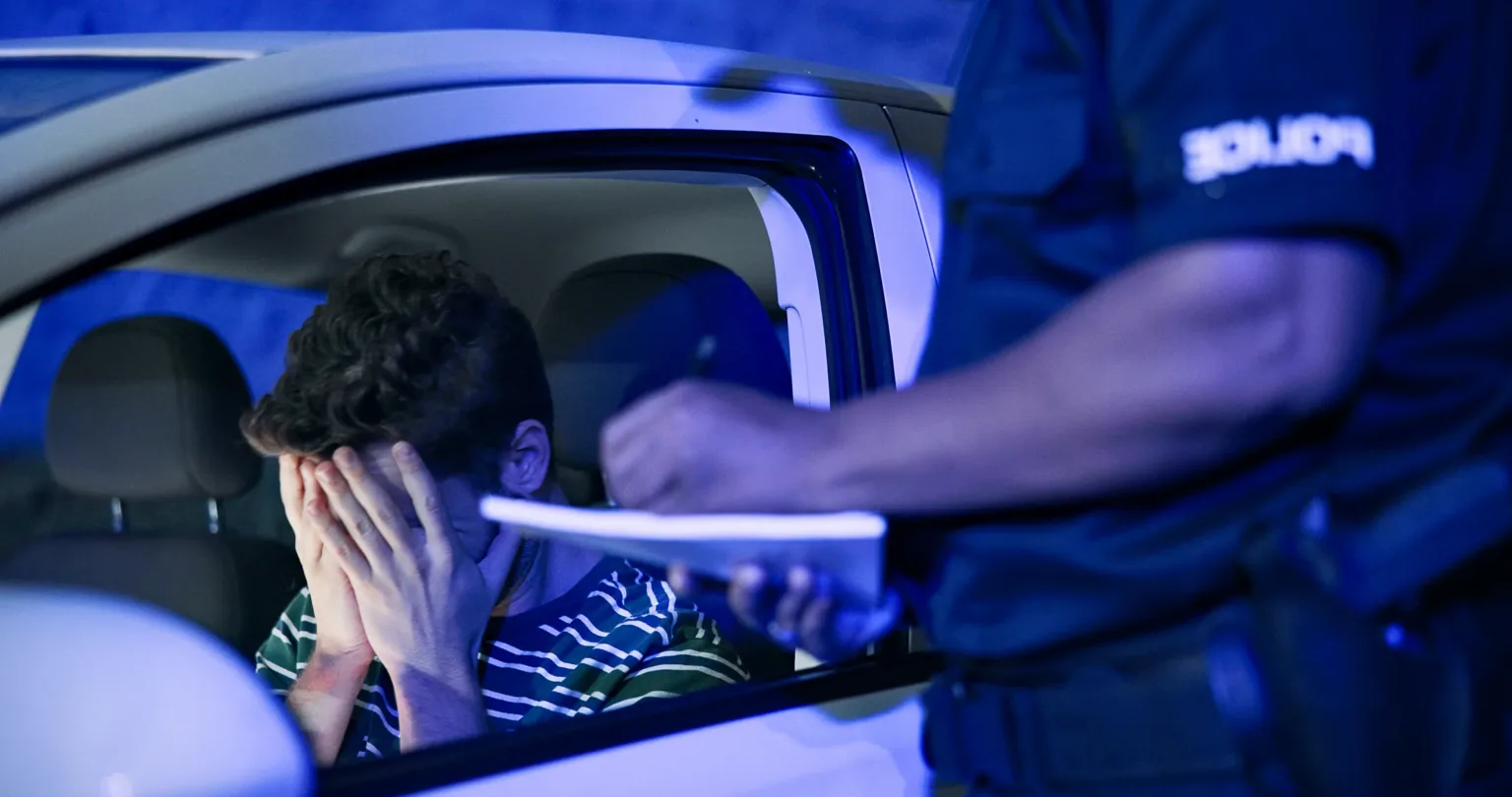

Why Many DUI Cases Feel Worse Than Expected
An OWI in Michigan is rarely “just a DUI.”
The charge impacts your driver’s license, your insurance, your permanent driving record, and in many cases, your employment — all at the same time. Mandatory penalties stack quickly, and decisions made in the first few weeks can shape the next several years.
That’s why so many people are caught off guard. They’re expecting one problem, but they wind up dealing with four.
Our Michigan OWI attorneys at Jeffrey Randa and Associates help clients across Metro Detroit navigate every layer of this — and keep their lives from going off the rails while they do it.
What Are the Penalties for a First-Offense OWI in Michigan?
Michigan’s term for what most people call a DUI is OWI — Operating While Intoxicated. Under Michigan Compiled Laws §257.625, operating a vehicle with a BAC of 0.08 or higher is a criminal offense, not a traffic violation. That distinction matters because the penalties reflect it.
A first conviction carries up to 93 days in jail, fines between $100 and $500, up to 360 hours of community service, and a 30-day hard suspension with no driving permitted, followed by 150 days of restricted driving.
Those are the statutory numbers. What surprises most people is how much stacks on top of them. The Michigan State Police publishes a summary of the costs and consequences of impaired driving if you want to verify those figures independently.
Probation is all but certain after a first drunk driving offense. It comes with conditions: regular check-ins, restrictions on conduct, random substance testing, and, often enough, mandatory substance abuse education or counseling. Violate any of those conditions and the case goes back before the judge — with the real possibility of additional penalties, including jail.
The charge hits harder if your BAC was 0.17 or higher. Michigan’s High BAC law (sometimes called “Super Drunk”) treats this as a significantly more serious offense. The maximum jail term jumps from 93 to 180 days. Fines increase to between $200 and $700. The license consequences escalate to a full year of suspension — 45 days with no driving, followed by 320 days on a restricted license with a mandatory ignition interlock device on every vehicle you operate.
Both are still first offense misdemeanors. But they are not the same misdemeanor.
What Are the Hidden Costs of an OWI Beyond the Court Fine?
Court fines for a first OWI can look modest on paper — sometimes as low as $100. Don’t let that number fool you.
When you add up court costs, mandatory program and probation fees, and license reinstatement fees, a first-offense conviction typically runs several thousand dollars. That’s before attorney fees or any income lost during the period of restricted driving.
Then the insurance bill arrives.
An OWI conviction can dramatically increase your auto insurance premiums for several years. The exact hit depends on your insurer, your prior record, and the specific charge. But the cumulative cost over the high-risk coverage period typically adds thousands more on top of everything else.
If an ignition interlock device is required — either as a probation condition or as part of the High BAC suspension terms — you cover all of it. Installation typically runs $100 to $200. Monthly monitoring fees run $75 to $100. Regular calibration appointments add to that total throughout the compliance period. Alcohol education and treatment programs ordered by the court carry their own fees as well.
And then there’s the record.
An OWI conviction creates a criminal record. It shows up on background checks. It can affect your employment, professional licensing in regulated industries, housing applications, and travel to some countries.
A first-and-only OWI conviction may eventually be eligible for expungement under Michigan’s set-aside law, but the five-year waiting period runs from the latest of your sentencing date, release from any jail term, or discharge from probation — whichever comes last.
It can never be removed from your driving record.
What Happens to Your Driver’s License After an OWI in Michigan?
For a first offense, the license consequences are defined and finite: 30 days of hard suspension, 150 days of restricted driving, and then full privileges return.
A second offense is a different category entirely.
A second OWI conviction within seven years results in a revocation — not a suspension. Those words are not interchangeable. A suspension ends automatically. A revocation does not.
The minimum revocation period for a second conviction is one year, but in practice, a person has almost no chance to win their license back for closer to three years. To succeed, you must prove, among several other things, that you have been completely alcohol and drug-free for a “sufficient” period of time after your probation has ended.
A third OWI conviction within ten years results in a minimum five-year revocation.
Once the minimum revocation period expires, you don’t simply get your license back. You have to apply for license restoration through a formal hearing with the Michigan Department of State’s Office of Hearings and Administrative Oversight (OHAO). That hearing requires clear and convincing evidence that any alcohol or substance issue is under control and that you pose a low or minimal risk of reoffending.
The evidence package typically includes a current substance abuse evaluation, letters from people in your life, and live testimony before a hearing officer. Many people try this without legal help and get denied — which means waiting, filing again, and starting the clock over.
There is a bit of potential good news: Michigan law allows the judge to override the revocation and issue a restricted driver’s license to anyone admitted to a Sobriety Court program. It’s not available everywhere and not a fit for everyone, but for the right person in the right court, it can make a real difference.
So What Does a Good Outcome in a Michigan DUI Case Actually Look Like?
Here’s the thing about DUI cases that many law firm websites overlook: success is not simply about beating the charge outright; that doesn’t happen in most cases. Instead, it’s about doing whatever is necessary to avoid as many of the potential consequences as possible — the record, the license hit, the insurance spike, the probation conditions.
Our firm lives by the motto that success in a DUI case is best measured by what does NOT happen to you.
The first goal in every case is to get the whole thing dismissed. If the evidence is strong enough to survive a legal challenge, the focus shifts to negotiating a plea bargain and making sure to produce the very best and most lenient outcome possible to avoid the fallout from what is most often a lapse in judgment.
Our firm concentrates exclusively on DUI defense, license restoration, and certain kinds of criminal cases. That focus matters. We also bring something to these cases that almost no other Michigan firm can offer: our founding attorney completed a formal post-graduate program in addiction studies. That knowledge shapes how we handle DUI cases in court and how we build restoration cases for OHAO hearings.
It’s also part of why we can back our license restoration practice with a first-time win guarantee. If your restoration or clearance case doesn’t win the first time, we keep working — at no additional fee. That’s not a marketing line. It’s the standard we hold ourselves to.
This connection between OWI defense and license restoration is one reason why having a lawyer with experience in both areas matters from the very start of a case. Decisions made during OWI defense can directly affect your ability to drive. These two areas of law are not separate — they ALWAYS go together.
Talk to Someone Who Handles These Cases Every Day
An OWI charge puts your license, your record, and your finances on the line all at once. My team and I have been handling these cases in the Metro Detroit area — Wayne, Oakland, Macomb, and the surrounding counties — for more than 30 years.
Call us for a free, confidential phone consultation. We’re available Monday through Friday, 8:30 a.m. to 5:00 p.m., at 586-465-1980. After-hours? Our answering service picks up. You can also reach us through the contact form or chat box on our website.
We’ll give you a straight answer about where things stand and what your options are. No pressure, no fluff. Learn more about our DUI defense practice.