
Denied License Restoration Appeal? What to Do Next
Key Takeaways
- To win a Michigan license restoration appeal, you must prove by clear and convincing evidence that your presumed alcohol or substance problem is under control and likely to stay that way, and hearing officers deny far more petitions than they grant.
- After a denial you generally must wait a year before requesting another hearing, and a Circuit Court appeal reviews only the existing record for legal error rather than giving you a new hearing.
- Denials often stem from small, compounding mistakes, such as sobriety time that doesn’t count (jail, inpatient treatment, or a sober living facility), generic support letters, inconsistent documentation, and testimony unprepared for cross-examination.
Many of the people who call us about a denied license restoration appeal weren’t our clients the first time around. Some represented themselves — filing the petition, gathering their own documentation, and sitting through a hearing before the Secretary of State’s Office of Hearings and Administrative Oversight (OHAO) or an administrative review — and still lost. Others hired a different lawyer and got the same result.
If that’s where you are right now, you’re not alone, and a denial is not the end of the road. It does mean the path forward looks different than it did the first time. Here’s what a denial means in the real world, why it happens more often than it should, and what your realistic options are from here.
What a Denial Actually Means
A Michigan license restoration or clearance appeal is judged against a specific legal standard. To begin, you need to understand that under Michigan law, a person who racks up 2 DUI convictions within 7 years or 3 within 10 years is legally categorized as a “habitual alcohol offender.” As a result, the law further presumes that any such person has an alcohol (and/or substance abuse) problem.
To win a license appeal, you must prove, by what the rules define as “clear and convincing evidence,” that your legally presumed alcohol (and/or substance abuse) problem is under control and that it is likely to remain under control. This means showing that you have been completely abstinent from alcohol and drugs (including and especially recreational marijuana) and that you have the ability and the commitment to never drink or get high again. That is a demanding standard, and whether you meet it or not is decided by a hearing officer who denies far more petitions than they grant.
If your petition was denied, Michigan law generally requires you to wait a full year before you can request another hearing. You do have the option to appeal the hearing officer’s decision directly to Circuit Court under MCL 257.323, but it’s worth understanding what that route actually involves before deciding which way to go.
A Circuit Court appeal is not a new hearing, and it is not a second chance for a judge to simply re-decide the case. The judge reviews the existing record from your OHAO hearing and can only set the decision aside for one of four kinds of legal problems: the decision violated the constitution or a Michigan statute, the Secretary of State exceeded its legal authority, the process itself was so unfair that it actually harmed your case, or the decision wasn’t supported by the evidence in the record or was a clear abuse of discretion. Lawyers collectively refer to these grounds as “legal error.” Outside of proving one of them, the judge generally cannot introduce new evidence or reconsider the case on its merits.
This is the single most misunderstood part of the process. Most people who come to us after a denied license restoration appeal assume the problem was that the hearing officer didn’t believe them, didn’t like them, or simply got the decision wrong. That’s not the legal standard a Circuit Court applies. In our experience, the large majority of people who’ve lost an OHAO hearing don’t have a realistic shot at winning a Circuit Court appeal, because the hearing officer’s decision was legally sound — even in cases where we believe the person should have won, or had what it takes to put together a winning appeal.
For most people, a stronger second petition, built correctly from the ground up, is the more reliable path back to a restored license.
Why License Restoration Appeals Filed Without an Attorney Get Denied
Losing a self-represented appeal seldom involves any kind of dramatic mistake. It’s usually a combination of smaller ones that add up to a petition that doesn’t meet the clear-and-convincing legal evidence standard. The patterns we see most often include:
Sobriety that doesn’t count the way petitioners think it does. Time spent in jail, prison, inpatient treatment, or a sober living facility doesn’t count toward the sobriety period a hearing officer will credit — that time has to be demonstrated in normal, everyday life.
Support letters that fall short of what’s required. A stack of letters from friends and family feels like strong evidence, but hearing officers are looking for specific things in each one, and generic letters of encouragement don’t meet the bar.
Documentation that’s incomplete or inconsistent. Even small gaps or contradictions between your paperwork and your testimony give a hearing officer an easy, defensible reason to deny the petition.
Testimony that isn’t prepared for cross-examination. The hearing itself is adversarial. Petitioners who haven’t been coached through likely questions are often caught off guard by how the hearing officer probes their answers.
What to Do Now
Once your required waiting period has passed, you’ll have another opportunity to petition — and this time, the goal is to fix what went wrong the first time, not simply resubmit the same case. That means a real, honest look at where the original petition fell short, making sure you file properly executed support letters, and are thoroughly prepared to give testimony that will help your case and make a clear case.
This is exactly the situation where an experienced license restoration attorney makes the biggest difference. We know what a hearing officer is looking for because these cases are the main focus of our practice, and we build every petition around the clear-and-convincing standard from day one rather than hoping general documentation is good enough.
Our First-Time Win Guarantee
Before we take a restoration or clearance case, we require at least 18 months of genuine sobriety — because filing before the case is truly ready is one of the most common reasons appeals fail. Once we do take your case, we guarantee to win it. If we don’t win the first time, we continue working on your case at no additional fee until you do.
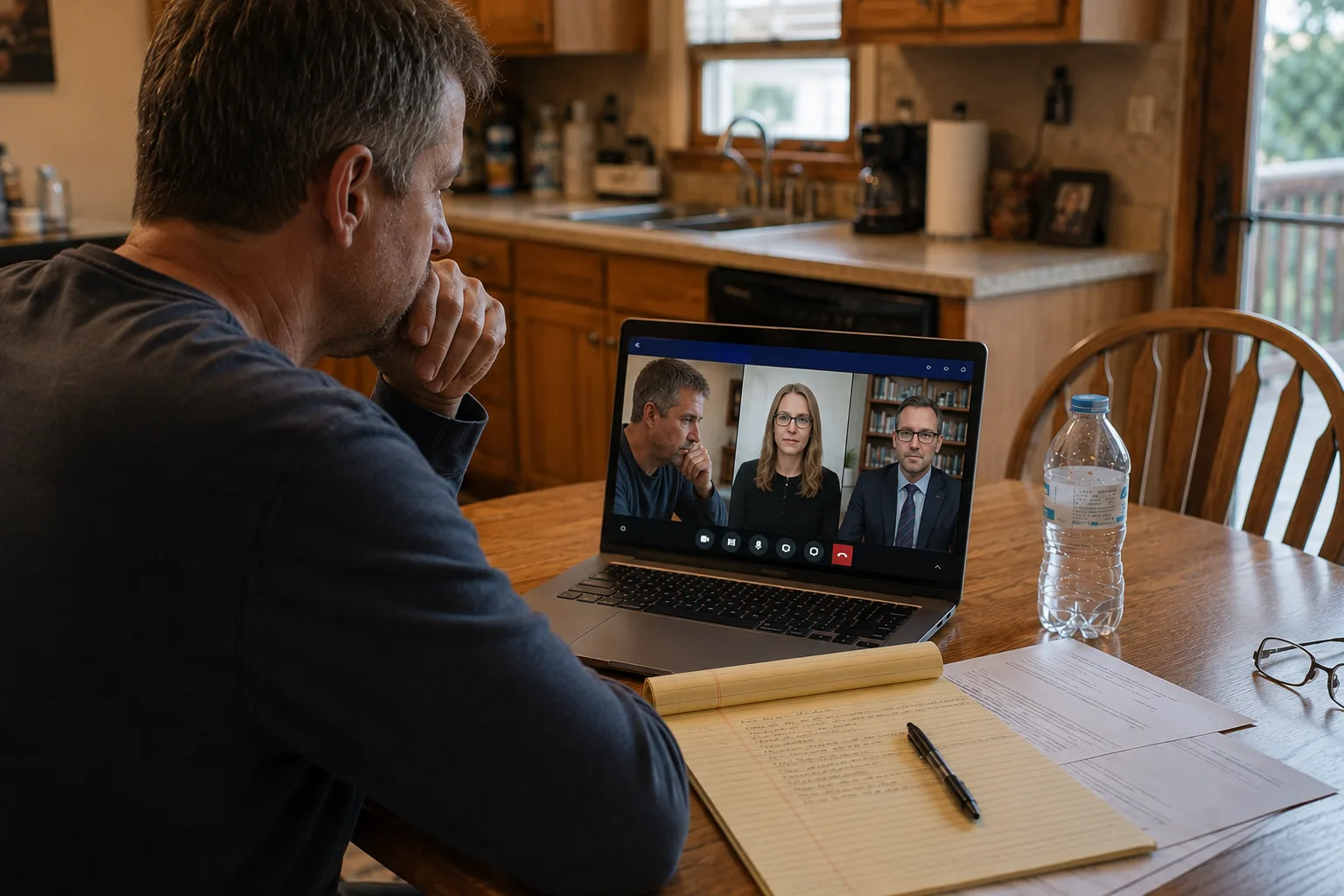
Our restoration and clearance practice is statewide and nationwide. Hearings and all meetings are conducted remotely by video through Microsoft Teams, so whether you live in Michigan or you’re an out-of-state driver dealing with a hold on your record, you never need to travel back to Michigan or even leave your couch to move your case forward.
Talk to Us About Your Denied License Restoration Appeal
Free, confidential phone consultations are available Monday through Friday, 8:30 AM to 5:00 PM, at 586-465-1980. An after-hours answering service is available outside those hours, and you can also reach us through the contact form or chat box on our website. For more on how our restoration and clearance practice works, visit our driver’s license restoration page.
Contact Us Today