

What If I Refused the Breath or Blood Test? Here’s What Happens Next

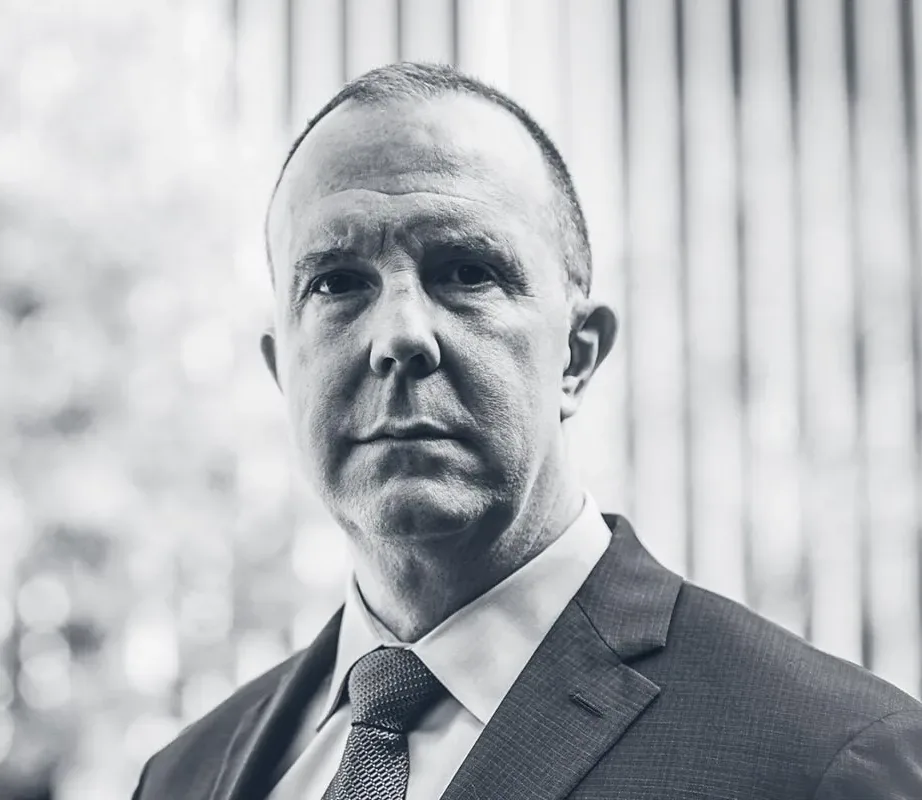
Michigan DUI defense attorney consulting with a client by phone about a refused breath test
Share on Facebook
Share on X
Share on LinkedIn

What You Need to Know

  • Refusing a breath or blood test after a DUI arrest triggers an automatic 1-year license suspension under Michigan’s Implied Consent law — separate from and on top of any DUI penalties.
  • You have exactly 14 days from the date of arrest to request a hearing before the Michigan Secretary of State. If you miss that window, the suspension is automatic.
  • Even if you lose the hearing — or don’t request one at all — our firm can go to circuit court and get your driving privileges back. For a first refusal, we have a 100% success rate.
  • Refusing almost never helps your DUI case. The police will almost always obtain a warrant for a blood draw anyway — and now you’re also facing the license suspension.
  • If you’ve already refused, the time to act is right now. Call our office and we’ll walk you through exactly what to do.

You Already Refused — Now What?

If you’re reading this, you’ve probably already refused a breath or blood test after a DUI arrest in Michigan — and you’re trying to figure out what comes next. My team and I handle these situations constantly, and the most important thing to understand right away is this: if you refused the breath test in Michigan, that does NOT make your DUI case go away. In almost every case, the police obtain a warrant for a blood draw regardless.

What the refusal does add is a mandatory 1-year license suspension on top of everything else.

The good news is that we can fix this. Our firm has a 100% success rate in circuit court for Implied Consent refusal appeals — meaning we’ve gotten driving privileges back for every single client who has faced this situation. But time matters. Keep reading.

Michigan’s Implied Consent Law — The Short Version

Under Michigan’s Implied Consent law, anyone who accepts a Michigan driver’s license — or who drives in Michigan on a license issued by another state — automatically agrees to submit to a chemical test (breath or blood) if a law enforcement officer has probable cause to believe they’re driving under the influence. This agreement is baked into the act of getting or using a license. It’s covered in driver’s ed, and “ignorance of the law is no excuse” applies in full here.

When a person refuses that post-arrest chemical test, Michigan law requires the Secretary of State to suspend their license for 1 year and add 6 points to their driving record. This happens independently of whatever else occurs in the DUI case itself — even if it’s dismissed altogether.

For a deeper dive into how the Implied Consent law works, including the actual statutory language and what the police are required to read you, see our full article: “Implied Consent (Chemical Test Refusal) in Michigan DUI Cases — What You Need to Know.” This article focuses on what to do now that a refusal has already happened.

PBT vs. Post-Arrest Test: Which One Matters Here?

There are two breath tests in a Michigan DUI case, and they carry very different consequences:

  1. The PBT (Preliminary Breath Test) is the handheld roadside breathalyzer given before arrest. Refusing a PBT is a civil infraction — it carries a fine, no points, and no license suspension. Not ideal, but not the problem we’re dealing with here.
  2. The formal chemical test is requested after arrest, at the police station. For breath, this is done on the Intoxilyzer 9000. For blood, it’s a draw, usually at the station or a medical facility. Refusing this test is what triggers the Implied Consent suspension.
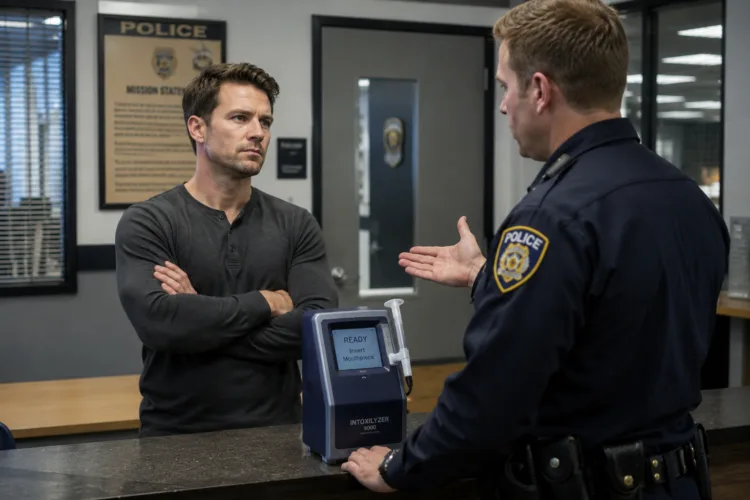
 

Man refusing the breath test in Michigan at a police station as officer gestures toward the Intoxilyzer 9000

If you refused the breath test in Michigan — specifically the post-arrest test at the station — the license suspension issue very much applies. If you only refused the roadside PBT, it doesn’t.

What Happens Immediately After a Refusal

When someone has refused the breath test in Michigan, the officer files an “Officer’s Report of Refusal to Submit to Chemical Test” with the Michigan Secretary of State. The person is given a copy of that form, which serves as a temporary driver’s license.

That form contains critical information: the person has 14 days to request a hearing before the Secretary of State’s Office of Hearings and Administrative Oversight (OHAO). If no hearing is requested, the 1-year suspension kicks in automatically.

Simultaneously, the police will almost certainly seek a warrant for a blood draw. Every court has a magistrate available around the clock to review these requests. In over 30 years of handling thousands of DUI cases, our firm has only seen a handful of cases where the police did not obtain a warrant after a refusal.

In other words: in more than 99% of refusal cases, the police get the blood evidence anyway. The refusal accomplishes nothing for the DUI case and adds a mandatory license suspension.

Your 14-Day Window: Should You Request a Hearing?

Yes — almost always. Here’s why: even if you don’t have a strong defense, requesting a hearing costs nothing extra and gives you one realistic upside. If the arresting officer doesn’t appear, the refusal is dismissed and your license is saved. That happens in roughly 1 out of every 20 or so cases — not often, but it’s a free chance and worth taking.

If you do have a valid defense, we’ll fight hard at the hearing. The law allows only four issues to be contested:

  1. Whether the officer had reasonable grounds to believe you committed an alcohol-related traffic offense.
  2. Whether you were lawfully placed under arrest for that offense.
  3. Whether your refusal was reasonable under the circumstances.
  4. Whether you were properly advised of your chemical test rights.

Issue #4 — whether you were properly advised of your rights — is the most common ground for a successful challenge. Because police conduct is captured on dashcam, bodycam, and station video, this is often something we can confirm or contest quickly.

We’re honest with our clients about this: if there’s no viable defense at the Secretary of State level, we won’t recommend spending money on a hearing we can’t win. The real safety net — the circuit court appeal to get your license back — is available regardless.

Getting Your License Back: The Circuit Court Appeal

Even if you lose the Secretary of State hearing — or skip it entirely — there is a workaround, and it’s the route most of our clients take. Michigan law allows a person facing a first Implied Consent refusal to go to circuit court and petition for a restricted license that overrides the mandatory suspension.

Different circuit courts have different requirements. Some require a formal substance use evaluation to be filed with the petition; others don’t. Our firm knows exactly what each court needs, and our evaluator is experienced specifically in these (they are not standard driver’s license restoration) evaluations.

After more than 30 years and hundreds of these appeals, our firm has a 100% success rate in circuit court for Implied Consent refusal cases.

Important: this circuit court relief is only available for a first Implied Consent refusal. If you have a prior refusal on your record, you cannot obtain any restricted driving privileges during the 2-year suspension period for a second violation. Although it’s rare, this is not a situation where the same workaround applies.

A Note on Sobriety Court

If you’re facing a second or third DUI and considering sobriety court, be aware that a sobriety court judge can override a license revocation — but cannot override an Implied Consent suspension. Only a circuit court judge can do that. If you’ve refused the breath test in Michigan and are looking at sobriety court, we need to handle the Implied Consent appeal in circuit court first. It’s more complicated, but our firm does this regularly.

Does Refusing the Breath Test in Michigan Actually Help Your Case?

Almost never. This is one of the most persistent misconceptions we encounter. People assume that without a breath or blood test, the prosecution can’t prove their BAC — and therefore can’t prove the DUI.

In practice, that’s not how it works.

As noted, the police obtain a warrant for a blood draw in more than 99% of refusals. The blood is drawn, tested by the Michigan State Police Crime Laboratory, and becomes evidence in the DUI case just as a breath test result would have. The refusal itself can also be used against the person in court as a circumstantial indication of consciousness of guilt.

There is one narrow scenario where refusing makes strategic sense: a person who has no valid license and nothing to lose from an additional suspension might rationally refuse to avoid giving the prosecution a cleaner BAC result. But for anyone with a license they want to keep, refusing is almost always the wrong call. In either case, the police are almost certain to get a warrant for a blood draw anyway.

What About Urine Tests?

Michigan law technically includes urine as a chemical test option, but in practice urine is almost never requested. A urine sample can’t establish BAC at the time of driving — it only shows that alcohol or drugs were consumed at some point. For suspected drug impairment, blood is far more useful. You can ignore urine as a practical concern in almost every DUI case.

Challenging the Blood Draw Evidence

When the police obtain a warrant for a blood draw after a refusal, every aspect of the collection and analysis becomes a target for examination. This is one of the most productive areas for a DUI defense challenge.

  • How the blood was drawn and by whom
  • Chain of custody from the draw to the Michigan State Police Crime Laboratory
  • Storage and handling of the sample
  • The time gap between the refusal, the warrant, and the actual draw — a significant delay can mean the BAC result doesn’t accurately reflect what was in the person’s system at the time of driving
  • The laboratory’s analysis procedures

In some cases, problems with the blood draw evidence are serious enough to get the DUI charge reduced or dismissed. More often, they provide leverage for a better outcome. Our firm examines every piece of blood evidence as a matter of course — we never accept it at face value.
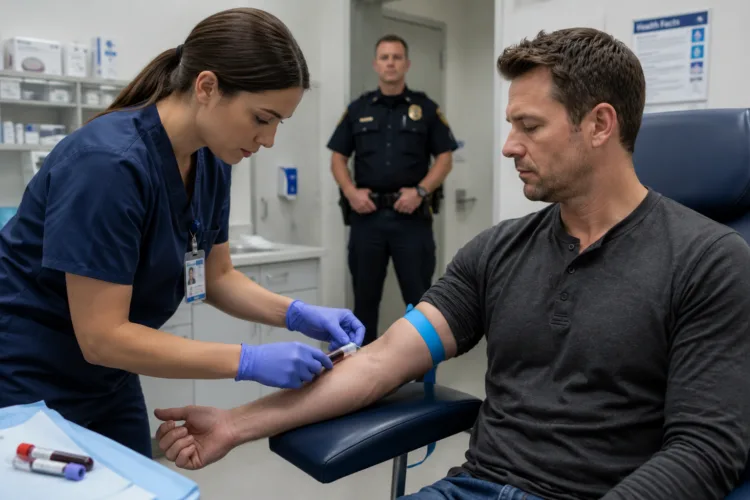
Medical professional drawing blood from a DUI suspect after a refused breath test in Michigan, police officer present

What Our Clients Say

Attorney Jeff and his team are absolutely amazing! They will treat your case with care and support throughout the entire DUI process. Every one on the team treats you with respect and wants the best outcome for you. They are the number one, second to none firm. — Talise A.

Hi Everyone – I can’t believe you got MY WHOLE DUI CASE THROWN OUT! My lawyers worked hard, told me to be patient, and then got the whole case dismissed. Best decision I ever made was to hire you guys. — David

When they guarantee getting your license reinstated, they mean it! — Marcus B.

Refused the Test? Call Us Today.

If you’ve refused the breath test in Michigan after a DUI arrest, the clock is running. You have 14 days from the date of arrest to request a hearing — and every day you wait is a day closer to an automatic suspension.

My team and I handle DUI and Implied Consent cases across Wayne, Oakland, Macomb, and the surrounding counties. We’ll tell you honestly where you stand, what your options are, and what it will cost. No runaround.

Call us for a free, confidential phone consultation: Monday through Friday, 8:30 a.m. to 5:00 p.m., at 586-465-1980. An after-hours answering service is available outside those hours. You can also reach us through the contact form or chat box on our website. For more on how we approach DUI defense, visit our Michigan DUI defense page.

Frequently Asked Questions

Is it better to refuse a breathalyzer if you’re drunk?

Almost never. Refusing the breath test in Michigan means the police will obtain a warrant for a blood draw in virtually every case, so you’re not avoiding BAC evidence — you’re just adding a mandatory 1-year license suspension on top of the DUI. The only person for whom refusal might make sense is someone with no valid license and nothing to lose from the additional suspension.

Does a roadside breath test hold up in court?

With limited exceptions, the PBT result from the roadside handheld unit is not admissible to prove intoxication or BAC. It can be used in a probable cause hearing (felony cases only), to establish that the DUI arrest was lawful, or to rebut BAC testimony. It’s much less reliable than the formal Intoxilyzer 9000 result, which requires regular calibration and maintenance — records we always examine.

What if I was never read my chemical test rights?

That’s issue #4 in the Implied Consent hearing — and it’s the most commonly successful defense. The officer is required to read the chemical test rights from the DI 177 form before requesting the test. If that didn’t happen, or wasn’t done properly, we can challenge the refusal. Police stations have video, and we pull it as part of every case review.

Can I get a restricted license even after refusing?

Yes — for a first refusal. Michigan law allows a person to petition the circuit court for restricted driving privileges that override the Implied Consent suspension. Our firm handles these petitions regularly and has a 100% success rate. If this is a second refusal, that option is not available.

Additional Resources

About the Author
Jeff has been a practicing Michigan criminal lawyer, DUI attorney and driver’s license restoration lawyer for more than 30 years. He is passionate about winning and doing whatever it takes to accomplish that. He understands that a pending criminal or DUI charge is stressful and that being unable to legally drive is a huge problem.
Michigan DUI defense attorney consulting with a client by phone about a refused breath test
What If I Refused the Breath or Blood Test? Here’s What Happens Next

What You Need to Know

  • Refusing a breath or blood test after a DUI arrest triggers an automatic 1-year license suspension under Michigan’s Implied Consent law — separate from and on top of any DUI penalties.
  • You have exactly 14 days from the date of arrest to request a hearing before the Michigan Secretary of State. If you miss that window, the suspension is automatic.
  • Even if you lose the hearing — or don’t request one at all — our firm can go to circuit court and get your driving privileges back. For a first refusal, we have a 100% success rate.
  • Refusing almost never helps your DUI case. The police will almost always obtain a warrant for a blood draw anyway — and now you’re also facing the license suspension.
  • If you’ve already refused, the time to act is right now. Call our office and we’ll walk you through exactly what to do.

You Already Refused — Now What?

If you’re reading this, you’ve probably already refused a breath or blood test after a DUI arrest in Michigan — and you’re trying to figure out what comes next. My team and I handle these situations constantly, and the most important thing to understand right away is this: if you refused the breath test in Michigan, that does NOT make your DUI case go away. In almost every case, the police obtain a warrant for a blood draw regardless.

What the refusal does add is a mandatory 1-year license suspension on top of everything else.

The good news is that we can fix this. Our firm has a 100% success rate in circuit court for Implied Consent refusal appeals — meaning we’ve gotten driving privileges back for every single client who has faced this situation. But time matters. Keep reading.

Michigan’s Implied Consent Law — The Short Version

Under Michigan’s Implied Consent law, anyone who accepts a Michigan driver’s license — or who drives in Michigan on a license issued by another state — automatically agrees to submit to a chemical test (breath or blood) if a law enforcement officer has probable cause to believe they’re driving under the influence. This agreement is baked into the act of getting or using a license. It’s covered in driver’s ed, and “ignorance of the law is no excuse” applies in full here.

When a person refuses that post-arrest chemical test, Michigan law requires the Secretary of State to suspend their license for 1 year and add 6 points to their driving record. This happens independently of whatever else occurs in the DUI case itself — even if it’s dismissed altogether.

For a deeper dive into how the Implied Consent law works, including the actual statutory language and what the police are required to read you, see our full article: “Implied Consent (Chemical Test Refusal) in Michigan DUI Cases — What You Need to Know.” This article focuses on what to do now that a refusal has already happened.

PBT vs. Post-Arrest Test: Which One Matters Here?

There are two breath tests in a Michigan DUI case, and they carry very different consequences:

  1. The PBT (Preliminary Breath Test) is the handheld roadside breathalyzer given before arrest. Refusing a PBT is a civil infraction — it carries a fine, no points, and no license suspension. Not ideal, but not the problem we’re dealing with here.
  2. The formal chemical test is requested after arrest, at the police station. For breath, this is done on the Intoxilyzer 9000. For blood, it’s a draw, usually at the station or a medical facility. Refusing this test is what triggers the Implied Consent suspension.


Man refusing the breath test in Michigan at a police station as officer gestures toward the Intoxilyzer 9000

If you refused the breath test in Michigan — specifically the post-arrest test at the station — the license suspension issue very much applies. If you only refused the roadside PBT, it doesn’t.

What Happens Immediately After a Refusal

When someone has refused the breath test in Michigan, the officer files an “Officer’s Report of Refusal to Submit to Chemical Test” with the Michigan Secretary of State. The person is given a copy of that form, which serves as a temporary driver’s license.

That form contains critical information: the person has 14 days to request a hearing before the Secretary of State’s Office of Hearings and Administrative Oversight (OHAO). If no hearing is requested, the 1-year suspension kicks in automatically.

Simultaneously, the police will almost certainly seek a warrant for a blood draw. Every court has a magistrate available around the clock to review these requests. In over 30 years of handling thousands of DUI cases, our firm has only seen a handful of cases where the police did not obtain a warrant after a refusal.

In other words: in more than 99% of refusal cases, the police get the blood evidence anyway. The refusal accomplishes nothing for the DUI case and adds a mandatory license suspension.

Your 14-Day Window: Should You Request a Hearing?

Yes — almost always. Here’s why: even if you don’t have a strong defense, requesting a hearing costs nothing extra and gives you one realistic upside. If the arresting officer doesn’t appear, the refusal is dismissed and your license is saved. That happens in roughly 1 out of every 20 or so cases — not often, but it’s a free chance and worth taking.

If you do have a valid defense, we’ll fight hard at the hearing. The law allows only four issues to be contested:

  1. Whether the officer had reasonable grounds to believe you committed an alcohol-related traffic offense.
  2. Whether you were lawfully placed under arrest for that offense.
  3. Whether your refusal was reasonable under the circumstances.
  4. Whether you were properly advised of your chemical test rights.

Issue #4 — whether you were properly advised of your rights — is the most common ground for a successful challenge. Because police conduct is captured on dashcam, bodycam, and station video, this is often something we can confirm or contest quickly.

We’re honest with our clients about this: if there’s no viable defense at the Secretary of State level, we won’t recommend spending money on a hearing we can’t win. The real safety net — the circuit court appeal to get your license back — is available regardless.

Getting Your License Back: The Circuit Court Appeal

Even if you lose the Secretary of State hearing — or skip it entirely — there is a workaround, and it’s the route most of our clients take. Michigan law allows a person facing a first Implied Consent refusal to go to circuit court and petition for a restricted license that overrides the mandatory suspension.

Different circuit courts have different requirements. Some require a formal substance use evaluation to be filed with the petition; others don’t. Our firm knows exactly what each court needs, and our evaluator is experienced specifically in these (they are not standard driver’s license restoration) evaluations.

After more than 30 years and hundreds of these appeals, our firm has a 100% success rate in circuit court for Implied Consent refusal cases.

Important: this circuit court relief is only available for a first Implied Consent refusal. If you have a prior refusal on your record, you cannot obtain any restricted driving privileges during the 2-year suspension period for a second violation. Although it’s rare, this is not a situation where the same workaround applies.

A Note on Sobriety Court

If you’re facing a second or third DUI and considering sobriety court, be aware that a sobriety court judge can override a license revocation — but cannot override an Implied Consent suspension. Only a circuit court judge can do that. If you’ve refused the breath test in Michigan and are looking at sobriety court, we need to handle the Implied Consent appeal in circuit court first. It’s more complicated, but our firm does this regularly.

Does Refusing the Breath Test in Michigan Actually Help Your Case?

Almost never. This is one of the most persistent misconceptions we encounter. People assume that without a breath or blood test, the prosecution can’t prove their BAC — and therefore can’t prove the DUI.

In practice, that’s not how it works.

As noted, the police obtain a warrant for a blood draw in more than 99% of refusals. The blood is drawn, tested by the Michigan State Police Crime Laboratory, and becomes evidence in the DUI case just as a breath test result would have. The refusal itself can also be used against the person in court as a circumstantial indication of consciousness of guilt.

There is one narrow scenario where refusing makes strategic sense: a person who has no valid license and nothing to lose from an additional suspension might rationally refuse to avoid giving the prosecution a cleaner BAC result. But for anyone with a license they want to keep, refusing is almost always the wrong call. In either case, the police are almost certain to get a warrant for a blood draw anyway.

What About Urine Tests?

Michigan law technically includes urine as a chemical test option, but in practice urine is almost never requested. A urine sample can’t establish BAC at the time of driving — it only shows that alcohol or drugs were consumed at some point. For suspected drug impairment, blood is far more useful. You can ignore urine as a practical concern in almost every DUI case.

Challenging the Blood Draw Evidence

When the police obtain a warrant for a blood draw after a refusal, every aspect of the collection and analysis becomes a target for examination. This is one of the most productive areas for a DUI defense challenge.

  • How the blood was drawn and by whom
  • Chain of custody from the draw to the Michigan State Police Crime Laboratory
  • Storage and handling of the sample
  • The time gap between the refusal, the warrant, and the actual draw — a significant delay can mean the BAC result doesn’t accurately reflect what was in the person’s system at the time of driving
  • The laboratory’s analysis procedures

In some cases, problems with the blood draw evidence are serious enough to get the DUI charge reduced or dismissed. More often, they provide leverage for a better outcome. Our firm examines every piece of blood evidence as a matter of course — we never accept it at face value.

Medical professional drawing blood from a DUI suspect after a refused breath test in Michigan, police officer present

What Our Clients Say

Attorney Jeff and his team are absolutely amazing! They will treat your case with care and support throughout the entire DUI process. Every one on the team treats you with respect and wants the best outcome for you. They are the number one, second to none firm. — Talise A.

Hi Everyone – I can’t believe you got MY WHOLE DUI CASE THROWN OUT! My lawyers worked hard, told me to be patient, and then got the whole case dismissed. Best decision I ever made was to hire you guys. — David

When they guarantee getting your license reinstated, they mean it! — Marcus B.

Refused the Test? Call Us Today.

If you’ve refused the breath test in Michigan after a DUI arrest, the clock is running. You have 14 days from the date of arrest to request a hearing — and every day you wait is a day closer to an automatic suspension.

My team and I handle DUI and Implied Consent cases across Wayne, Oakland, Macomb, and the surrounding counties. We’ll tell you honestly where you stand, what your options are, and what it will cost. No runaround.

Call us for a free, confidential phone consultation: Monday through Friday, 8:30 a.m. to 5:00 p.m., at 586-465-1980. An after-hours answering service is available outside those hours. You can also reach us through the contact form or chat box on our website. For more on how we approach DUI defense, visit our Michigan DUI defense page.

Frequently Asked Questions

Is it better to refuse a breathalyzer if you’re drunk?

Almost never. Refusing the breath test in Michigan means the police will obtain a warrant for a blood draw in virtually every case, so you’re not avoiding BAC evidence — you’re just adding a mandatory 1-year license suspension on top of the DUI. The only person for whom refusal might make sense is someone with no valid license and nothing to lose from the additional suspension.

Does a roadside breath test hold up in court?

With limited exceptions, the PBT result from the roadside handheld unit is not admissible to prove intoxication or BAC. It can be used in a probable cause hearing (felony cases only), to establish that the DUI arrest was lawful, or to rebut BAC testimony. It’s much less reliable than the formal Intoxilyzer 9000 result, which requires regular calibration and maintenance — records we always examine.

What if I was never read my chemical test rights?

That’s issue #4 in the Implied Consent hearing — and it’s the most commonly successful defense. The officer is required to read the chemical test rights from the DI 177 form before requesting the test. If that didn’t happen, or wasn’t done properly, we can challenge the refusal. Police stations have video, and we pull it as part of every case review.

Can I get a restricted license even after refusing?

Yes — for a first refusal. Michigan law allows a person to petition the circuit court for restricted driving privileges that override the Implied Consent suspension. Our firm handles these petitions regularly and has a 100% success rate. If this is a second refusal, that option is not available.

Additional Resources

About the Author
Jeff has been a practicing Michigan criminal lawyer, DUI attorney and driver’s license restoration lawyer for more than 30 years. He is passionate about winning and doing whatever it takes to accomplish that. He understands that a pending criminal or DUI charge is stressful and that being unable to legally drive is a huge problem.
Website developed in accordance with Web Content Accessibility Guidelines 2.2.
If you encounter any issues while using this site, please contact us: 586.465.1980