

3 Things you Should know About a DUI Arrest in Michigan
Key Takeaways
- Nobody plans on getting a DUI – most of the time, it just “happens.”
- Realistically, once you’re asked to step out of a vehicle on suspicion of operating while intoxicated, you will almost certainly wind up arrested for DUI.
- There is no way to talk your way out of a drunk driving arrest.
- Refusing a breath test or blood test in Michigan will result in a 1-year driver’s license suspension.
- Fortunately, we can go to court and seek to have that overturned. Our firm has a 100% success rate in those appeals.
As busy Michigan DUI lawyers, there are certain issues that we see every day. In this article, I want to cover 3 of the most common things about Michigan DUI cases:
- First, once someone pulled over is asked to step out of the vehicle to take field sobriety tests, he or she is almost certainly going to be arrested for DUI.
- Second, a person will never sweet-talk or argue his or her way out of a DUI arrest.
- Third, anyone who refuses to take a breath or blood test after being arrested for a DUI will have his or her driver’s license suspended.
The Backstory
One evening, while my wife and I were driving home from a night out, we passed a large, well-lit gas station. There, we saw that a car had been stopped near the pumps by 2 police vehicles with flashing emergency lights.
As I looked over, I saw the driver standing outside and being watched by 2 police officers as he performed some field sobriety tests.
“He’s getting arrested,” I said to my wife.
She then asked how I knew that based upon what we saw.
I explained to her that by the time someone is asked to step out of his or her vehicle for field sobriety tests, it’s usually a foregone conclusion that he or she will be getting a ride to the police station.
That information may not be of any direct help for anyone who has already been arrested for a DUI, but perhaps it can help him or her avoid wasting their time wondering if they could have done or said anything differently to have avoided being taken into custody and having to go through the legal process.
What You Should Know
In this article, we’re going to look at the 3 things noted above that everyone facing a DUI charge in the Metro Detroit area should know. Make sure to read all the way through, because #3 is critically important to anyone who has refused a breath or blood (chemical) test.
For the most part, what can be done to make things better in a pending DUI depends on what did and did not happen during the initial police contact, the arrest that followed, and the collection of the evidence.
As a starting point, we should note that the actual term in Michigan for what everyone just calls a “DUI” is actually “Operating While Intoxicated,” or “OWI,” for short. This law covers both driving while under the influence of alcohol and/or a controlled substance.
Nobody plans on going out and getting arrested for drunk driving. The simple fact is that most DUI’s just “happen,” especially in first-offense cases.
That said, a person’s actions during the arrest process can have a profound impact on the final outcome of his or her case. We’ll examine that below.
1. Taking a Field Sobriety Test Usually Leads to a DUI Arrest
The first thing to know is that the police are very good at figuring out when someone is intoxicated. That’s a very important part of their job. When someone is suspected of drunk driving by the police, those suspicions usually turn out to be right.
What’s more, once the police interact with a driver and decide to ask him or her out of the car to take some field sobriety tests, it’s a safe bet that the person is over the legal limit and will be arrested.
It is highly unusual for the police to miss the fact that a driver with whom they’re having contact is intoxicated.
Almost nobody ever gets pulled over on suspicion of DUI, put through field sobriety tests, but is then found to NOT be intoxicated, and let go. When is the last time you heard that kind of story?
A key part of our job as DUI lawyers is to carefully scrutinize all of the evidence from a DUI arrest and how it was collected. Mistakes in that process may not be very common, but they’re not extremely rare, either.
For example, the very week this article was updated, our firm challenged the evidence in a local, Oakland County DUI arrest and got the entire case thrown out of court.
That only occurred because of our meticulous commitment to examine everything related to a case, including all relevant (police dash cam and body cam) video.
2. You Cannot Talk Your Way Out of a DUI
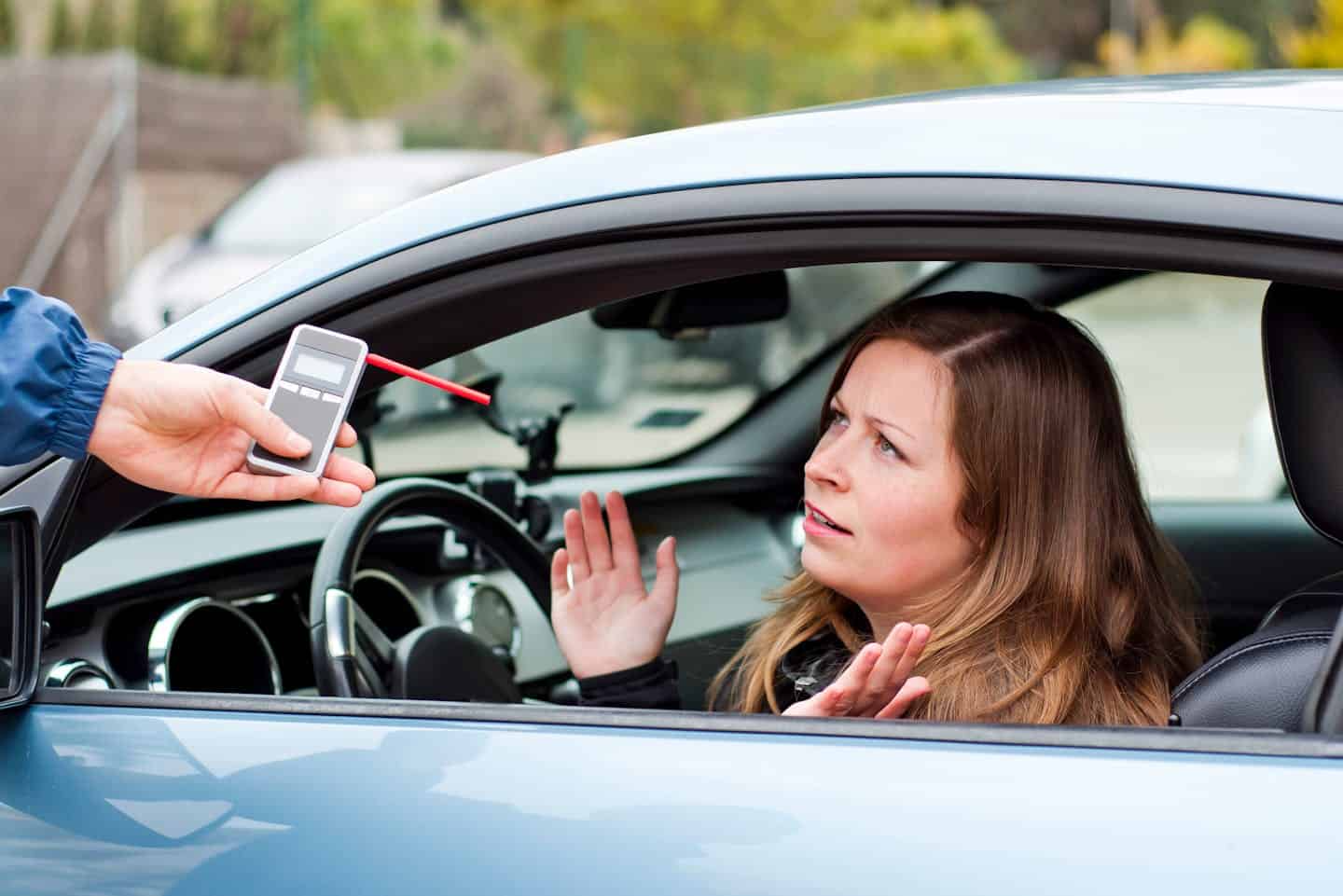
The second thing to know is that there is really no way to talk or argue your way out of a DUI once there has been police contact. It does NOT matter:
- Who you are,
- Who you know,
- That you have never been in trouble before,
- That you can’t have a DUI on your record, or
- Anything else.
Of course, that doesn’t stop many people from trying every way possible to convince the officer to let them go, but it never works.
While trying to talk one’s way out of trouble is understandable (yet ineffective) it is, as noted above, very much true that how a person behaves at the time of arrest can affect his or her DUI case down the road.
The good news is that whatever a person did or said probably won’t matter very much, if at all, in the court process UNLESS he or she:
- Tried to bribe an officer,
- Was combative,
- Was highly uncooperative,
- Threatened the police, or
- Acted like a flaming a$$hole.
That said, it shouldn’t come as a surprise that most people aren’t at their most charming when they’re drunk, particularly when being arrested. The police appreciate it when a person cooperates, but they understand nobody is happy to be taken into custody.
Of course, some people are far more polite and easygoing than others and having been cooperative can only help down the road. Even so, it’s not possible to be “extra nice” and talk one’s way out of a DUI arrest.
In practice, it largely comes down to these 2 things:
- If a person was an extremely difficult arrestee, then the police may tell the prosecutor that they oppose any kind of break for him or her.
- Otherwise, and assuming the person was decent (even if a little upset about the whole thing), they won’t have done any harm to their case.
“Knowing Someone” Will Not Get You Out of a DUI
Nobody wants to get arrested for a DUI, so when some people realize that’s about to happen, they’ll try everything they can to get out of it, often telling the police about any and every last person they know who works in law enforcement.
If excuses or “knowing someone” worked, then there would be no DUI arrests.
Nowadays, we have police chiefs, Judges, politicians, and all kinds of other “connected” people getting arrested for drunk driving and then winding up in the news for it.
The simple fact is that having a friend or relative in some police or sheriff’s department or other isn’t going to get a free pass for someone pulled over for a DUI.
Knowing the Law Doesn’t Mean You Are Above It
Another useless tactic is to play defense lawyer with the police. I’ve never been in law enforcement, but I can imagine how an officer or deputy feels when someone asks something like, “What was your legal reason for pulling me over?”
Likewise, it’s a waste of breath to say something like ‘You had no reason to pull me over!”
You will never meet a police officer who heard that and said, “Yeah, you’re right, so we’ll just let you go, and you can be on your way…”
This much is certain: In the history of law enforcement and DUI cases, there has NEVER been a person who got out of being arrested by telling the officer that he or she had no reason or no right to do something.
Ever.
Do Not Threaten a Police Officer During a Traffic Stop
The worst thing to do, though, is threaten the officer.
Beyond an explicit threat of harm, other aggressive or threatening-type statements and/or questions don’t do any good. They, can, however, make things a lot worse. The last thing anyone needs is to piss off the officer by being that flaming a$$hole mentioned above.
Here is a sample of some common, stupid things people say:
- What’s your badge number?
- Call your supervisor,
- I’m going to file a complaint,
- I’m going to sue you, or
- You’ll be sorry for this.
None of that is going to get one out of a DUI charge, nor will it help his or her case down the road.
The law works a bit differently in the real world than it does on TV, and in people’s heads. Examination of the evidence and then challenging it is best left to a bona fide DUI defense lawyer.
If there is any chance of successfully arguing a legal issue, that will happen in court, not at the side of the road.
When the police pull someone over because they claim he or she was swerving, and that person tests out as being over the limit for drunk driving (or refuses to take a test), a DUI arrest is going to follow – period.
3. If You Refuse a Chemical (Breath or Blood) Test, Your License Will be Suspended
The third thing to know is, by far, the most important and practical of all:
If you are arrested for a DUI and refuse to submit to either a breath test or blood test, the Michigan Secretary of State MUST suspend your driver’s license.
This means that you have already refused a breath or blood (chemical) test refusal, what matters most is either keeping your license, or getting it back.
This is a rather deep subject in its own right, and I have covered it in a recently updated piece that can be found here:
Related Article: What if I Refused to Take the Blood or Breath Test?
Also, the reader should look for other related articles in the DUI section our blog.
What must be understood is that Michigan’s Implied Consent law REQUIRES the suspension of a person’s driver’s license for refusing a formal, post-arrest breath or blood test.
While many people don’t specifically recall it, the whole subject of implied consent gets covered in driver’s education.
The law provides that, in exchange for either accepting a Michigan driver’s license or using a license issued by another state to drive within the state of Michigan, a person is legally deemed to have given his or her consent, in advance, to submit to a chemical test upon arrest for an alcohol or drug-related driving offense.
The implied consent law is specific to breath, blood or urine tests that are requested following an arrest. Those tests are very different from the preliminary breath test (PBT) usually requested prior to someone’s arrest, at the side of the road, or in the back of the police vehicle.
The failure to submit to that PBT test is:
- A civil infraction driving offense.
- It ONLY carries a potential fine, and,
- No points will go on the person’s driving record.
This is very different than what happens if someone refuses a formal chemical test after arrest.
If a person does refuse that chemical test (meaning a breath, blood or urine test) after his or her arrest, Michigan law REQUIRES that his or her driver’s license be suspended.
This penalty is set in stone, and automatically imposed by the Michigan Secretary of State.
When a person does not consent to a chemical test, he or she will be given a temporary (paper) driver’s license that is entitled “Officer’s Report of Refusal to Submit to Chemical Test.”
If you have that, then you need to know what to do, because you only have 14 days to request a hearing to contest an Implied Consent violation. If you don’t do that, or even if you do, but you lose your appeal, the mandatory 1-year license suspension will follow.
There Are Only Four Legal Issues That Can Be Considered at the Hearing
Michigan law allows a person the right to request an Implied Consent hearing before the suspension goes into effect.
- The request must be made within 14 days of the refusal notice.
- If a person fails to timely do that, then there will be no hearing, and,
- The 1-year suspension of his or her driver’s license will automatically be imposed.
There are ONLY 4 specific legal issues that can be considered at an Implied Consent hearing. These hearing are conducted by a hearing officer from the Michigan Secretary of State’s Office of Hearings and Administrative Oversight (OHAO). This is the same body that decides all driver’s license restoration appeals.
Here are the 4 issues that can be raised at the hearing:
- Whether the peace officer had reasonable grounds to believe that the person had committed a crime described in section 625c(1).
- Whether the person was placed under arrest for a crime described in section 625c(1).
- If the person refused to submit to the test upon the request of the officer, whether the refusal was reasonable.
- Whether the person was advised of the rights under section 625a(6).
Translated into plain English, here’s what that means:
- Were there reasonable grounds for the traffic stop, or police investigation?
- Were you ultimately arrested for drunk driving?
- Did you have a reasonable and valid reason to refuse the test? Being drunk or not remembering that your legal obligation to submit to a chemical test law is NOT a defense.
- Did the police properly advise you of your chemical test rights?
A person cannot simply show up at an implied consent hearing and try to get some kind of restricted license. The Secretary of State does not have the authority to do that. Unless a person wins on at least 1 of the 4 issues specified above, then the 1-year license suspension must be imposed.
Unfortunately, the reality is that very few of these appeals ever win.
Of course, my team and I will carefully examine the facts to see if a person DOES have a valid argument that can win. However, there is a huge difference between just taking someone’s money to fight a losing cause versus pursuing a genuinely viable strategy.
THERE IS SOME GOOD NEWS. Even if you did refuse to take a breath or blood test and your license winds up suspended, we can still go to court and request reinstatement of driving privileges.
You Can Seek a One-Time, Hardship License
Fortunately, unless a person has previously been suspended for refusing a chemical (usually breath or blood) test, he or she can file a petition in circuit court seeking a one-time, hardship license.
Again, this can get rather complex, and I would direct any reader interested in the subject the recently updated article, linked above.
For now, what matters is simply that anyone who does not consent to a chemical test following a DUI arrest will have his or her license suspended, and, realistically speaking, the only thing that can be done about it is to appeal to court afterward to get back on the road.
Fortunately, after more than 30 years of handling thousands of DUI cases, my team and I can boast an unbeatable 100% success rate in these appeals.
Choosing the Right DUI Attorney in Michigan Matters
If you’re facing DUI charges anywhere in the Greater-Detroit area (meaning anywhere in Wayne, Oakland, Macomb, or one of the surrounding counties), you need the help of an experience and skilled DUI attorney.
Be a good consumer, do your homework and read around. See how different defense attorneys explain the DUI process and how they explain their various approaches to it.
When you’ve done enough of that, start calling around. You can learn a lot by speaking with a live person, and that’s what you’ll get when you call our office. There really is no better way to sort through the field of lawyers you’ll find online.
Remember, you need honest answers and useful information. What you DON’T need is someone simply telling you what you want to hear. This is why checking around and exploring your options is the best thing you can do if you’ve been accused of driving under the influence.
Related Article: Why It’s Better to Have a Whole DUI Team Protecting You
Why Work With Jeffrey Randa and Associates
We are genuine Michigan DUI defense lawyers and driver’s license restoration attorneys. My team and I work on these cases all day, every day. We know what to do to produce the best results legally possible – and that’s exactly what is needed by anyone facing a DUI charge.
We truly believe in helping good people out of bad situations. Our firm lives by the motto that “Success in a DUI case is best measured by what does NOT happen to you.”
Arrested for DUI? Contact Jeffrey Randa & Associates for Help.
As noted, we are genuine Michigan DUI defense attorneys. If you’re facing a DUI charge anywhere in the Greater-Detroit area of Wayne, Oakland, Macomb or one of the surrounding counties, you should explore your options and compare lawyers. As part of that, make sure you give our office a ring.
We offer a free consultation that is entirely confidential, and, best of all, done over the phone, right when you call.
My team and I are very friendly people who will be glad to answer your questions, explain things, and even compare notes with anything some other lawyer has told you.
We can be reached Monday through Friday, from 8:30 a.m. until 5:00 p.m. at 586-465-1980.
Frequently Asked Questions
What is an Ignition Interlock Device?
An ignition interlock device, also known as a “BAIID,” meaning “Breath Alcohol Ignition Interlock Device,” or just “interlock,” for short, is a physical device, installed in a motor vehicle, that requires someone to provide a breath sample to start, and, at various intervals, continue driving it.
The machine will prevent a vehicle from starting if the alcohol content of a person’s breath is .025 or higher.
In addition, as a person is driving, the device will signal for what’s called a “rolling retest,” requiring him or her to provide breath sample WHILE he or she is driving (some people pull over to do this).
This will prevent a third party from blowing into the machine to start the car for someone who has been drinking. Of course, it also ensures that a person isn’t drinking while driving.
In the context of DUI cases, an interlock is required for anyone convicted of High BAC (OWI with a BAC of .17 or greater).
In addition, and although it rarely happens, a judge can order a person to drive with an interlock as part of probation for a DUI case, or even as a condition of his or her bond, after arraignment.
Related Article: Ignition Interlock Violations and the Michigan Secretary of State
What Are the Penalties for a Second DUI Offense in Michigan?
A 2nd offense DUI carries significantly more penalties than a 1st offense. To begin, we must define what is (and what isn’t) a 2nd offense:
Under Michigan law, a DWI charge can ONLY be brought as a second offense if the arrest date for it occurs within 7 years of a prior DUI conviction. Thus, even if a person was convicted of OWI 7 years and 1 day before his or her arrest for another drunk driving, he or she cannot be charged with a 2nd offense.
A 2nd Offense DUI carries these potential penalties:
- Up to 1 year in jail,
- Community Service for 30 to 90 days,
- License REVOKED (no driving at all, and no license possible until and unless a person files and wins a formal driver’s license restoration appeal. This cannot happen for 1 year, although, realistically, a person will have to wait closer to 3 years to have any chance of winning such an appeal),
- Fines of $200 to $1000, plus costs,
- Confiscation of license plate,
- Possible forfeiture of the vehicle that was driven,
- Unless it is forfeited, vehicle immobilization from 90 to 180 days, and
- 6 Points on the Driving Record.
The goal in a 2nd offense case, of course, is to avoid jail time and as many of the penalties listed above as possible.
Remember, success in a DUI case is best measured by what does NOT happen to you.
Related Article: 2nd Offense DUI License Consequences
What Are the Penalties for a Third DUI Offense in Michigan?
Everyone knows that a 3rd offense DUI is serious. It is a felony, and the potential penalties are quite severe. Here is a list of them:
- A fine of anywhere from $500 up to $5,000, and either of the following
- 1 to 5 years imprisonment, or
- Probation, with 30 days to 1 year in jail,
- From 60 up to 180 days of community service,
- Revocation and denial of the driver’s license if this case results in a 2nd conviction within 7 years, or a 3rd conviction within 10 years. The minimum period of revocation and denial is 1 year (minimum of 5 years if there was a prior revocation within 7 years or this is a 3rd conviction within 10 years),
- Confiscation of the vehicle’s license plate,
- Vehicle immobilization for 1 to 3 years, UNLESS it is forfeited,
- Possible forfeiture of that vehicle (in which case there is no immobilization),
- Denial of vehicle registration, and
- The offender’s driving record will have 6 points added to it.
Of course, the big threat here is the possibility of being sent to prison for multiple years.
If a person doesn’t go to prison for a third offense DUI, and otherwise avoids a longer jail stint, there is still a legal requirement that he or she be incarcerated for least 30 days, UNLESS he or she is admitted into a specialty court program, like Sobriety Court.
When we handle a 3rd offense case, the first thing my team and I must do is CAREFULLY examine every shred of evidence to see if there is any way to successfully challenge it.
After all, the best way to defend a DUI case is to find a way to get it dismissed.
However, even when the evidence is solid, it is imperative for us to find a way to get the charge reduced from a felony to a misdemeanor and keep the case in the local, district court. This will avoid a felony conviction as well as the mandatory minimum 30-day jail requirement.
Remember, success in a DUI case is best measured by what does NOT happen to you.
Related Article: How to Avoid Jail Time for a 3rd DUI Offense in Michigan
Can You Drive After Drunk Driving Arrest Before the Court Date in Michigan?
Assuming you had a valid license at the time of your DUI arrest, you can drive to court for your DUI case. Any restrictions to a person’s driving privileges are imposed by the Secretary of State AFTER a conviction.
It’s important to recall that very often, the conviction for a DUI offense is different (as in less severe) than the charge originally made against a person. This is almost always the result of a favorable plea bargain.
It is the conviction offense that determines what penalties can be assessed by the court and the mandatory driver’s license sanctions that must be imposed by the Secretary of State.
Let’s quickly review what happens AFTER a conviction for the various DUI offenses:
- 1st Offense OWI (Operating While Intoxicated) – NO DRIVING for the first 30 days followed by a restricted license for the next 5 months.
- High BAC (OWI with a BAC of .17 or Greater) – NO DRIVING for the first 45 days followed by a restricted license that requires use of an Ignition Interlock Unit (BAIID) for the next 10 and ½ months.
- 1st Offense OWVI (Operating While Visibly Impaired, often just called “Impaired”) – Restricted license for 90 days and NO period when a person cannot drive.
- 2nd Offense DUI (2 convictions within 7 years) – License Revoked.
- 3rd Offense DUI (3 convictions within 10 years) – License Revoked.
Note that a license revocation is different from a suspension:
- A suspension is for a specific time period, or until a person does something, like pay a fine.
- By contrast, a revocation means taken away for good. A person whose license has been revoked can only get it back by either being admitted to a Sobriety Court program, or filing and winning a formal driver’s license restoration appeal.
How This Works
With that in mind, consider this example:
Nancy the Nurse goes out one night, meets up with some friends, and really overindulges. She gets pulled over for swerving, and it turns out that her blood alcohol content is .19, more than twice the legal limit.
She gets charged with High BAC.
She calls our firm and we become the defense attorneys for her drunk driving case.
Even though the evidence against her turns out to be solid, we manage (as we often do) to negotiate her original High BAC charge down to the least serious DUI offense of Impaired Driving (OWVI, or “Operating While Visibly Impaired”).
This will spare her having to get through the 45 day “hard” suspension for a High BAC conviction and will also avoid the requirement that she have an ignition interlock unit installed in her vehicle.
Instead of having no license for 45 days, and then 10 and ½ months of driving restrictions, Nancy will only have to drive under restrictions for a mere 90 days.
As noted, those kick in AFTER her charge has been resolved.
No matter what, driving to court for one’s underlying case is allowed as part of any license restriction.