
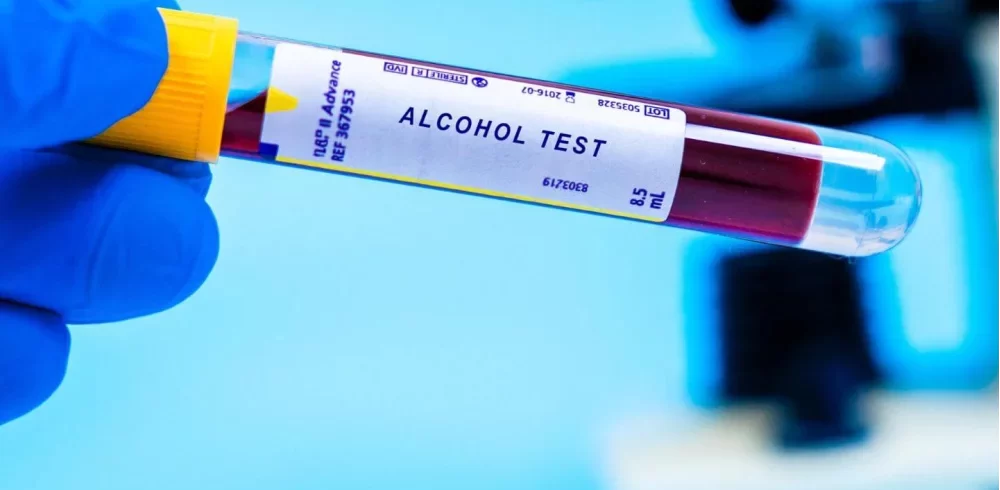
Guide to Court-ordered Drug and Alcohol Testing For Probation and Bond
Court-ordered testing is the part of a Michigan DUI case that can feel like it’s taking over daily life. You blow before work, during the day, and at night. In some cases, you may drive to a facility, and every reading feels like it decides whether you stay out of jail. We tell clients that the testing order is not fixed and can be reconsidered.
The testing order rests on specific rules with specific limits, and those rules also guide how to ask the judge for a change. As Metro Detroit DUI defense lawyers who also concentrate in driver’s license restoration cases, we believe clean testing is evidence we can use to your advantage later.
Where a Judge Gets the Power to Test You
Bond, while the case is pending, and probation, as part of the sentence after it has been resolved, are separate tracks with separate sources of authority, and mixing them up can lead to arguing the wrong point to the judge.
While you are on bond, the court rule that controls pretrial release governs, and the order of its subrules is the whole point. The default is release on personal recognizance with 3 conditions:
- You appear when required
- You do not leave the state without permission
- You do not commit a crime
Almost without exception, a judge will decide that default is not enough and will add conditions. In DUI cases, this begins with a condition of no alcohol and no non-prescribed drugs. To ensure compliance, the judge will order alcohol testing and, in some cases, drug testing as well.
Anyone taking controlled substances or other high-risk medications must have a valid prescription. Medical marijuana is generally allowed, but the card cannot just be a flimsy excuse to use cannabis. The bond rule also lists what the court weighs, and two of those factors, your prior record and any history of substance abuse or addiction, tend to result in the heaviest testing schedules.
Probation is governed by state statute. Testing is not among the discretionary conditions that the statute lists, though an ankle monitor arguably fits the electronic monitoring provision. Testing generally rests within the court’s catch-all power instead. That matters, because the same statute requires that conditions be tailored to the individual person, address that person’s assessed risks and needs, and be adjusted if the court determines adjustment is appropriate.
What Each Testing Method Actually Proves
In the courts we appear in across Wayne, Oakland, Macomb, and the surrounding counties, different monitoring and testing methods are used in the criminal court process, and they do not all measure the same thing. These include:
- Portable cellular breath alcohol testers you blow into at set times, which transmit the result and usually a photo
- In-person breath testing at a facility, on a portable unit (PBT)
- Transdermal ankle monitors, such as the SCRAM tether, which sample for alcohol through the skin at regular intervals, day and night
- Urine testing, which shows recent drinking (through a byproduct called EtG) or recent drug use rather than a current level
Breath testing measures alcohol in your system at the time the sample is provided, which is why a false reading from something you just ate, drank, or smoked is a real risk. Urine testing for alcohol or drugs works differently. It looks for metabolites that show you consumed alcohol or drugs within a window before the sample, not how much. For alcohol, that window can be shorter than the testing industry sometimes suggests.
An NIH-funded study of EtG urine testing, published in Alcoholism: Clinical and Experimental Research, found detection sensitivity poor after 48 hours at every dose and cutoff it tested and called the marketing of it as an 80-hour test unsubstantiated. Urine screening for other drugs is a separate question, with windows that run considerably longer.
What a Missed or Failed Test Really Costs
This is where a lot of the guidance found online can fall short, and where Michigan law is specific.
Whether you are on bond or probation, a missed or failed test can bring you back before the judge to explain what happened, usually at a bond or probation violation hearing. In our experience, a first positive on bond more often brings tighter conditions or more frequent testing rather than jail, but repeated problems, a new offense, or leaving the state without permission can quickly lead to revocation and incarceration.
Once you are on probation, missing or failing a drug test is a technical violation by statute, and technical violations carry ceilings on jail. Our guide to probation violations in Michigan covers the full picture, but the caps are:
- Misdemeanor probation: not more than 5 days for a first violation, 10 for a second, and 15 for a third
- Felony probation: not more than 15 days for a first violation, 30 for a second, and 45 for a third
- A fourth violation removes the limit, up to whatever sentence remains available
One situation is different, although not common. If you are waiting for a bed in a treatment facility and have no safe place to wait, the statute allows the penalty to stretch to 45 days.
Fortunately, it’s not all bad news. In most cases, a court cannot revoke probation on technical grounds until you have already been sanctioned for 3 or more violations and then commit another. However, the statute excludes domestic violence probation from that protection.
Three more protections apply to technical violations. If more than one technical violation arises out of the same incident, the court counts them as a single violation. The court is also presumed to issue a summons or order to show cause rather than an arrest warrant. And if you are detained and no hearing is held within the jail time the sanction would allow, you must be returned to community supervision.
In felony OWI cases, things get more serious. Drinking is not a “technical violation” for a person on probation for a felony violation of Michigan’s OWI statute (and a third-offense OWI is a felony). In those cases, a positive alcohol test is more serious and falls outside the caps and outside the revocation threshold. A missed or failed drug test by that same person is still technical, and the caps still apply to it.
On bond, by contrast, there is no graduated ceiling at all. A court that finds you violated release conditions can issue a warrant, revoke your release, send you to jail, and forfeit the bond.
At a probation violation hearing, the burden of proof belongs to the state, but only by a preponderance of the evidence. You do not have to prove your innocence, but this is a far cry from the prosecutor having to prove your guilt beyond a reasonable doubt. The threshold is basically “more likely than not.”
The hearing is summary and informal, though, and the rules of evidence do not apply except those covering privileges, so material comes in that would otherwise not be admissible at trial.
How Testing Schedules Get Reduced
How often you are tested is not set by any statewide schedule. It depends on the seriousness of the offense, your record, and how the judge approaches these cases. Some courts order multiple breath tests a day, while others require testing only a few times a month, and you may face random drug tests for as long as the bond or probation lasts.
Compliance counts too, because a clean testing record is often rewarded with less frequent monitoring as time passes. Because testing is a condition rather than a sentence, it can be revisited. The judge can do that alone, or at the request of a lawyer or the prosecutor, and the rules say how.
On bond, before arraignment on the information, a court may modify a release decision on finding a substantial reason to do so. At that arraignment, and at any time after, it decides the question fresh. The party asking for a change carries the burden of going forward, which means arriving with something concrete, such as a work schedule the current plan makes impossible, a stretch of clean results, or a cheaper method that proves the same thing.
Once you are on probation, the same principle applies, because the statute requires that your conditions be tailored to you. We have moved nurses off facility testing and onto home monitoring because they cannot walk off a hospital floor mid-shift. None of it happens by itself: you will not get relief without asking for it.
There is a second reason to stay clean. Those results become evidence, and we use them with the prosecutor, at sentencing, and later at the Secretary of State if a driver’s license restoration case follows. For what the rest of supervision looks like, see our guide to how probation works in a Michigan DUI case.
Talk With Us About Your Testing Conditions
If your testing schedule is unworkable, or you have already missed or failed a test and do not know what comes next, we would rather hear from you now than after a violation hearing is set. We handle criminal and DUI cases across Wayne, Oakland, Macomb, and the surrounding counties.
We offer free, confidential phone consultations Monday through Friday, 8:30 AM to 5:00 PM, at 586-465-1980, and an after-hours answering service is available. You can also reach us through the contact form or the chat box on our website.
Learn more about our Michigan DUI and OWI defense practice.
Frequently Asked Questions
Can you drink while on bond or probation in Michigan?
If your order prohibits it, then no (and that’s almost always the case). A judge may condition release on not using alcohol (or drugs), and a no-alcohol term is standard in Michigan DUI cases on both bond and probation. Read your bond conditions or probation order; the terms usually apply everywhere, including at home.
Marijuana is more complicated. In July 2026, the Michigan Supreme Court held in People v. Hess that a court cannot bar marijuana use that complies with Michigan’s recreational marijuana law as a probation condition merely because federal law still prohibits it.
The Court left open whether, and in what circumstances, a judge may still impose that condition as a discretionary condition of probation, and it did not address bond at all. If your order bars marijuana and you use it lawfully, it’s better to raise this issue rather than just assume you have no defense.
How can I prepare for alcohol testing?
Preparation is mostly logistics. Avoid alcohol completely, including in foods and drinks that contain it. As a practical matter, wait roughly 15 minutes after eating, drinking, or smoking before a breath test, because residue in the mouth can produce a reading that has nothing to do with drinking.
Keep a log of test times and results. If something goes wrong, contact the facility immediately and tell us, because an explanation documented the same day lands far better than one offered a week later.
How reliable are the different testing methods?
Each method has known limits. Breath tests can produce inaccurate results from recent food, drink, mouthwash, or certain medical conditions. Urine testing shows consumption within a window rather than an amount, and for alcohol that window is commonly overstated. The process itself adds familiar failure points:
- Improper calibration or maintenance of a testing device
- Incorrect labeling of a specimen, or two samples switched
- Gaps in the chain of custody documentation
These are some of the things we look at first on a disputed result, because a positive test is evidence like any other, and evidence can be wrong.
How long does a DUI stay on your record in Michigan?
A conviction stays on your Michigan driving record, and setting aside the criminal conviction does not remove it from that record. On the criminal side, a first-offense OWI conviction may be set aside, but only on application, only once, and only 5 or more years after the latest of these events: sentencing, completion of probation, discharge from parole, or completion of any jail or prison term.
Our guide to whether a Michigan DUI can be expunged explains who qualifies, and our DUI expungement page explains how we handle these petitions.
What are the consequences of refusing a breathalyzer test?
For a driver in a personal vehicle, refusing the chemical test after arrest carries an implied consent sanction of 1 year of suspension or denial for a first refusal, and 2 years for a second or subsequent refusal within 7 years. This sanction is automatic unless you request a hearing within 14 days of the notice and win it. Even if you do not request a hearing, or you request one and lose, we may still be able to ask the circuit court for a restricted license after a first refusal.
That 14-day window is the most important thing to act on if you have just refused. Our guide to refusing the breath test and our breathalyzer refusal page cover the details.
How does my criminal history affect my bond conditions?
It affects them directly, because the court rule makes it a factor. A judge weighs your prior criminal record, including juvenile offenses, your record of appearing or failing to appear, and your history of substance abuse or addiction. Someone with a prior alcohol-related conviction should expect closer monitoring than a first-time defendant facing the same charge, which can mean more frequent testing and even more burdensome testing methods (like an ankle monitor that tests for alcohol).
What the rule does not do is set a schedule, so be skeptical of anyone quoting a fixed number of tests per week. The conditions still must be reasonably necessary to ensure that you appear in court and to protect the public. If they are not, then it’s better to speak up.