
DUI Cases in the 52-2 District Court (Clarkston)

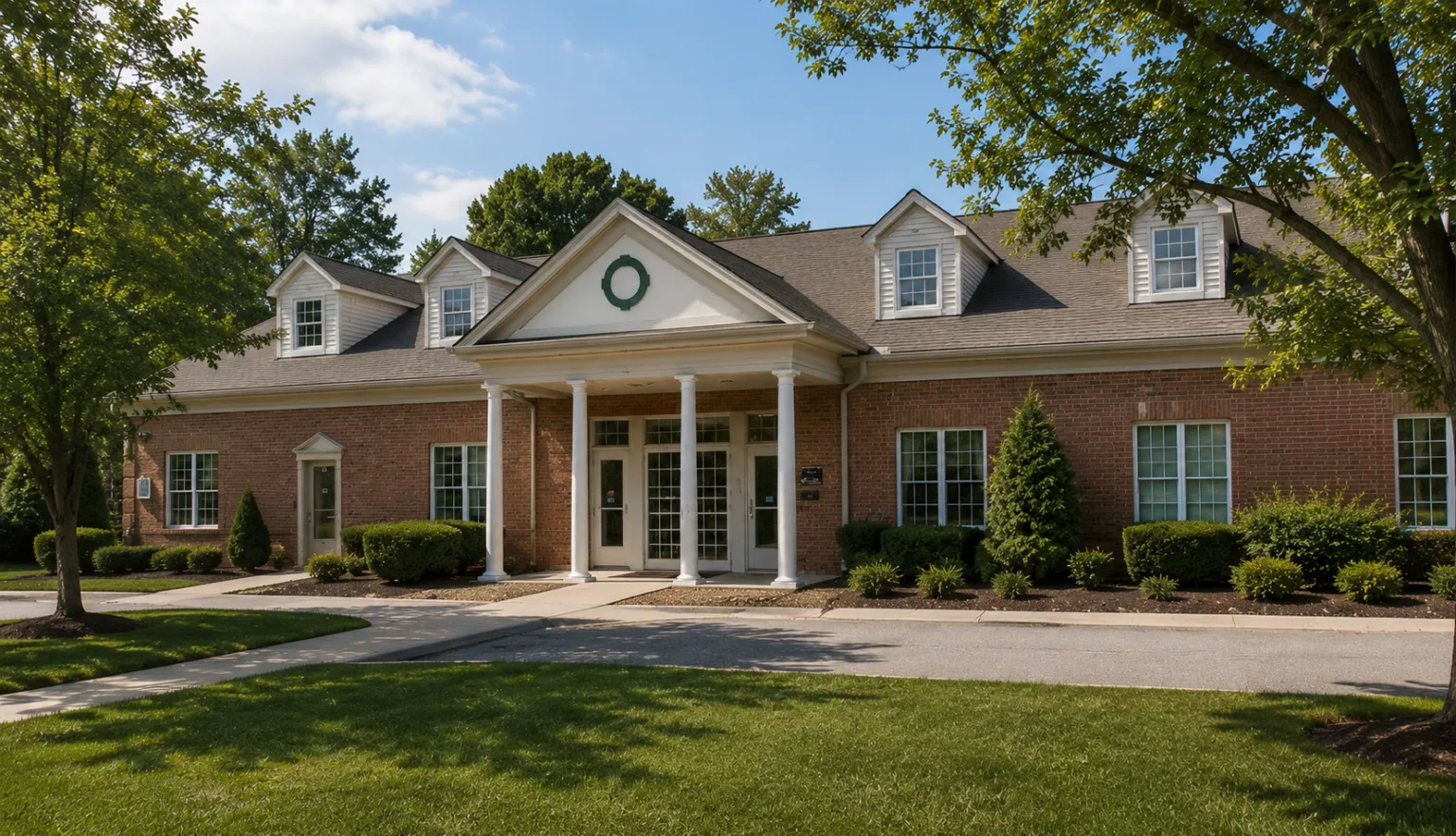
52-2 District Court in Clarkston, Michigan
Share on Facebook
Share on X
Share on LinkedIn
By Jeffrey J. Randa
DUI Cases in the 52-2 District Court (Clarkston)

If you have been charged with a DUI in Clarkston or one of the surrounding communities in northern Oakland County, your case will be heard in the 52-2 District Court. Our firm handles DUI cases in this court regularly, and we can tell you from direct experience: in terms of how defendants are treated, this is one of the better courts in the Metro Detroit area. That matters — not just in an abstract sense, but in the real, practical sense of what you can expect as your case moves forward.

This article covers what you need to know about the 52-2 District Court — the judges, the court’s character, how DUI cases are typically handled, and what our firm brings to cases here.

The 52-2 District Court and Its Jurisdiction

The 52-2 District Court is one of four courts that make up the 52nd District, which also includes sister courts in Novi (52-1), Rochester Hills (52-3), and Troy (52-4). The 52-2 is located at 5850 Lorac Drive in Clarkston, and most people — including lawyers who practice here — simply call it “Clarkston.”

The court has jurisdiction over all criminal and DUI cases arising in the following communities:

  • City of the Village of Clarkston
  • Brandon Township
  • Groveland Township
  • Holly Township
  • Independence Township
  • Rose Township
  • Springfield Township
  • White Lake Township
  • Village of Holly
  • Village of Ortonville

The area served by the 52-2 sits at the northern edge of Metro Detroit, where suburban development is still actively growing. It retains a character that is distinct from the denser communities to the south — but make no mistake, this is a fully resourced court with all the infrastructure of a major urban district. It simply has the good fortune of being small enough to treat each case — and each person — with individual attention.

The official court website is 52nd District Court – Division 2.

What Kind of Court Is the 52-2?

This is a very good court. Absent genuinely aggravating circumstances, it is one of the better places in Oakland County to face a DUI or criminal charge, and that is saying something. The two judges here are fair, thoughtful, and — without overstating it — tilt toward rehabilitation over punishment. Neither comes to the bench looking to make an example out of anyone.

What makes the 52-2 work as well as it does is a combination of factors that rarely appear together: it has the resources and procedural sophistication of a larger urban court, but its caseload is manageable enough that every defendant gets real attention. There is no sense here that cases are being processed in batches. Defendants are treated as individuals, not as entries on a docket.

That experience is consistent across both judges and is something our firm has observed over many years and many cases in this courtroom.

The Judges of the 52-2 District Court

The 52-2 District Court has two judges, both of whom have served this community for many years.

The Honorable Kelley R. Kostin has been on the bench since January 2005 — more than two decades of service to the Clarkston community. Before taking the bench, Judge Kostin served as a Magistrate at the 52-2, meaning she understood this court from the inside before she ever presided over it. She is a Past President of the Oakland County District Judge’s Association and currently serves on the Oakland County Community Corrections Advisory Board.

She has been appointed by the Michigan Supreme Court to the Michigan Tribal State Federal Judicial Forum. Judge Kostin presides over all three of the court’s specialty courts — Sobriety Court, the North Oakland Veterans Treatment Court, and the Mental Health Court — and has written publicly about her belief that therapy courts are among the most effective tools available for reducing recidivism. She is also a contributing author to the Institute of Continuing Legal Education publication Michigan Drunk Driving Law and Practice, Fifth Edition — a credential that reflects both her deep knowledge of this area of law and the respect she has earned among her peers across the state.

The Honorable Joseph G. Fabrizio has served since January 2009 and is a lifelong resident of Clarkston. He is a former Chief Judge of the 52nd District Courts and a former President of the Oakland County District Judge’s Association, and he brings the same community roots to the bench that he built over years of private practice as managing partner of Fabrizio & Brook, P.C. Judge Fabrizio participates in the court’s Sobriety Court program and has been actively involved in legal training and mock trial programs for both law students and younger students throughout the area.

Both judges approach DUI cases with the same fundamental orientation: fair, informed, and focused on the person in front of them rather than the charge on paper. In our experience, that approach holds consistently regardless of which judge is assigned to a case.

DUI Charges in the 52-2 District Court

Michigan’s drunk driving law, codified at MCL 257.625, establishes a range of DUI offenses — from first-offense OWI and Operating While Visibly Impaired (OWVI) to more serious charges involving high BAC levels, repeat offenses, or child endangerment. The specific charge, your prior record, and the facts of your case all determine what you’re facing. Here is a general overview of what to expect at the 52-2.

First Offense OWI

Our firm’s consistent goal in any DUI case is to pursue the best possible outcome from the start. That requires a careful analysis of all the evidence from the initial police contact, the investigation, including field sobriety tests, and then the arrest, and the breath or blood test that followed. In every case, the first goal is to see if there is a way to just get the whole thing dismissed.

If the evidence is strong enough to prevent that, then our efforts are directed at negotiating the most favorable resolution available.

First-offense cases carry the widest range of potential outcomes, and the 52-2’s approach gives a well-prepared defense lawyer real room to work. Penalties for a standard first-offense OWI can include up to 93 days in jail, fines, license sanctions, and probation, though jail is rarely imposed in a true first-offense case here absent something unusual. A first offense for Operating While Visibly Impaired (OWVI) carries lighter statutory penalties and is often a meaningful target when negotiating a charge reduction.

Find a more detailed breakdown of what to expect after a first-offense DUI in Michigan.

First Offense High BAC (.17 or Above)

A BAC of .17 or higher triggers Michigan’s High BAC enhancement, which applies to first offenses only. This offense carries higher potential fines, a longer potential jail sentence (although, as noted, jail can usually be avoided) and harsher driver’s license penalties. In a court like Clarkston, where judges take an individualized approach, thorough preparation and a strong mitigation case matter.

Second Offense OWI

A second DUI conviction carries mandatory license revocation with no restricted driving privileges for at least one year. This is one of the most serious and lasting consequences of a second-offense DUI. The maximum possible jail term increases to one year at the second-offense level, though the 52-2’s orientation toward rehabilitation means avoiding it is often possible. Sobriety Court is a meaningful option here — more on that below.

Third Offense OWI

A third DUI charge in Michigan is a felony. The consequences are serious: potential prison time, heavy fines, and up to a five-year driver’s license revocation. Anyone facing a third-offense DUI should understand the stakes clearly and move quickly to retain experienced counsel.

Bond Conditions and What Happens After Arrest

Like virtually every court in the Metro Detroit area, the 52-2 District Court routinely imposes bond conditions that include a prohibition on consuming alcohol. Breath and urine testing to verify compliance is standard. These conditions are taken seriously — violating them can result in bond revocation or additional charges — so compliance from day one is essential.

Probation in Michigan DUI cases is all but certain. The 52-2 is not an exception. What can vary is the structure and intensity of probation — whether it is reporting or non-reporting, how frequently testing is required, and what treatment or education components are ordered. Non-reporting probation is rarely granted, except in cases where a defendant lives a considerable distance from the court. The best way to position a case for favorable probation terms is through thorough preparation before sentencing, not hopeful assumptions about what the court might do.

Sobriety Court at the 52-2

The 52-2 District Court has operated a certified Sobriety Court program since 2004, making it one of the more established sobriety courts in the Detroit area. Judge Kostin presides over the program and has been a vocal advocate for its effectiveness.

Sobriety Court is a post-conviction, voluntary program designed for defendants with a genuine alcohol or substance use problem. Participants who complete it successfully benefit from intensive support structures, close court supervision, and — critically — access to the Treatment Court Interlock Licensing program, which can allow restricted driving privileges that would otherwise be unavailable due to a mandatory license revocation.

To be eligible, a defendant must meet one of two criteria:

  • A current OWI or related offense with a prior alcohol or drug conviction (Track A), or
  • A current OWI with a BAC of .17 or higher, or a Child Endangerment charge with a BAC of .15 or higher, without a prior conviction (Track B).

The program requires residency or full-time employment within the 52-2’s jurisdiction, and it does not accept current felony OWI convictions. For second-offense defendants facing mandatory license revocation, Sobriety Court’s ability to provide a path to restricted driving is one of its most significant practical advantages — it is the one mechanism that can override what would otherwise be an automatic, year-long loss of all driving privileges.

Other Criminal Cases in the 52-2

Beyond DUI, the 52-2 handles the full range of misdemeanor criminal matters that arise in its communities. Our firm regularly represents clients in this court on charges including driving on a suspended or revoked license (DWLS and DWLR), Operating While Visibly Impaired (OWVI), indecent exposure, and embezzlement. The same qualities that make the 52-2 a good court for DUI cases apply across the criminal docket: the judges are fair, well-informed, and focused on the individual rather than the charge.

How DUI Cases Are Prosecuted at the 52-2

As in all Oakland County courts, DUI cases charged under state law are prosecuted by the Oakland County Prosecutor’s Office. Cases charged as local ordinance violations — which can occur when a municipality elects to pursue a case under its own code rather than state law — are handled by the respective township or village attorney. In practice, the distinction affects the charge level and potential penalties, and it is one of the factors an experienced DUI lawyer will assess early in the case.

No matter what the charge, the whole point of hiring a lawyer is to avoid as many of the legal penalties and negative consequences as possible. Our job is to protect you and your interests. Ultimately, success in a criminal or DUI case is best measured by what does NOT happen to you.

How Our Firm Handles DUI Cases in the 52-2

My team and I have been handling DUI cases in the 52-2 District Court for many years. We know the judges, we know how cases move through this court, and we know how to prepare a defense that gives our clients the best possible chance at the very best outcome.

As noted above, in every case, our starting point is the evidence. Before any other decisions are made, we analyze the traffic stop, the officer’s observations, the field sobriety testing, and the breath or blood test results. If the evidence has weaknesses, those weaknesses become the foundation of the defense. If the evidence is strong, damage control (avoiding penalties) and strategic negotiation become the priority.

One of the things we can tell you from consistent experience at the 52-2 is that our clients have always felt well-treated in this courtroom. That is not something we can say about every court. The judges here bring real humanity to their work, and that creates an environment where good lawyering — and genuine effort by the client — can make a meaningful difference.

We handle DUI cases throughout Wayne, Oakland, Macomb, and the surrounding counties. If you have been charged with a DUI in Clarkston or anywhere in the 52-2’s jurisdiction, we encourage you to call us as soon as possible. Early involvement gives us the most time to evaluate your case, review the evidence, and build the strongest possible defense.

What You Need to Know

If you are facing a DUI charge in the 52-2 District Court in Clarkston, call our office for a free, confidential consultation. We handle DUI cases throughout Wayne, Oakland, Macomb, and the surrounding counties. Phones are answered Monday through Friday, 8:30 a.m. to 5:00 p.m. An after-hours answering service is available outside those hours. You can also reach us through the contact form or chat box on our website.

Call us at 586-465-1980 or visit our DUI defense practice page to learn more.

About the Author
Jeff has been a practicing Michigan criminal lawyer, DUI attorney and driver’s license restoration lawyer for more than 30 years. He is passionate about winning and doing whatever it takes to accomplish that. He understands that a pending criminal or DUI charge is stressful and that being unable to legally drive is a huge problem.
52-2 District Court in Clarkston, Michigan
DUI Cases in the 52-2 District Court (Clarkston)

If you have been charged with a DUI in Clarkston or one of the surrounding communities in northern Oakland County, your case will be heard in the 52-2 District Court. Our firm handles DUI cases in this court regularly, and we can tell you from direct experience: in terms of how defendants are treated, this is one of the better courts in the Metro Detroit area. That matters — not just in an abstract sense, but in the real, practical sense of what you can expect as your case moves forward.

This article covers what you need to know about the 52-2 District Court — the judges, the court’s character, how DUI cases are typically handled, and what our firm brings to cases here.

The 52-2 District Court and Its Jurisdiction

The 52-2 District Court is one of four courts that make up the 52nd District, which also includes sister courts in Novi (52-1), Rochester Hills (52-3), and Troy (52-4). The 52-2 is located at 5850 Lorac Drive in Clarkston, and most people — including lawyers who practice here — simply call it “Clarkston.”

The court has jurisdiction over all criminal and DUI cases arising in the following communities:

  • City of the Village of Clarkston
  • Brandon Township
  • Groveland Township
  • Holly Township
  • Independence Township
  • Rose Township
  • Springfield Township
  • White Lake Township
  • Village of Holly
  • Village of Ortonville

The area served by the 52-2 sits at the northern edge of Metro Detroit, where suburban development is still actively growing. It retains a character that is distinct from the denser communities to the south — but make no mistake, this is a fully resourced court with all the infrastructure of a major urban district. It simply has the good fortune of being small enough to treat each case — and each person — with individual attention.

The official court website is 52nd District Court – Division 2.

What Kind of Court Is the 52-2?

This is a very good court. Absent genuinely aggravating circumstances, it is one of the better places in Oakland County to face a DUI or criminal charge, and that is saying something. The two judges here are fair, thoughtful, and — without overstating it — tilt toward rehabilitation over punishment. Neither comes to the bench looking to make an example out of anyone.

What makes the 52-2 work as well as it does is a combination of factors that rarely appear together: it has the resources and procedural sophistication of a larger urban court, but its caseload is manageable enough that every defendant gets real attention. There is no sense here that cases are being processed in batches. Defendants are treated as individuals, not as entries on a docket.

That experience is consistent across both judges and is something our firm has observed over many years and many cases in this courtroom.

The Judges of the 52-2 District Court

The 52-2 District Court has two judges, both of whom have served this community for many years.

The Honorable Kelley R. Kostin has been on the bench since January 2005 — more than two decades of service to the Clarkston community. Before taking the bench, Judge Kostin served as a Magistrate at the 52-2, meaning she understood this court from the inside before she ever presided over it. She is a Past President of the Oakland County District Judge’s Association and currently serves on the Oakland County Community Corrections Advisory Board.

She has been appointed by the Michigan Supreme Court to the Michigan Tribal State Federal Judicial Forum. Judge Kostin presides over all three of the court’s specialty courts — Sobriety Court, the North Oakland Veterans Treatment Court, and the Mental Health Court — and has written publicly about her belief that therapy courts are among the most effective tools available for reducing recidivism. She is also a contributing author to the Institute of Continuing Legal Education publication Michigan Drunk Driving Law and Practice, Fifth Edition — a credential that reflects both her deep knowledge of this area of law and the respect she has earned among her peers across the state.

The Honorable Joseph G. Fabrizio has served since January 2009 and is a lifelong resident of Clarkston. He is a former Chief Judge of the 52nd District Courts and a former President of the Oakland County District Judge’s Association, and he brings the same community roots to the bench that he built over years of private practice as managing partner of Fabrizio & Brook, P.C. Judge Fabrizio participates in the court’s Sobriety Court program and has been actively involved in legal training and mock trial programs for both law students and younger students throughout the area.

Both judges approach DUI cases with the same fundamental orientation: fair, informed, and focused on the person in front of them rather than the charge on paper. In our experience, that approach holds consistently regardless of which judge is assigned to a case.

DUI Charges in the 52-2 District Court

Michigan’s drunk driving law, codified at MCL 257.625, establishes a range of DUI offenses — from first-offense OWI and Operating While Visibly Impaired (OWVI) to more serious charges involving high BAC levels, repeat offenses, or child endangerment. The specific charge, your prior record, and the facts of your case all determine what you’re facing. Here is a general overview of what to expect at the 52-2.

First Offense OWI

Our firm’s consistent goal in any DUI case is to pursue the best possible outcome from the start. That requires a careful analysis of all the evidence from the initial police contact, the investigation, including field sobriety tests, and then the arrest, and the breath or blood test that followed. In every case, the first goal is to see if there is a way to just get the whole thing dismissed.

If the evidence is strong enough to prevent that, then our efforts are directed at negotiating the most favorable resolution available.

First-offense cases carry the widest range of potential outcomes, and the 52-2’s approach gives a well-prepared defense lawyer real room to work. Penalties for a standard first-offense OWI can include up to 93 days in jail, fines, license sanctions, and probation, though jail is rarely imposed in a true first-offense case here absent something unusual. A first offense for Operating While Visibly Impaired (OWVI) carries lighter statutory penalties and is often a meaningful target when negotiating a charge reduction.

Find a more detailed breakdown of what to expect after a first-offense DUI in Michigan.

First Offense High BAC (.17 or Above)

A BAC of .17 or higher triggers Michigan’s High BAC enhancement, which applies to first offenses only. This offense carries higher potential fines, a longer potential jail sentence (although, as noted, jail can usually be avoided) and harsher driver’s license penalties. In a court like Clarkston, where judges take an individualized approach, thorough preparation and a strong mitigation case matter.

Second Offense OWI

A second DUI conviction carries mandatory license revocation with no restricted driving privileges for at least one year. This is one of the most serious and lasting consequences of a second-offense DUI. The maximum possible jail term increases to one year at the second-offense level, though the 52-2’s orientation toward rehabilitation means avoiding it is often possible. Sobriety Court is a meaningful option here — more on that below.

Third Offense OWI

A third DUI charge in Michigan is a felony. The consequences are serious: potential prison time, heavy fines, and up to a five-year driver’s license revocation. Anyone facing a third-offense DUI should understand the stakes clearly and move quickly to retain experienced counsel.

Bond Conditions and What Happens After Arrest

Like virtually every court in the Metro Detroit area, the 52-2 District Court routinely imposes bond conditions that include a prohibition on consuming alcohol. Breath and urine testing to verify compliance is standard. These conditions are taken seriously — violating them can result in bond revocation or additional charges — so compliance from day one is essential.

Probation in Michigan DUI cases is all but certain. The 52-2 is not an exception. What can vary is the structure and intensity of probation — whether it is reporting or non-reporting, how frequently testing is required, and what treatment or education components are ordered. Non-reporting probation is rarely granted, except in cases where a defendant lives a considerable distance from the court. The best way to position a case for favorable probation terms is through thorough preparation before sentencing, not hopeful assumptions about what the court might do.

Sobriety Court at the 52-2

The 52-2 District Court has operated a certified Sobriety Court program since 2004, making it one of the more established sobriety courts in the Detroit area. Judge Kostin presides over the program and has been a vocal advocate for its effectiveness.

Sobriety Court is a post-conviction, voluntary program designed for defendants with a genuine alcohol or substance use problem. Participants who complete it successfully benefit from intensive support structures, close court supervision, and — critically — access to the Treatment Court Interlock Licensing program, which can allow restricted driving privileges that would otherwise be unavailable due to a mandatory license revocation.

To be eligible, a defendant must meet one of two criteria:

  • A current OWI or related offense with a prior alcohol or drug conviction (Track A), or
  • A current OWI with a BAC of .17 or higher, or a Child Endangerment charge with a BAC of .15 or higher, without a prior conviction (Track B).

The program requires residency or full-time employment within the 52-2’s jurisdiction, and it does not accept current felony OWI convictions. For second-offense defendants facing mandatory license revocation, Sobriety Court’s ability to provide a path to restricted driving is one of its most significant practical advantages — it is the one mechanism that can override what would otherwise be an automatic, year-long loss of all driving privileges.

Other Criminal Cases in the 52-2

Beyond DUI, the 52-2 handles the full range of misdemeanor criminal matters that arise in its communities. Our firm regularly represents clients in this court on charges including driving on a suspended or revoked license (DWLS and DWLR), Operating While Visibly Impaired (OWVI), indecent exposure, and embezzlement. The same qualities that make the 52-2 a good court for DUI cases apply across the criminal docket: the judges are fair, well-informed, and focused on the individual rather than the charge.

How DUI Cases Are Prosecuted at the 52-2

As in all Oakland County courts, DUI cases charged under state law are prosecuted by the Oakland County Prosecutor’s Office. Cases charged as local ordinance violations — which can occur when a municipality elects to pursue a case under its own code rather than state law — are handled by the respective township or village attorney. In practice, the distinction affects the charge level and potential penalties, and it is one of the factors an experienced DUI lawyer will assess early in the case.

No matter what the charge, the whole point of hiring a lawyer is to avoid as many of the legal penalties and negative consequences as possible. Our job is to protect you and your interests. Ultimately, success in a criminal or DUI case is best measured by what does NOT happen to you.

How Our Firm Handles DUI Cases in the 52-2

My team and I have been handling DUI cases in the 52-2 District Court for many years. We know the judges, we know how cases move through this court, and we know how to prepare a defense that gives our clients the best possible chance at the very best outcome.

As noted above, in every case, our starting point is the evidence. Before any other decisions are made, we analyze the traffic stop, the officer’s observations, the field sobriety testing, and the breath or blood test results. If the evidence has weaknesses, those weaknesses become the foundation of the defense. If the evidence is strong, damage control (avoiding penalties) and strategic negotiation become the priority.

One of the things we can tell you from consistent experience at the 52-2 is that our clients have always felt well-treated in this courtroom. That is not something we can say about every court. The judges here bring real humanity to their work, and that creates an environment where good lawyering — and genuine effort by the client — can make a meaningful difference.

We handle DUI cases throughout Wayne, Oakland, Macomb, and the surrounding counties. If you have been charged with a DUI in Clarkston or anywhere in the 52-2’s jurisdiction, we encourage you to call us as soon as possible. Early involvement gives us the most time to evaluate your case, review the evidence, and build the strongest possible defense.

What You Need to Know

If you are facing a DUI charge in the 52-2 District Court in Clarkston, call our office for a free, confidential consultation. We handle DUI cases throughout Wayne, Oakland, Macomb, and the surrounding counties. Phones are answered Monday through Friday, 8:30 a.m. to 5:00 p.m. An after-hours answering service is available outside those hours. You can also reach us through the contact form or chat box on our website.

Call us at 586-465-1980 or visit our DUI defense practice page to learn more.

About the Author
Jeff has been a practicing Michigan criminal lawyer, DUI attorney and driver’s license restoration lawyer for more than 30 years. He is passionate about winning and doing whatever it takes to accomplish that. He understands that a pending criminal or DUI charge is stressful and that being unable to legally drive is a huge problem.
Website developed in accordance with Web Content Accessibility Guidelines 2.2.
If you encounter any issues while using this site, please contact us: 586.465.1980